Venus in Pisces, Goth Shakira, and the Art of Escaping Romantic Daydreams
An Image magazine feature connects astrological longing with Buddhist empathy, sensory grounding, and cinematic melancholy
Modern astrological advice and lifestyle media are increasingly bringing together traditional planetary astrology, Eastern philosophical concepts, and cinematic pop-culture references to address contemporary anxieties around intimacy, romantic daydreaming, and personal development.
That combination appears in the August “Adornment” issue of Image magazine, a publication focused on expressive accessories, style, and cultural commentary. One astrological guidance feature answers a reader who identifies as a “late bloomer” and worries about remaining trapped in idealized romantic fantasies associated with Venus in Pisces. The reader asks how to decenter unrequited longings and concentrate on real-world experiences instead of being consumed by unattainable daydreams.
In Hellenistic and Western astrological traditions, Venus governs affection, relationships, aesthetic sensibilities, and values. Its placement in Pisces, the mutable water sign, is considered Venus’s place of “exaltation,” where traditional astrological principles describe the planet as operating with heightened intensity and idealization.



Astrologers associate Venus in Pisces with deep empathy, unconditional love, and spiritual sensitivity, while also noting its vulnerability to boundary dissolution, idealization of romantic partners, and escapist fantasy when it is unanchored from physical reality. The publication identifies escapism as the primary shadow aspect of the placement and recommends silent walking meditation without music or digital audio distractions, keeping attention on breath and physical steps.
The response does not frame romantic yearning as a detriment. Instead, it calls the capacity a “gift from the Cosmic Mother.” Its discussion of the emotional weight of intense empathy draws on the Buddhist concept of bodhicitta. In Mahayana Buddhist theology, bodhicitta, translated from Sanskrit as “awakened mind” or “mind of enlightenment,” is the altruistic wish to achieve spiritual awakening in order to liberate all sentient beings from suffering, or dukkha.
The guidance notes that engaging deeply with love and empathy requires direct contact with the root of emotional suffering, describing the experience as an advanced form of empathy. It also recommends processing internal romantic narratives through writing, vocalization, and physical movement so that emotional energy can move through the body.
For a cultural image of romantic longing, the feature turns to the signature visual style of film director Sofia Coppola. Her cinema explores emotional isolation, yearning, and melancholy in films including The Virgin Suicides (1999), Lost in Translation (2003), and Marie Antoinette (2006). Coppola’s aesthetic is cited as a cultural baseline for the poignant, sequence-like internal montages experienced by people with heavy Piscean placements.
Other grounding suggestions involve deliberate sensory rituals, including slowly tasting Champagne or burning palo santo (Bursera graveolens) in the dark to anchor consciousness in physical sensation. The feature also cautions that internal fantasies should not eclipse external reality, using the metaphor of avoiding missed lightning patterns in the clouds by staring into puddles.
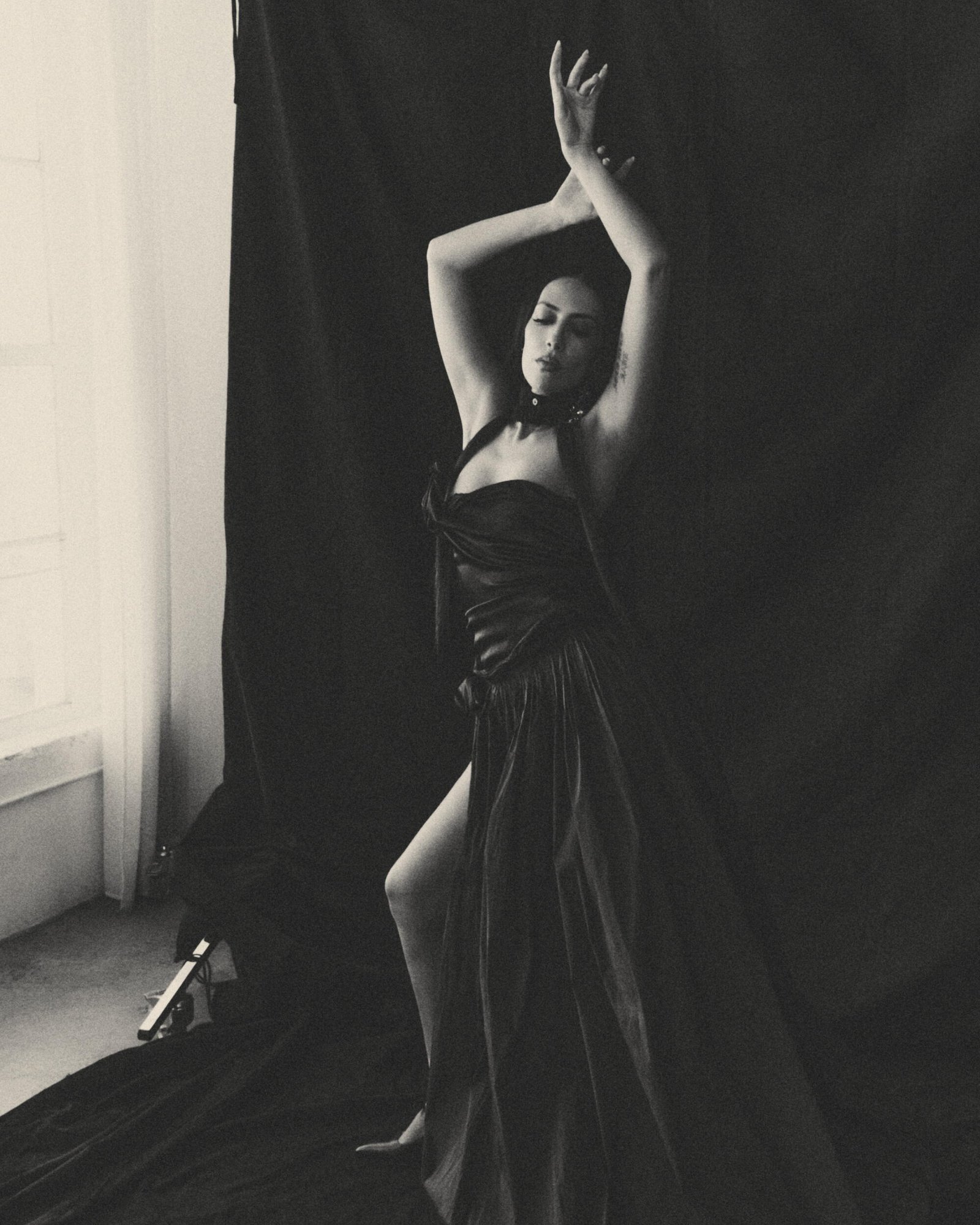
The guidance appears alongside a visual editorial featuring personality Goth Shakira. Its styling includes a corset and skirt designed by Miss Claire Sullivan, footwear from Shanghai-based fashion label Shushu/Tong, fine jewelry from Italian brand Blumarine, Japanese jewelry designer Hirotaka, and Italian silver house Pianegonda. The shoot also includes underwear from Xeno and a collar provided by the stylist.
Photographer Eugene Kim, stylist Britton Litow, hair and makeup artist Jaime Diaz, creative director Jess Aquino de Jesus, producer Cecilia Alvarez Blackwell, photo assistant Joe Elgar, and styling assistant Wendy Gonzalez Vivaño made up the creative team behind the editorial’s visual assembly.