

Trump Launches 32-Day Midterm Blitz Into Deep-Red States as War and Inflation Erode GOP Strongholds
White House strategists route the president through deep-red media markets to boost vulnerable Senate and gubernatorial candidates without dragging down suburban House incumbents.
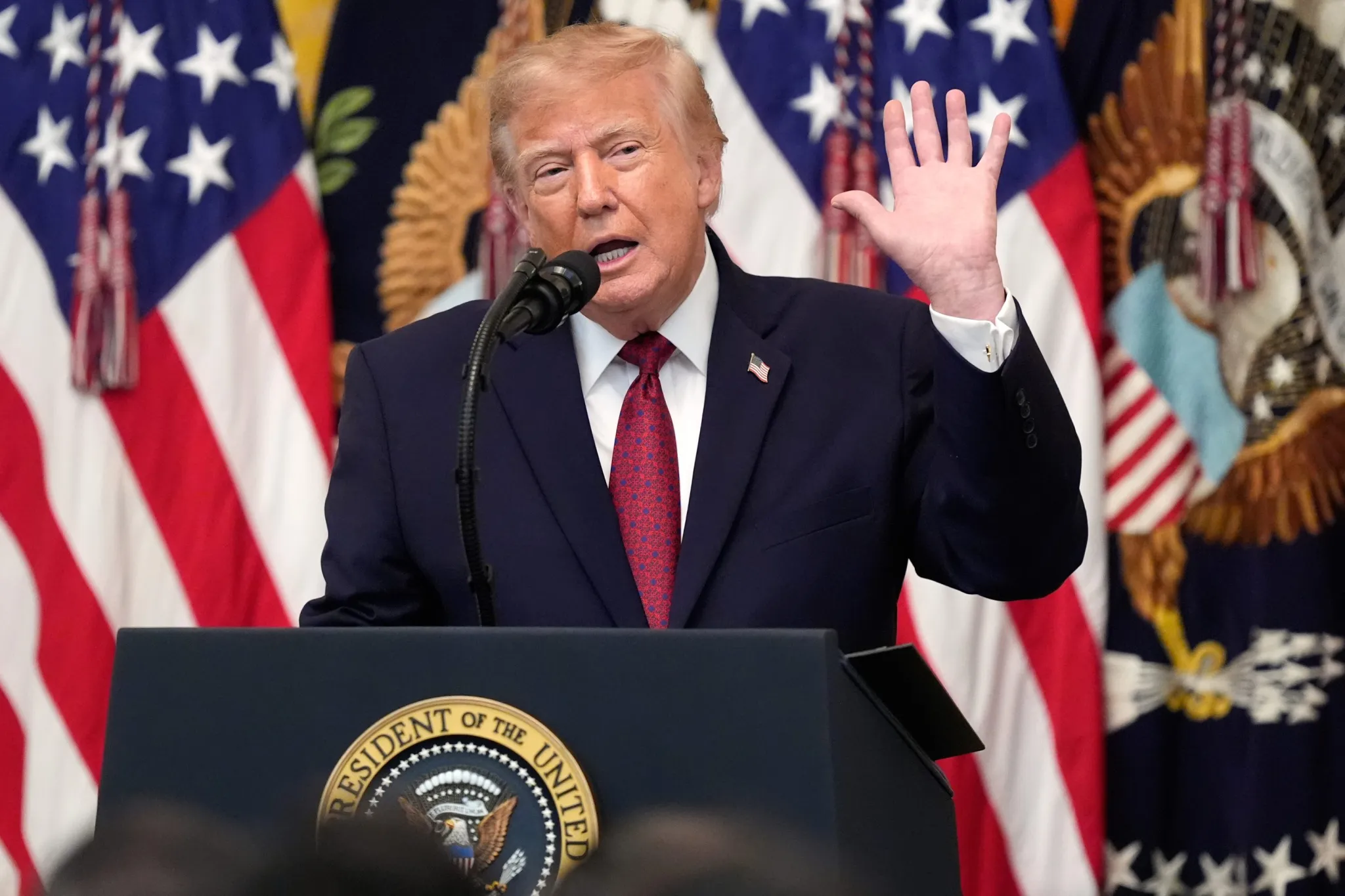
President Donald Trump is deploying an unusually aggressive midterm travel schedule into historically safe Republican territory, a tactical shift that underscores how the ongoing war in Iran and persistent inflation have destabilized the party’s grip on states it typically dominates without presidential intervention.
The White House confirmed Thursday that Trump will campaign almost daily through Nov. 3, beginning with stops in Texas and Oklahoma — states where Republican candidates for Senate and governor are suddenly facing competitive races. Vice President JD Vance is simultaneously running a parallel track through Florida and Texas, positioning the administration’s two highest-ranking officials in regions that were expected to be electoral coasting grounds just months ago.
The decision to send the president into deep-red geography reflects a severe deterioration in his political standing. A new Associated Press-NORC Center for Public Affairs Research poll found only 17% of U.S. adults approve of Trump’s handling of the cost of living, while overall economic approval has sunk to a new low of 26%. The numbers represent a sharp decline driven largely by the financial toll of the military conflict with Iran, which has disrupted energy markets and compounded affordability pressures that voters have cited as their primary concern throughout the year.


Historically, sitting presidents limit midterm travel to genuine battleground districts or use surrogates to protect down-ballot candidates from national headwinds. Trump’s itinerary defies that convention. His Thursday stop at a truck manufacturing facility in Denton, Texas, doubles as a proxy rally for state Attorney General Ken Paxton, who is locked in a tight Senate race against Democratic state Rep. James Talarico. National Republican committees have poured significant funding into Paxton’s defense, recognizing that losing a Texas Senate seat would signal catastrophic vulnerabilities further up the ballot.
Later Thursday, Trump travels to the Choctaw Nation of Oklahoma to campaign alongside Mike Mazzei, the Republican candidate for governor facing Democratic state House Minority Leader Cyndi Munson. The visit places Trump among a rare group of sitting presidents to hold official events on tribal lands, but the political calculation is geographic: Durant sits within the Dallas-Fort Worth media market, allowing the Oklahoma appearance to broadcast directly into North Texas living rooms.
Republican strategists acknowledge the necessity of the blitz while attempting to frame it as proactive rather than defensive. Sen. Shelley Moore Capito, R-W.Va., said after a private briefing this week with White House chief of staff Susie Wiles that the administration recognizes the “headwinds” but possesses both the strategy and capital to counteract them. Wiles presented senators with a near-daily travel calendar stretching across the country through Election Day.
Trump himself has attributed the party’s struggles entirely to messaging failures rather than policy outcomes. “We’re not getting the word out,” he told reporters Wednesday, characterizing the upcoming 32-day sprint as an effort to personally sell an agenda he believes is already successful. He has repeatedly dismissed voter anxiety over gas prices and grocery costs as a public relations problem, even as the Iran conflict continues to strain global supply chains.
Vance adopted a slightly different posture during a Wednesday rally in Harlingen, Texas, where he campaigned with Eric Flores, a Republican in a competitive U.S. House district in South Texas. Vance acknowledged widespread frustration over prices but directed the blame toward former President Joe Biden, arguing the current administration is still “digging ourselves out of the hole” left by its predecessor.
The vice president moves to Lakeland, Florida, on Thursday to support Republican Rep. Byron Donalds, who is running for governor. Donalds faces David Jolly, a former Republican congressman who switched his registration to independent before ultimately running as a Democrat. Florida’s gubernatorial contest has tightened unexpectedly amid local voter backlash over the rapid expansion of artificial intelligence data centers and broader affordability concerns, transforming a reliably conservative state into a resource drain for the national party.
Friday’s itinerary takes Trump to Mobile, Alabama, ostensibly to boost Sen. Tommy Tuberville’s gubernatorial campaign. Strategists note the location was selected specifically because Mobile’s media footprint bleeds into the Florida panhandle, providing secondary coverage for Donalds without requiring an additional trip. The president continues to Vandalia, Ohio, on Saturday and Grand Island, Nebraska, on Monday.
Party operatives familiar with the scheduling say Trump is being deliberately routed away from suburban swing districts where his presence could depress turnout for vulnerable House incumbents. Instead, the strategy relies on his ability to drive base enthusiasm in conservative areas, hoping that energy translates into down-ballot votes elsewhere.
The Democratic National Committee seized on the itinerary as evidence of internal panic. DNC deputy communications director Kendall Witmer tied the travel directly to the military conflict, arguing that Trump and Vance initiated a “deadly and costly war with Iran that sent the economy spiraling” and are now begging voters for leniency in the final weeks.
With early voting already underway in multiple states and control of Congress hanging on razor-thin margins, the Republican National Committee maintains it has the financial reserves to sustain the operation. Spokesperson Delanie Bomar described the schedule as a coordinated effort to “supercharge” candidates in battleground districts.
The White House has not announced any adjustments to the military operations in Iran ahead of the election, leaving the central driver of voter discontent unresolved as the president begins his most intensive domestic travel stretch of the term.









