

Oura’s $1.2B IPO Defends the Quiet Wearable Against Finger-Sized Smartphones
Oura officially filed to go public on September 3, entering the smart ring market competition from a position of unusual financial strength. The company was valued at $2.55 billion in a 2022 funding round. For the nine months ended June 30, its revenue nearly doubled to $1.21 billion. Oura said it sold 3.6 million rings over the past year and has around 5 million paid members.
The Oura IPO filing follows the launch of the Oura Ring 5, the company’s slimmest and lightest ring yet. Making a ring smaller while adding sensors and preserving battery life creates a narrow engineering margin. Oura’s minimalist approach can deliver up to seven days of battery life, while newer rivals are using the same two-gram form factor for increasingly demanding hardware.
Oura’s earlier valuation now sits beside a far larger revenue run rate. The company is monetizing its dominance through hardware sales and recurring memberships while competitors look for new reasons to justify their own rings.
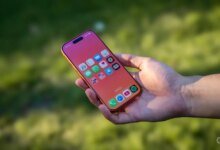

The market is splitting between two ideas. One treats the ring as a quiet health tracker that lets people step away from screens while still monitoring sleep, activity, and vital signs. The other treats it as a miniature interface.
The Pebble Halo already puts a screen on a smart ring, although it is currently available only in India. Dreame’s upcoming ring promises a touchpad for skipping songs and taking photos on a phone. Other products are adding notifications, alerts, and contactless payments.
A ring that began as a way to make technology less intrusive is moving toward a device that can demand more interaction. The category’s original appeal was the ability to leave a smartwatch or smartphone behind while keeping track of health. Screens and touchpads pull the ring in the opposite direction.
Oura’s legal strategy has pushed that split further. The company has filed patent infringement lawsuits against multiple rivals in US courts, including RingConn, as it works to protect its share of the American market. In October 2025, the U.S. International Trade Commission ruled in Oura’s favor in a patent dispute with Ultrahuman. The decision prevented Ultrahuman from importing new ring inventory into the country.
Ultrahuman had raised $70 million with backing from Qualcomm’s venture arm as it pursued a more ambitious ring capable of running software directly on the device. The company is aiming eventually to support applications ranging from AI interactions to games. Its legal problem arrived as it was trying to expand that hardware and software strategy.
To bypass the import ban, Ultrahuman had to rewrite its physical architecture. The company developed the Ring Pro with a redesigned form factor intended to circumvent Oura’s patent. It is an evolutionary escape attempt shaped by a courtroom dispute as much as by consumer demand.

Ultrahuman’s third-generation $479 Ring Pro is scheduled to begin shipping in the U.S. in mid-September. The Oura Ring 5 vs Ring Pro comparison therefore covers more than thickness, sensors, and battery life; it also reflects two different ways of defending a position in the category.
The Ring Pro includes a redesigned heart-rate sensing system intended to improve signal quality during sleep. Its new dual-core processor enables more accurate data collection and greater on-device processing. A processor, like an NFC chip or haptic motor, consumes space and energy inside a band that has very little of either.
Circular is pushing the ring toward communication and payments. Its upcoming Ring 3 series includes Pro and Slim models with integrated NFC payments and on-finger vibrations for silent wake-up alarms, reminders, and health alerts.

The Ring 3 Pro adds FDA-cleared ECG for A-fib detection, blood pressure trend tracking, glucose tracking, advanced sleep analysis, and broader biometric monitoring. Circular has not announced pricing, and the company expects the series to launch early next year.
RingConn’s approach overlaps with Circular’s but narrows the role of vibration. The RingConn Gen 3, launched in May at $349, uses sensor data to provide vascular health insights after calibration with externally measured blood pressure values. It also tracks heart rate, blood oxygen saturation, sleep, activity, and stress.

RingConn uses vibration alerts for health changes, sedentary reminders, and low battery. Circular wants haptics to make its ring more communicative; RingConn mostly uses them as a medical and health indicator.
The physical limits are less abstract when those features share the same tiny enclosure. NFC payments, haptic motors, and Ultrahuman’s dual-core processor all compete for battery capacity and internal space. The more smartphone-like the ring becomes, the more often it must be recharged, and the less it resembles the low-interruption device that created the market.
That race can produce features that sound increasingly detached from the original purpose. A ring might eventually let someone doomscroll TikTok, answer calls, or do their taxes. The Pebble Halo has a screen. Dreame has a touchpad. Feature creep is becoming an engineering requirement as well as a marketing strategy.

Dreame’s ring includes haptic alerts for alarms, calls, messages, and other notifications. Its touchpad can skip a song or trigger a photo on a connected phone. The company also says it will track heart rate, blood oxygen, heart rate variability, and sleep. Pricing and availability have not been announced.
Samsung represents a different kind of threat. Its advantage is not a long list of unusual ring interactions but the ecosystem surrounding the product. The company became the first major technology company to launch a smart ring in 2024, and the $399 Galaxy Ring is the most natural choice for people already using Samsung phones and other devices.

The Samsung Galaxy Ring features are relatively basic compared with the most advanced health and sleep tools in competing products. The ring lacks sleep apnea detection offered by RingConn, Oura, and Ultrahuman. It also lacks A-fib detection available on Circular and RingConn.
Samsung can therefore compete without matching every feature added by smaller rivals. Its devices, software, and services can make the ring useful through integration rather than through a screen, touchpad, or expanding set of alerts. That gives the company a route into the category that does not depend on copying every feature in the wearable technology trends race.
Oura still has the strongest recurring relationship with users. Around 5 million people pay for its membership service, giving the company a subscription model that extends beyond the initial ring purchase. Ultrahuman’s $70 million financing, Circular’s NFC payments, RingConn’s vascular tracking, and Dreame’s touchpad all address parts of the hardware contest.
Those features do not automatically reproduce Oura’s software revenue. Oura’s patents can force competitors to redesign their hardware, but the company’s larger defensive wall is the continuing stream of paid memberships attached to health data, sleep analysis, and the wider service. That is the business model behind Oura’s IPO filing and the reason the best smart rings 2026 discussion remains centered on Oura even as more companies add features to the finger.