Robinhood Launches Perps, Weekend Trading and AI Agents in Push for Active Traders
Brokerage adds 10x crypto leverage, autonomous AI execution, and weekend equity access in major active-trader push

Robinhood has executed its most significant product expansion in years, simultaneously introducing cryptocurrency perpetual futures, weekend equity trading, and autonomous AI trading agents. The announcements, made at the company’s Houston summit, signal a strategic pivot away from casual retail investing toward capturing market share among high-frequency and sophisticated active traders.
The introduction of perpetual futures marks Robinhood’s entry into leveraged crypto derivatives for U.S. customers. Bitcoin and ether contracts will offer up to 10x leverage, while other assets will be capped at 3x initially. These products are facilitated through Robinhood Derivatives and Bitstamp infrastructure. Unlike offshore exchanges that often offer significantly higher leverage, Robinhood’s conservative caps reflect current U.S. regulatory expectations for retail-facing derivative platforms. The move directly competes with established crypto-native venues like Coinbase Advanced and Kraken, which have long offered similar instruments to American users.
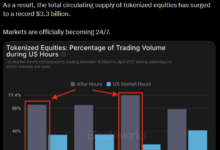
Simultaneously, the brokerage is closing the temporal gap between traditional finance and digital assets by launching true 24/7 stock trading. While Robinhood introduced overnight trading in 2023, weekends remained a blackout period. A new partnership with Bruce ATS, an alternative trading system, now enables Saturday and Sunday execution for select stocks and ETFs. This development effectively eliminates the last structural advantage crypto markets held over equities regarding availability, creating a unified always-on trading environment within a single application.

Perhaps the most forward-looking initiative is the integration of agentic AI trading. Users can now deploy autonomous agents powered by models from OpenAI or Anthropic directly within the app. Through a feature called Loops, these agents can execute trades based on predefined conditions without manual intervention. Over 150,000 agent accounts were created during earlier testing phases when Robinhood opened its API to external developers. This represents one of the first mainstream implementations of LLM-driven financial autonomy in a regulated U.S. brokerage, distinguishing it from experimental DeFi bots that operate outside traditional compliance frameworks.
The product blitz extends beyond core trading mechanics. Robinhood is integrating earnings contracts via Cboe, allowing speculation on specific corporate metrics like iPhone sales or EPS targets. Additionally, the launch of Robinhood Social embeds community-driven trading signals directly into the main platform, competing with emerging onchain social trading protocols. Company executives described the overarching goal as a singular account where asset class distinctions become invisible to the user.
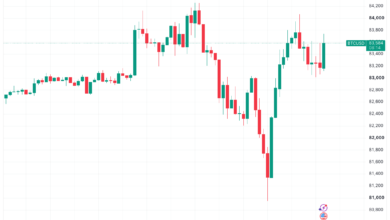
These expansions arrive as Bitcoin attempts to secure its best September performance on record. The asset is up approximately 7.3% this month, narrowly outpacing the 7.29% gain seen in September 2024. Maintaining this record requires holding above roughly $83,600 through month-end. Broader market sentiment remains cautious ahead of upcoming economic data releases, with major cryptocurrencies trading sideways and equity futures showing slight declines.
Institutional infrastructure continues to evolve alongside retail access. Cboe and S&P Dow Jones Indices extended their exclusive licensing agreement for S&P 500 options through 2051 and disclosed plans to explore tokenized options contracts. Such instruments could eventually bridge the liquidity fragmentation between traditional derivatives markets and blockchain-based settlement layers.
Capital formation activity remains robust despite macro uncertainty. Blockchain.com is targeting a $500 million IPO at a valuation approaching $6 billion following a confidential SEC filing. Separately, prediction market platform Kalshi is reportedly raising capital at a $40 billion valuation, underscoring sustained investor appetite for regulated speculative venues. Spot ETF flows also showed divergence, with Bitcoin funds attracting $66 million in net inflows Tuesday while Ethereum products saw modest outflows.
Privacy-focused developments are accelerating across both centralized and decentralized ecosystems. HSBC announced its Hong Kong dollar stablecoin will be branded RedCoin, with a consumer launch planned before year-end through its PayMe mobile banking app. On the decentralized front, Aztec Network revived zk.money on Ethereum, enabling private transactions using human-readable addresses. Meanwhile, Zcash developers are integrating Tachyon code to accelerate private payments as part of a broader November network upgrade. The urgency around privacy tooling was underscored Wednesday when attackers moved $3.9 million in stolen Zcash into shielded pools, highlighting the dual-use nature of cryptographic anonymity.