

Bitcoin Tests $84,000 as Dollar Hits 18-Month High
Rising Treasury yields and a 5.5% dollar surge since September are constraining crypto liquidity despite equity market turbulence.
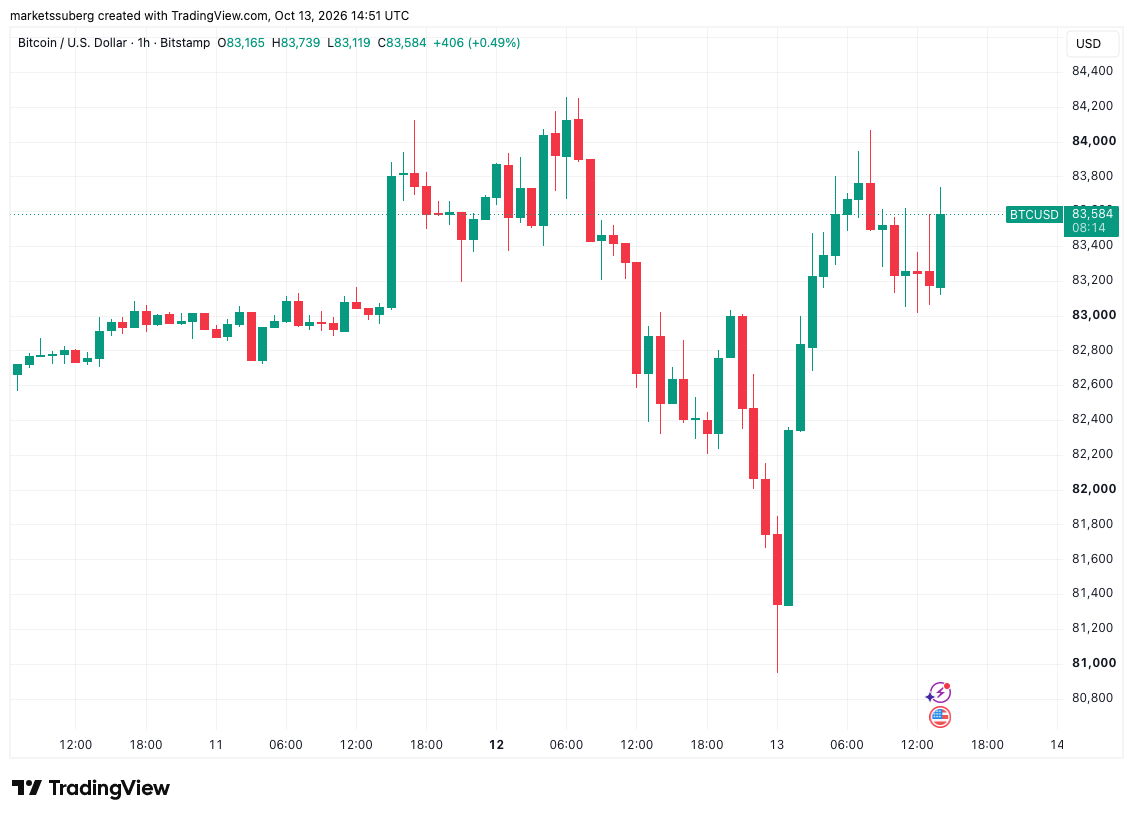
A resurgent U.S. dollar and elevated Treasury yields are capping Bitcoin’s advance toward $84,000, even as the cryptocurrency outperformed traditional equities during Tuesday’s session.
BTC/USD traded near $83,800 at the Wall Street open, holding a roughly 2% daily gain. The price action demonstrated notable resilience given the broader macroeconomic environment. Unlike previous market cycles where digital assets moved in lockstep with risk-on technology stocks, Bitcoin maintained its footing while major equity benchmarks absorbed heavy overnight selling pressure originating from Asian markets.
The U.S. Dollar Index (DXY), which measures the greenback against a basket of six major trading-partner currencies, climbed to 102.57 on Tuesday. That marks its highest level since April 2025 and represents a 5.5% surge since Sept. 9. Historically, a stronger dollar exerts downward pressure on alternative assets priced in USD. While the strict inverse correlation between DXY and Bitcoin has weakened throughout 2026, the current liquidity squeeze is suppressing institutional risk appetite across all non-yielding asset classes, according to analysis published Tuesday by CryptoQuant contributor Darkfost.


The dollar’s rally is directly tied to U.S. government bond yields hovering near their highest levels in nearly 25 years. When fixed-income instruments offer competitive returns, capital frequently rotates out of speculative markets. This dynamic is rippling through global asset pricing. “The most important development has been not just bond yields going up, but the volatility for bonds… and that’s starting to work its way out through asset pricing across the board,” Damien Boey, portfolio strategist at Sydney-based Wilson Asset Management, told Reuters.
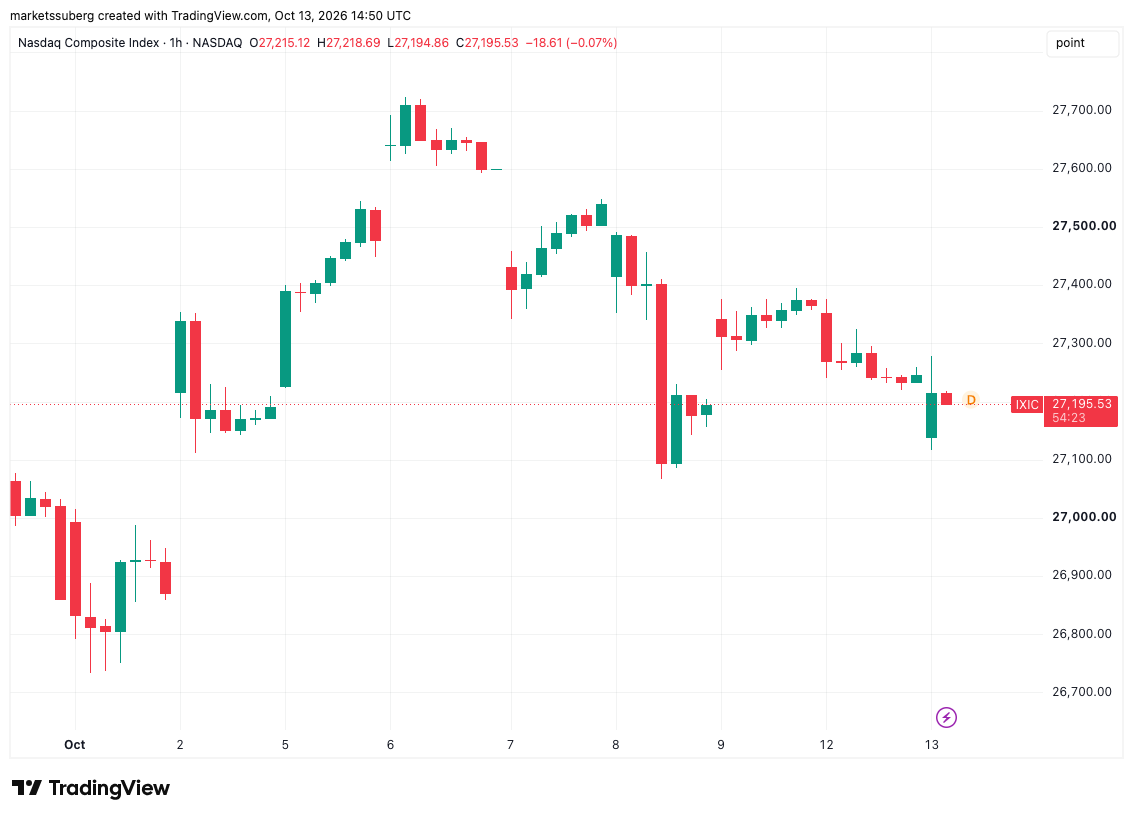
Despite these macroeconomic headwinds, U.S. stock indices avoided a severe contagion effect from South Korea. The KOSPI Composite Index plummeted 5.4% on Tuesday, extending a two-day decline of 7.4%. Semiconductor manufacturers led the Korean sell-off amid escalating concerns over artificial intelligence capital expenditures and intensifying competition from Chinese chipmakers. Futures contracts indicated a lower open for American equities, but both the S&P 500 and the Nasdaq Composite briefly turned positive in early trading before settling down less than 0.5%.
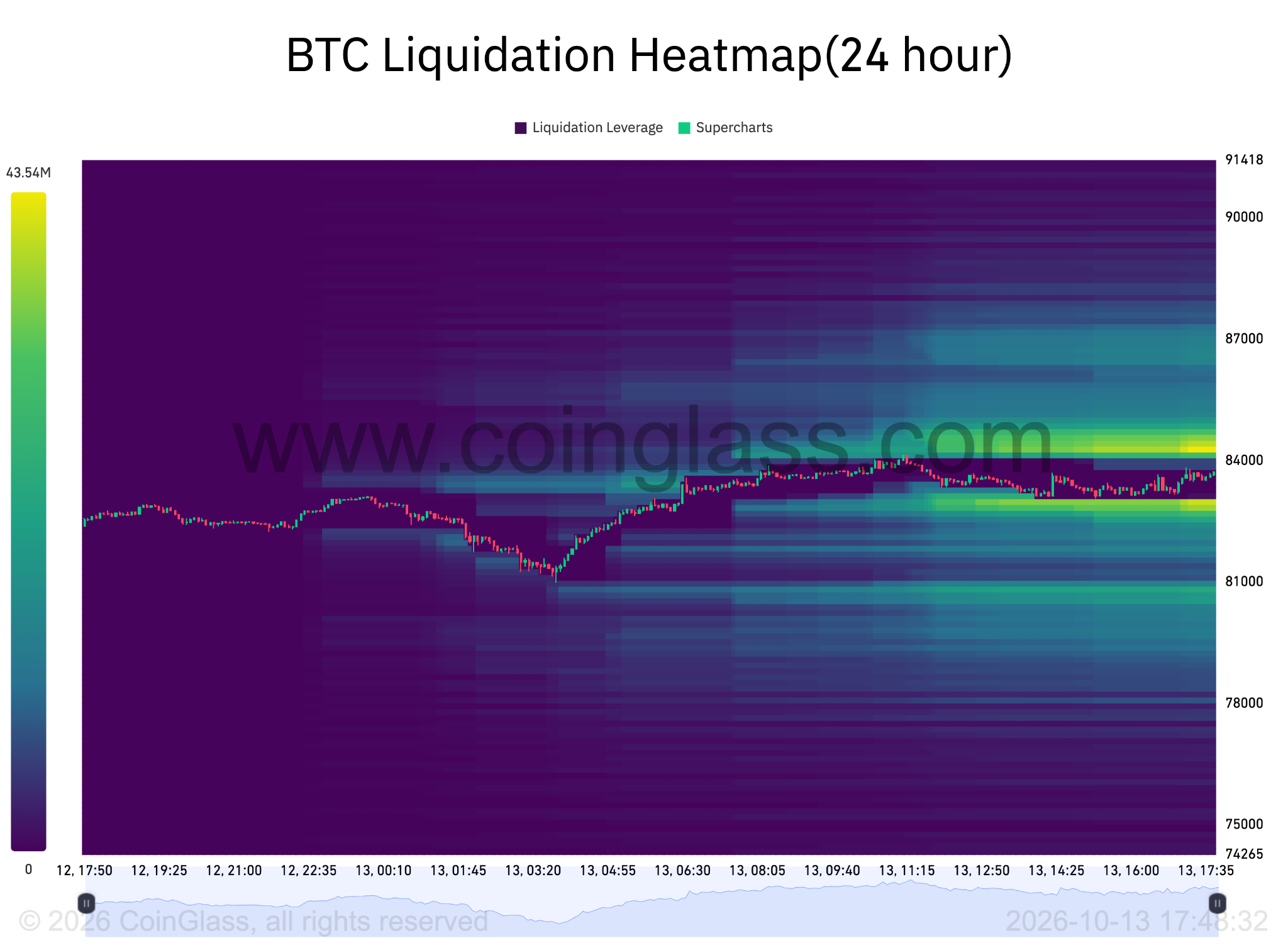
For Bitcoin to clear the psychological $84,000 threshold, buyers must overcome dense exchange order-book liquidity acting as immediate resistance. Data from derivatives tracker CoinGlass shows concentrated sell orders clustered just above current spot prices, creating a structural ceiling that requires significant volume to breach.
Market participants are now monitoring upcoming U.S. Consumer Price Index data later this week. Inflation readings will likely dictate near-term Federal Reserve interest rate expectations, serving as the primary catalyst capable of either breaking the dollar’s upward momentum or reinforcing the current constraints on Bitcoin’s price discovery.






