
GameCube vs. PS2: The Hardware Decisions That Split Their Fortunes
Different hardware strategies produced two very different console fortunes
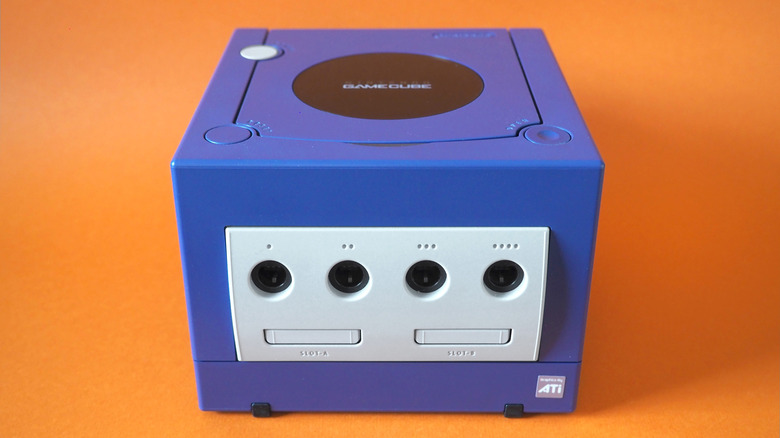
When Sony introduced the PlayStation 2 in North America in October 2000, it entered the market fourteen months before Nintendo launched the GameCube there in November 2001. Public marketing presented their competition through game franchises and brand identity, but the machines embodied opposing hardware philosophies. Nintendo pursued a streamlined, high-efficiency system intended to maximize throughput and simplify programming, while Sony used a complex multi-processor design that sacrificed initial development simplicity for long-term graphical capability.
Sony’s PlayStation 2 centered on the “Emotion Engine,” a custom 295 MHz processor co-developed by Sony and Toshiba and based on the MIPS R5900 architecture. Its floating-point and vector calculations were distributed across two dedicated Vector Units, VU0 and VU1, alongside a 147 MHz Graphics Synthesizer with 4MB of embedded DRAM (eDRAM).
Nintendo instead paired a 485 MHz “Gekko” CPU, built on IBM’s PowerPC architecture, with a custom 162 MHz graphics processor called “Flipper.” ArtX developed Flipper before its acquisition by ATI Technologies. The GPU placed hardware transform and lighting (T&L) processing and built-in S3 texture compression directly on the silicon, allowing the GameCube to render as many as eight polygon effect layers in a single hardware pass.


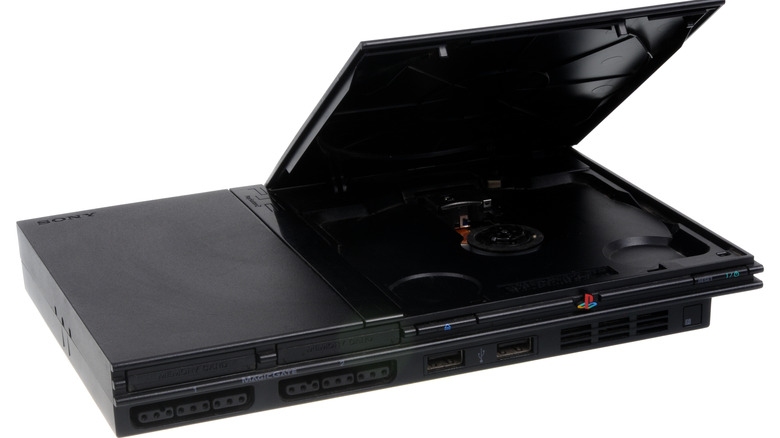
That GPU logic sent developers down different programming pathways. On PlayStation 2, achieving high polygon detail and complex visual lighting required studios to write custom code that divided workloads between the main CPU and the Vector Units. The process used multi-pass rendering, and the limited optimization tools in early development kits produced steep learning curves during the console’s first years.
Factor 5, the studio behind the launch title Star Wars Rogue Squadron II: Rogue Leader, said the GameCube’s Gekko CPU had raw computational power equivalent to the PlayStation 2’s main CPU and VU0 combined. Former Factor 5 president Julian Eggebrecht said that tasks assigned to the PlayStation 2’s VU1 were handled inside the GameCube’s Flipper GPU, giving Nintendo’s hardware advantages in texture handling and dynamic lighting calculations.
Memory access created another distinction. The PlayStation 2 used 32MB of Direct Rambus DRAM (RDRAM), which had high memory access latency. GameCube included 24MB of MoSys 1T-SRAM as main system memory and another 16MB of auxiliary audio/system RAM, for 40MB in total. The 1T-SRAM technology provided substantially lower latency and faster data access, making dynamic frame-rate maintenance in high-action software simpler.
Those hardware efficiencies did not eliminate the GameCube’s storage constraint. Nintendo worked with Matsushita Electric (Panasonic) to create a proprietary 8-centimeter miniDVD holding 1.5 gigabytes, a format intended to deter piracy and avoid the licensing fees associated with standard DVD technology.
Sony equipped its console with a standard optical drive that supported single-layer 4.7GB and dual-layer 8.5GB DVD-ROMs, along with compact discs. Third-party publishers bringing multi-platform games to GameCube often had to compress audio tracks, reduce video frame rates, or remove pre-rendered video sequences to stay within the 1.5GB limit. Some larger games required multi-disc releases on Nintendo’s system, increasing manufacturing costs for publishers.
The PlayStation 2’s software situation also changed as middleware became available. Criterion Games licensed its RenderWare engine, a suite designed to simplify geometry management and graphics pipelines across the PlayStation 2’s separate processing nodes, easing multi-platform software distribution.
Sony’s choice of DVD affected buyers beyond game storage. The PlayStation 2 launched in North America at $299 and operated as a self-contained DVD movie player when standalone home DVD players cost $300 to $500. That multimedia function presented the console as an affordable central living room entertainment device for households that did not play games.
Backward compatibility added another consumer advantage. Sony retained the original PlayStation’s CPU as an I/O processor, allowing the PlayStation 2 to run an existing library of thousands of original PlayStation titles out of the box. Nintendo did not provide GameCube backward compatibility with the Nintendo 64, whose games used read-only cartridges rather than optical media.
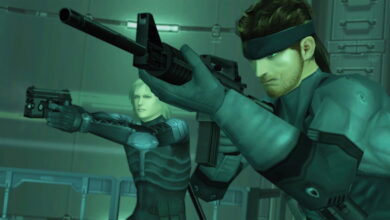
Sony later strengthened the platform with software exclusives from franchises including Metal Gear Solid, Grand Theft Auto, Ratchet & Clank, and Persona. Its overall software library eventually reached nearly 4,500 titles, and in 2004 the company released a smaller redesign, the PlayStation 2 Slimline, in the SCPH-70000 series.
Nintendo ended GameCube production in 2007 while shifting manufacturing infrastructure to its successor, the Wii. GameCube lifetime sales reached 21.74 million units globally.
Sony officially ended global PlayStation 2 production in January 2013, nearly thirteen years after the system’s debut. The console had sold 160 million units worldwide, making it the highest-selling video game console in history.