

Jeff Thomasson’s $100 Million Gift Reshapes Kelley’s Graduate Division
Record Indiana University donation connects Kelley graduate education with independent wealth management
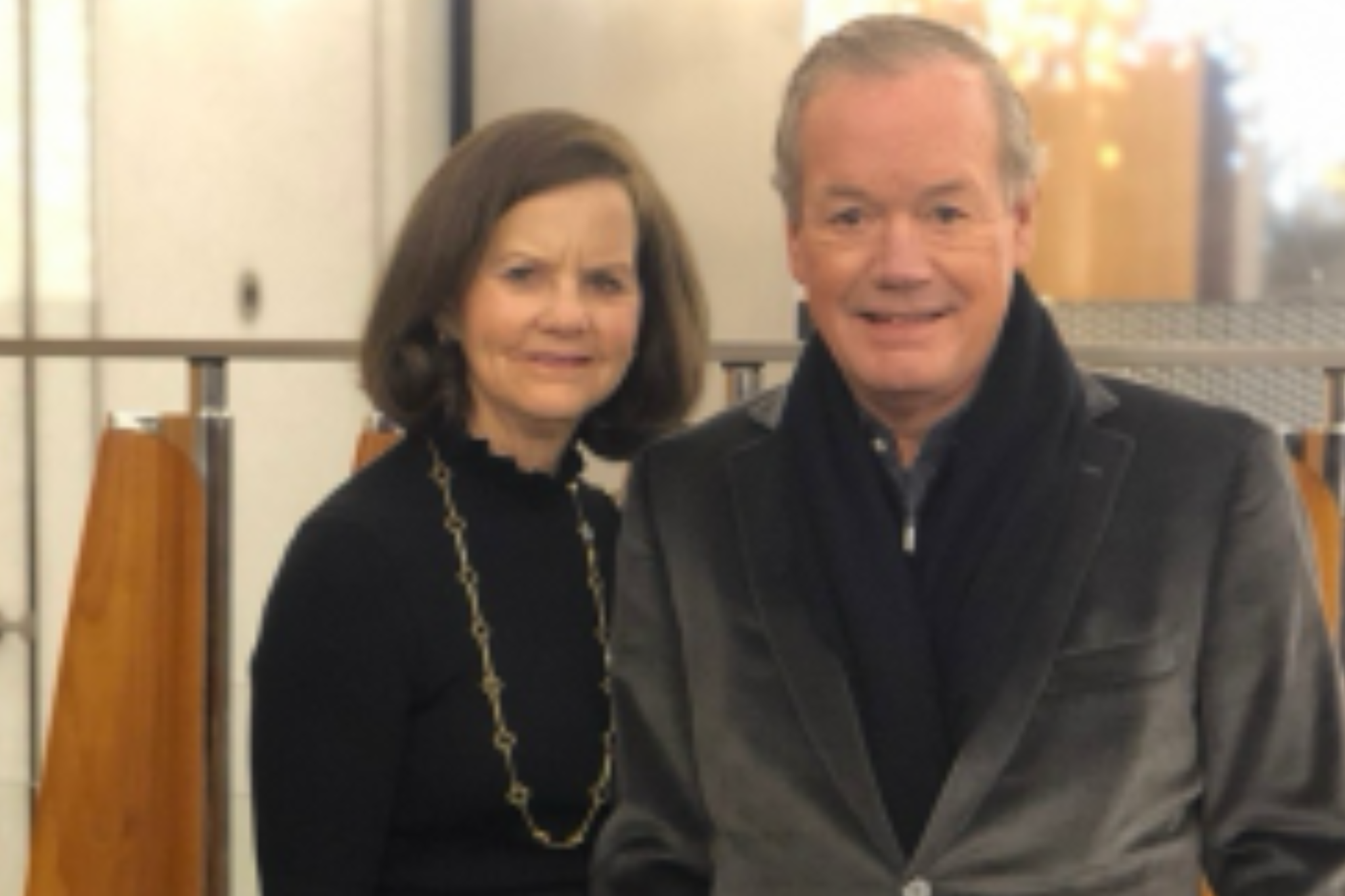
**BLOOMINGTON, Ind.** — The Indiana University Board of Trustees has approved the naming of the graduate division at the Kelley School of Business after wealth management executive Jeff Thomasson and his wife, Cheryl, committed $100 million to the university. It is the largest single gift from an individual in Indiana University’s 204-year history.
The Thomassons have now contributed more than $111 million to Indiana University. Part of the latest donation will support graduate business programs at the Kelley School, while another portion will go to the IU Lilly Family School of Philanthropy.
The business school began in 1920 as the IU School of Commerce and Finance. It took the name Kelley School of Business in 1997 after alumnus E.W. Kelley made a $23 million gift. The graduate division being named through the new donation oversees the university’s Master of Business Administration and specialized master’s degree offerings.


“The Kelley MBA program set the foundation for my career, and this gift is our way of paying forward the investment people made in us,” Jeff Thomasson said in a statement announcing the endowment. “We hope it encourages others to do the same, creating opportunities that will ripple across generations.”
The gift links one of Indiana University’s most prominent academic divisions with the independent wealth management industry Thomasson helped shape over four decades.
“`
[IMAGE-PLACEHOLDER]
“`
Thomasson earned his MBA from the Kelley School of Business in 1981, concentrating on investments and taxation. While completing the degree, he wrote a master’s thesis outlining a theoretical business plan for an independent wealth management firm. After graduation, he used the essay as the working blueprint for establishing Oxford Financial Advisors, now operating as Oxford Financial Group, Ltd.
He started Oxford Financial at age 23 in 1981 with $20,000 in graduate school debt. Double-digit interest rates and elevated national unemployment marked the economic environment at the time. Thomasson worked six days a week, made heavy use of cold calls and conducted roughly 1,000 client meetings each year to build a client base.
Thomasson entered financial services without family capital. His father, a construction worker, became disabled after an accident and died while Thomasson was in college. His mother worked as a bank teller, and a local oil distributor who had employed Thomasson during his teenage years funded his undergraduate tuition.
Oxford Financial adopted a fee-only advisory structure at its founding, rejecting the commission-based compensation model that dominated financial services in the early 1980s. Under the fee-only Registered Investment Advisor (RIA) model, advisors charge flat, hourly or percentage-of-asset fees and operate under a fiduciary mandate instead of collecting product sales commissions. Fee-only management later became widely adopted across the industry, although it was uncommon when Oxford Financial launched.
Headquartered in central Indiana, Oxford Financial has grown into one of the largest independent RIAs in the United States. The firm now oversees more than $38 billion in assets under advisement, employs 25 managing directors across seven regional offices and serves more than 700 institutional clients and high-net-worth families.
The IU Lilly Family School of Philanthropy, the other recipient of the donation, was established in 1987 as the Center on Philanthropy at Indiana University-Purdue University Indianapolis (IUPUI). It later expanded into the world’s first school dedicated exclusively to the study of philanthropy. The school researches charitable behavior and produces *Giving USA*, the annual report on national philanthropic trends, in partnership with the Giving USA Foundation.
The *Giving USA 2025* report published by the Lilly Family School said charitable contributions to educational institutions reached an all-time high of approximately $92 billion. Contributions to education expanded at a faster rate than giving to any other philanthropic sector.
That growth in private donations has occurred as public confidence in higher education has declined. Gallup polling from July 2024 found that 38% of American adults expressed “a great deal” or “quite a lot” of confidence in higher education, down from 57% when Gallup began tracking the question in 2015. Respondents cited rising tuition costs, lingering student debt burdens, uncertainty about return on investment and the integration of artificial intelligence in education as primary factors influencing their views.
The corporate sector remains divided over whether graduate business education is absolutely necessary. Critics of traditional management programs, including Tesla and SpaceX Chief Executive Officer Elon Musk, have publicly questioned the emphasis placed on MBA credentials in executive leadership. Microsoft Chief Executive Officer Satya Nadella, who earned an MBA from the University of Chicago Booth School of Business, has publicly credited graduate business training with providing the structural knowledge required to manage enterprise-scale technology organizations.
The $100 million commitment places the Thomassons among prominent private donors directing large-scale capital to higher education institutions, alongside tech executives such as Nvidia Chief Executive Officer Jensen Huang and philanthropist MacKenzie Scott.









