Industrial AI Adoption Stalls on Accuracy Gaps and High Costs
Executives cite 99.99% reliability requirements and tokenomics as primary obstacles to autonomous building and factory systems
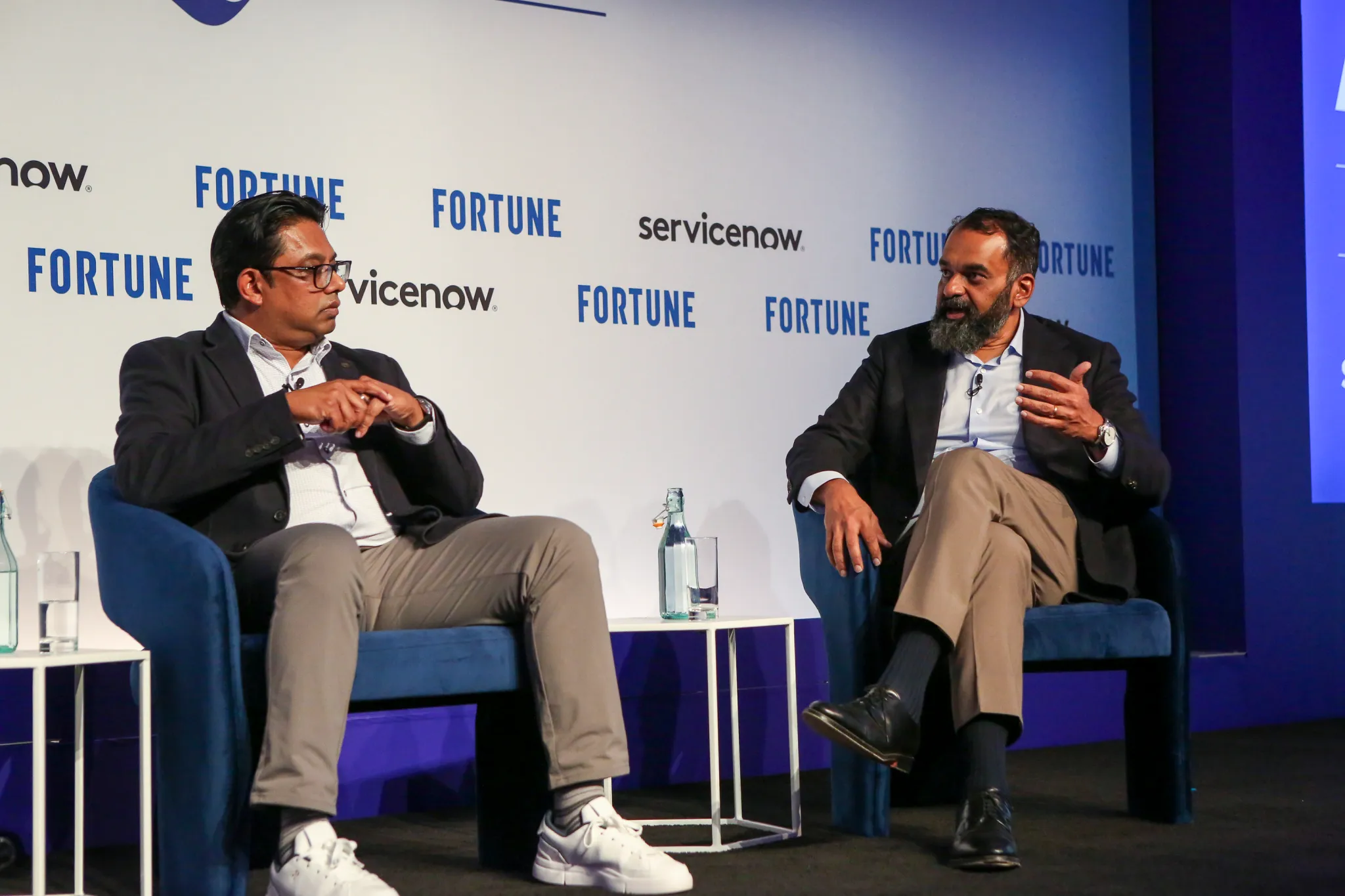
Deploying generative artificial intelligence in factories, commercial buildings, and water treatment facilities faces distinct barriers that do not exist in consumer software. While chatbots can tolerate occasional errors, industrial operators require near-perfect reliability, creating a massive performance gap between current frontier models and operational safety standards.
Honeywell Chief Technology Officer Suresh Venkatarayalu quantified this disparity at the Fortune AIQ Summit, noting that industrial customers demand 99.9999% accuracy for mission-critical systems. Current leading-edge AI models typically achieve only about 85% accuracy in complex physical environments. This 15-point deficit is not merely a technical shortfall; it represents an unacceptable safety risk in sectors where system failures can compromise human life or halt billion-dollar production lines.
Beyond reliability, economics frequently prohibit the use of top-tier models for high-volume industrial tasks. Ecolab Chief AI Officer AJ Wijesinghe reported that applying the most advanced available models to routine operations caused token costs to exceed the price of human labor. The company responded by optimizing its architecture and integrating open-source alternatives, reducing inference costs by 70% to 80%. This shift demonstrates that industrial AI deployment often prioritizes cost-efficiency and specific utility over raw model capability, utilizing tools like Anthropic’s Claude and OpenAI alongside smaller, specialized models.


The integration challenge extends to physical infrastructure lifecycles. Unlike consumer electronics that receive seamless over-the-air updates, building management and industrial control systems cannot tolerate downtime for software patches. A commercial HVAC or fire safety system requires continuous operation, making the update cadence common in automotive or mobile software unfeasible. Honeywell is addressing this by developing semi-autonomous frameworks where AI agents operate under human supervision, using protocols like BACnet to connect disparate assets while maintaining operator authority.
Data sovereignty further complicates cloud-dependent AI strategies. Industrial clients often refuse to send proprietary operational data to public clouds due to security and intellectual property concerns. To address this, Honeywell has partnered with Nvidia to fine-tune open-source Nemotron models that can run on-premises or at the edge. This approach allows companies to retain data control while avoiding the risks associated with unguarded open-source models, which Venkatarayalu described as potentially dangerous without enterprise-grade guardrails.
Successful industrial AI implementations are increasingly defined by horizontal integration rather than isolated pilot projects. Wijesinghe noted that single-function AI applications rarely generate measurable enterprise value. Instead, significant returns emerge when AI connects outcomes across sales, finance, and supply chain functions simultaneously. Ecolab projects $325 million in annual run-rate savings by 2027 through this integrated approach, emphasizing that process readiness and data foundations are as critical as the technology itself.
Current deployments focus heavily on predictive maintenance and resource optimization. Ecolab utilizes sensor networks in dishwashers, pest traps, and semiconductor cooling systems to reduce service visits and manage water usage for AI data centers. Honeywell reports that customers achieving 7% energy savings through traditional controls are now testing whether AI can unlock an additional 30% to 40% efficiency, though these gains depend entirely on solving the underlying latency and transaction cost constraints.