How to Store Garlic So It Lasts for Months
Why unpeeled bulbs rot in the fridge and how to safely handle peeled, sprouted, or frozen cloves.
Refrigerating unpeeled garlic is one of the most common kitchen mistakes in American households. The cold, humid environment inside a standard refrigerator triggers a biological response in Allium sativum that rapidly degrades its quality, turning a versatile staple into a bitter, sprouting liability.
Whole bulbs and individual cloves still wrapped in their papery skins belong outside the fridge. Ideal storage requires a cool, dark, and well-ventilated space hovering around 60 degrees Fahrenheit. A pantry shelf, a dark cupboard, or a root cellar provides these conditions. Under proper airflow at this temperature range, an intact bulb will remain viable for one to two months. Left uncovered on a countertop away from direct sunlight, that same bulb typically dries out or degrades within a week.
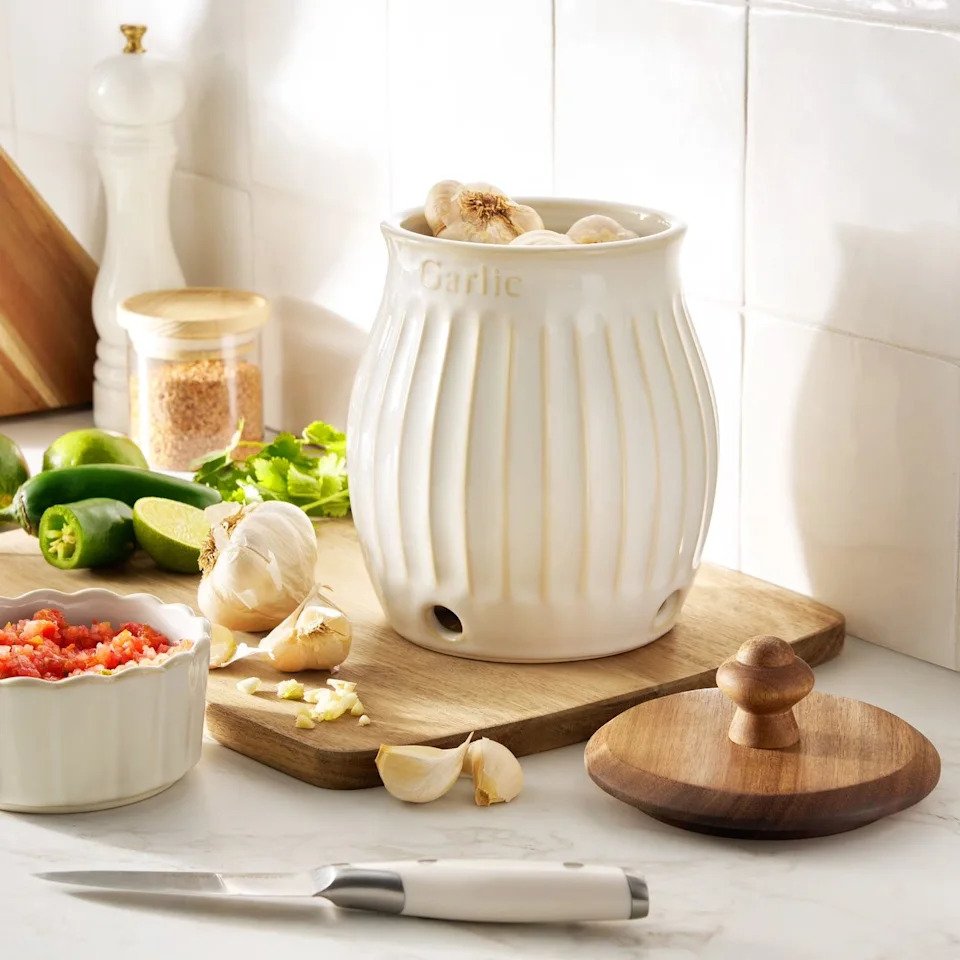
Vented ceramic garlic keepers sold for countertops serve a functional purpose beyond aesthetics. The holes allow necessary air circulation that prevents moisture accumulation. A loosely closed paper bag achieves the same effect without specialized equipment. Plastic bags and sealed containers trap humidity, accelerating mold growth and premature sprouting.


The rules reverse entirely once the protective skin is removed. Peeled whole cloves, minced pieces, and chopped garlic must go into the refrigerator immediately. Without their natural barrier, exposed cloves are highly susceptible to bacterial contamination, including Clostridium botulinum, which thrives in low-oxygen, room-temperature environments. Storing peeled garlic in an airtight container or zip-top bag in the refrigerator limits this risk. Whole peeled cloves survive about seven days under refrigeration. Chopped or minced garlic deteriorates faster, losing its sharp flavor profile and becoming unsafe after roughly three days.
Commercial jarred minced garlic found in supermarkets lasts significantly longer than homemade equivalents because manufacturers acidify the product with citric or phosphoric acid to inhibit bacterial growth and preserve color. Home cooks attempting to store fresh garlic submerged in oil at room temperature face a severe botulism risk, as the anaerobic environment allows toxin-producing bacteria to multiply undetected. The FDA explicitly warns against storing homemade garlic-in-oil mixtures outside of freezing temperatures.
For long-term preservation beyond the two-month pantry window, freezing offers a reliable alternative. Whole unpeeled bulbs can go directly into the freezer, though the texture becomes slightly spongy upon thawing, making them better suited for cooked dishes rather than raw applications like vinaigrettes or bruschetta. Minced garlic frozen flat in zip-top bags allows cooks to break off portions as needed without defrosting the entire batch.
Sprouted garlic frequently prompts unnecessary waste. Unlike potatoes, where green discoloration signals the presence of toxic solanine, a green shoot emerging from a garlic clove poses no health threat. The sprout itself carries a sharper, more bitter flavor profile that can overpower delicate dishes. Slicing the clove lengthwise and removing the green germ restores a milder taste. Agricultural studies have also shown that sprouted garlic contains higher concentrations of certain antioxidants compared to fresh bulbs, a byproduct of the plant’s defense mechanisms activating during germination.
Garlic varieties also dictate longevity. Softneck garlic, the type predominantly braided and sold in major U.S. grocery chains, stores longer than hardneck varieties favored by farmers’ markets and specialty growers. Hardneck types offer more complex flavors but generally begin deteriorating within four to six months even under perfect root-cellar conditions, while softneck bulbs can occasionally last up to nine months when cured properly after harvest.