How Steve Jobs’ Warning About Disney Shaped Apple’s Future
Jobs studied Disney's stagnation after Walt's death and used it to build a succession plan that forbade imitation.
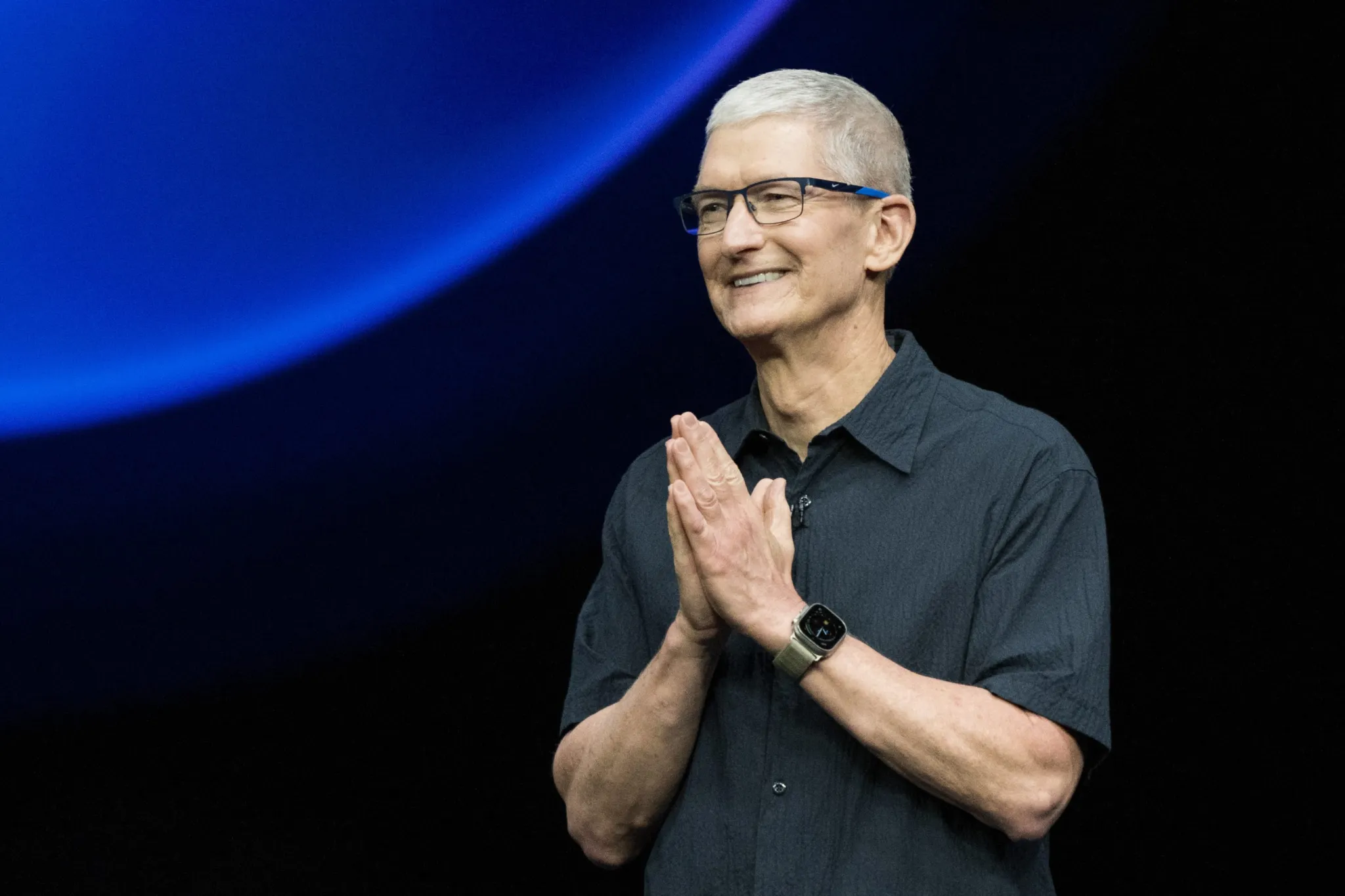
Fifteen years after Steve Jobs died, the most consequential decision he made for Apple wasn’t a product. It was an instruction to his successor: stop asking what I would do. That directive, born from watching Walt Disney Co. stall after its founder’s death, has now passed to John Ternus, who took over as chief executive in September.
Jobs explicitly modeled his succession plan on what he viewed as a corporate failure elsewhere. According to Tim Cook, speaking earlier this year on CBS Sunday Morning, Jobs watched Disney suffer through a “paralysis of sitting around and talking about what Walt would do” following Walt Disney’s death in 1966. For decades, executives at the entertainment giant struggled to innovate while operating in the shadow of their founder’s legacy. Jobs was determined not to let Apple become the next case study in founder worship.
“He did not want that for Apple,” Cook told CBS. When Jobs called Cook to his house to offer him the CEO role, he attached a specific condition. “Never ask what I would do, just do the right thing.”


The mandate broke with Silicon Valley tradition. Founder-led tech companies rarely survive their creators without fracturing. Microsoft spent years drifting after Bill Gates stepped down as CEO in 2000 before Satya Nadella stabilized it more than a decade later. Apple had already botched leadership changes once before, during Jobs’ own ouster in 1985, which nearly bankrupted the company by 1997.
Cook, who joined Apple in 1998 after working at Compaq and IBM, ran operations rather than design. He became COO in 2005. Under his watch, Apple crossed a $5 trillion market capitalization threshold, driven less by the theatrical product reveals Jobs favored and more by supply chain dominance, services revenue, and aggressive privacy positioning. Cook stepped down last month. Ternus, previously senior vice president of hardware engineering, is now navigating the top job.
Jobs’ refusal to micromanage from the grave extended beyond Apple’s campus. Salesforce CEO Marc Benioff recounted on Lenny’s Podcast in 2024 that Jobs helped him break through what Benioff called “entrepreneurs block.” The instructions were blunt: grow the business tenfold in two years, land a massive customer for Salesforce automation, and build an application economy. Benioff interpreted the final point as a directive to create AppExchange. He later handed Jobs the App Store trademark and the appstore.com domain as thanks.
Howard Schultz received harsher counsel. In 2008, Starbucks was collapsing. Schultz confided in Jobs about the crisis. Jobs told him to fire his entire leadership team, predicting they would leave within nine months regardless. Schultz initially dismissed the advice as preposterous. Every executive departed except one.
Inside Apple, the culture Jobs left behind relies heavily on internal friction. Cook described a strategy where employees are expected to “argue and debate everything” in meetings. “One plus one is equal to three, not two,” Cook said, recounting Jobs’ view on collaboration. “If you care enough that you call somebody at 10 at night because you just had an idea, that incredible things can come out of that.”
The philosophy traces back to Jobs’ time building Pixar Animation Studios, which he purchased from LucasFilm in 1986. Disney acquired Pixar in 2006. Jobs applied the same standard of relentless focus across both ventures. “You say ‘no’ to a thousand things to say ‘yes’ to the one that’s truly important,” Cook recalled.
Ternus inherits a company defined by that subtraction. He also inherits the rule Jobs laid down in his living room: good isn’t good enough, it has to be insanely great, but the method for getting there belongs entirely to whoever is currently running the place.