John Ternus Takes Apple Into Its $5 Trillion Era
Ternus inherits Apple’s biggest product and financial transition yet
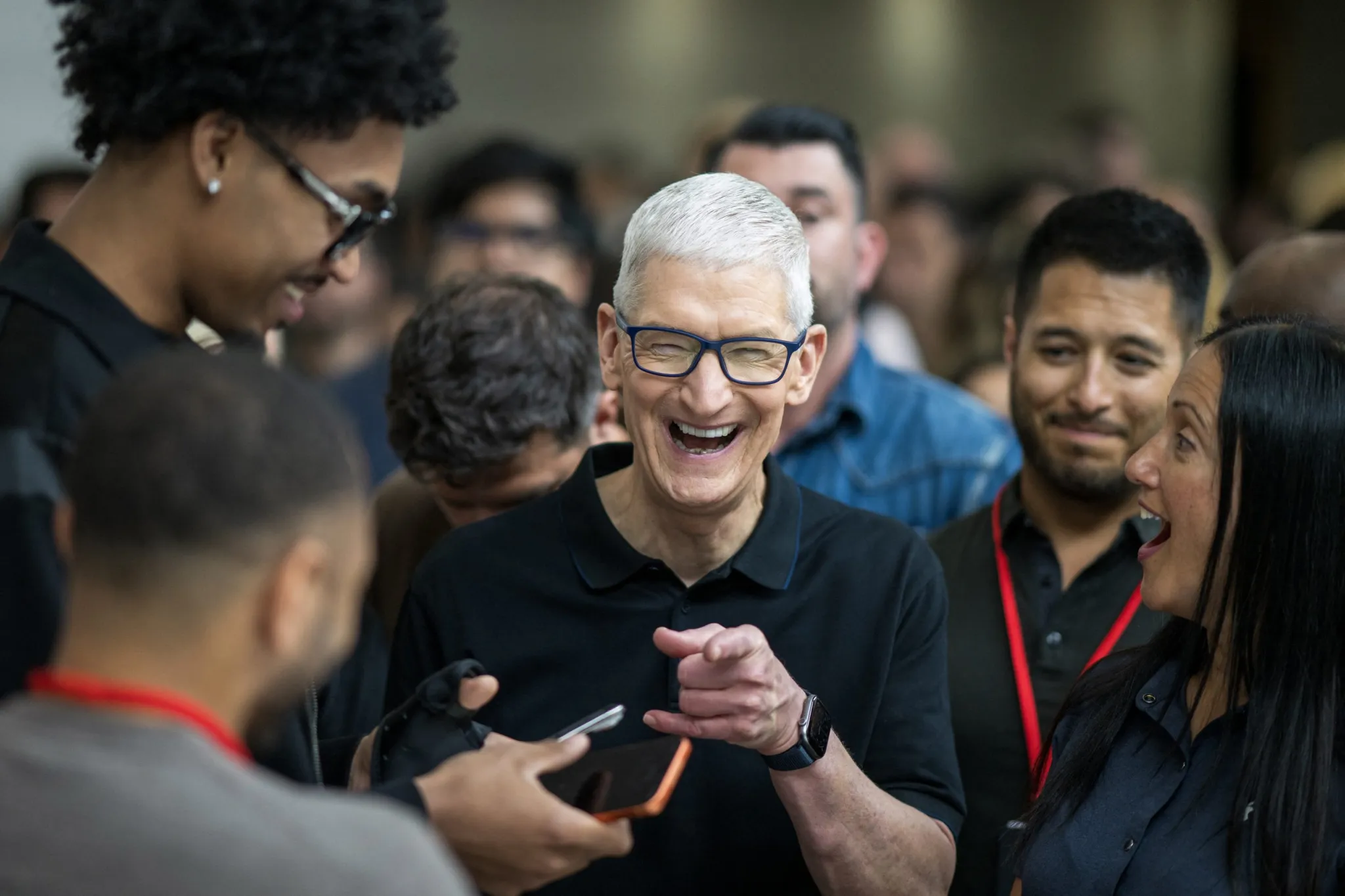
CUPERTINO, Calif. — John Ternus has officially become chief executive officer of Apple Inc., taking charge as the company introduces a new product generation built around its Duo folding iPhone. His appointment comes as Apple navigates an unprecedented $5 trillion financial footprint.
Ternus succeeds Tim Cook, who stepped down as CEO on Sept. 1 to become Apple’s executive chair. Cook leaves behind $147 billion in cash and liquid assets after overseeing 2,000% stock growth during his 15-year tenure. Apple reached a record $5 trillion market valuation in July, becoming only the second company in history to reach that milestone.
The new CEO joined Apple’s product design team in 2001 and most recently served as senior vice president of hardware engineering, overseeing the Mac, iPhone, iPad, and AirPods lines. His public debut in the role came at Apple’s September product launch event, where he unveiled the Duo folding iPhone and said, “We’re going to change the world in ways we can’t imagine today.”


Cook had expanded Apple beyond the hardware-centric company he took over in 2011. The services division he built around Apple’s hardware base generated $109 billion in revenue over the past fiscal year, making it Apple’s second-largest revenue generator behind the iPhone. Its platforms include iCloud, Apple Music, Apple Pay, Apple TV+, Apple Arcade, and Apple Fitness+.
The company’s expansion also included wearable technology. Apple introduced the Apple Watch in September 2014 and released it in early 2015, despite industry skepticism about consumer adoption and aesthetics. The device later became a multibillion-dollar product line with widespread adoption among diverse demographics. AirPods wireless headphones followed in 2016, expanding Apple’s position in the wearables market.
Cook’s financial and operational foundation was shaped by supply-chain mechanics and global operations, which he managed after co-founder Steve Jobs recruited him to Apple in 1998. He became executive vice president of worldwide sales and operations in 2002 and was appointed chief operating officer in 2005.
As CEO, Cook made long-term commercial agreements with global component suppliers and frequently prepaid vendors to secure manufacturing capacity years in advance. That operational leverage helped Apple maintain supply chain priority for critical materials during global manufacturing disruptions, including the COVID-19 pandemic. “He created an incredibly efficient organization relative to the rest of the tech world,” said David Yoffie, a professor at Harvard Business School who has authored case studies on Apple’s business operations.
The same strategy brought Cook into complex international trade negotiations during the administration of U.S. President Donald Trump. To protect Apple’s Asian manufacturing network and hardware margins, Cook negotiated directly with Washington officials, pledged $600 billion in domestic U.S. investments, and secured key exemptions from federal tariffs on electronics manufactured in China in 2025. He maintained those manufacturing arrangements despite political friction, including an April social media post in which Trump claimed Cook had called him to “kiss my ass.”
Apple’s corporate posture also changed under Cook through positions on user privacy, legal precedent, and corporate governance. In February 2016, the company opposed a federal court order obtained by the FBI that requested custom software to bypass encryption on an iPhone used by one of the perpetrators of the San Bernardino mass shooting. Apple argued that creating a law-enforcement backdoor would undermine the security architecture of all iOS devices worldwide.
“That refusal really told everybody that Apple sees your privacy as the most important thing,” said Jo-Ellen Pozner, a business professor at Santa Clara University. Pozner said Cook moved Apple away from a founder-centric culture dominated by Jobs’ personality and toward an organization guided by institutional values.
Cook also took public positions on immigration reform, educational equity, and diversity in corporate leadership. In October 2014, he became the first chief executive of a Fortune 500 company to publicly come out as gay. “You want to be the pebble in the pond that creates the ripple for change,” Cook said in a 2015 interview with Fortune.
His tenure nevertheless included prominent product setbacks and canceled development projects. Apple launched Apple Maps in 2012 to replace Google Maps on iOS, but early mapping errors and software glitches led to public criticism and a public apology from Cook. Siri, Apple’s virtual assistant, faced persistent performance criticism; the company canceled the AirPower wireless charging mat because of engineering flaws; and it terminated Project Titan, a decade-long effort to design and build an autonomous electric vehicle that cost billions of dollars before being abandoned without commercial production.
When Steve Jobs resigned as CEO in August 2011 shortly before his death, industry analysts questioned whether Cook could maintain Apple’s momentum. Molly Wood, then a CNET editor, reflected the broader consensus among tech commentators at the time of Cook’s appointment: “I don’t see [Cook] as the kind of person who could ever have the focus, the kind of maniacal dedication [as Jobs].”
Cook did not replicate Jobs’ approach to product development. He concentrated on operational resilience, long-term supplier commitments, and subscription-based revenue channels. “The founder story of Apple was so mythical and present that Tim Cook could have disappointed everybody by just being himself,” Pozner said. “But by being himself, he actually exceeded all expectations.”