French Police Lost Control of Cities for Hours as Riots Expose Intelligence Gaps
Police lost operational control for hours; military deployed as €1B damage reveals systemic crisis
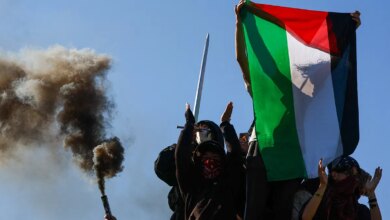
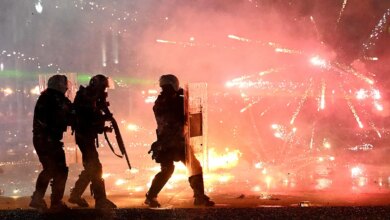
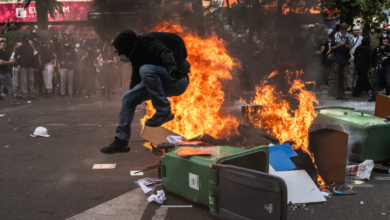
PARIS — French authorities acknowledge they lost operational control of multiple urban districts for several hours during last weekend’s unrest, a lapse that has triggered internal investigations into intelligence failures and prompted the government to deploy military units alongside police for the first time in decades to secure public buildings.
Prime Minister Jean-François Lecornu confirmed the “massive police operation” planned for Saturday will include 45,000 officers backed by 3,000 military personnel from Operation Sentinelle, the domestic counterterrorism force created after the 2015 attacks. The deployment marks a doctrinal shift: soldiers will guard fixed sites — prefectures, city halls, police stations — freeing riot police for mobile interventions.
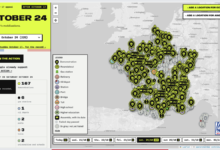
The decision follows admissions by senior officials that coordination between the DGSI domestic intelligence agency, the National Police’s Central Directorate of Public Security, and local prefectures broke down during the peak violence on Friday night. According to a leaked internal memo first reported by Le Monde, real-time drone feeds from Marseille and Lyon were not shared across agencies for over three hours while police headquarters in Marseille’s 14th arrondissement came under sustained attack.
“We had the eyes but not the nervous system,” said a senior police union official who spoke on condition of anonymity because the investigation is ongoing. “The command chain fractured. Unit commanders on the ground were making tactical decisions without strategic picture.”
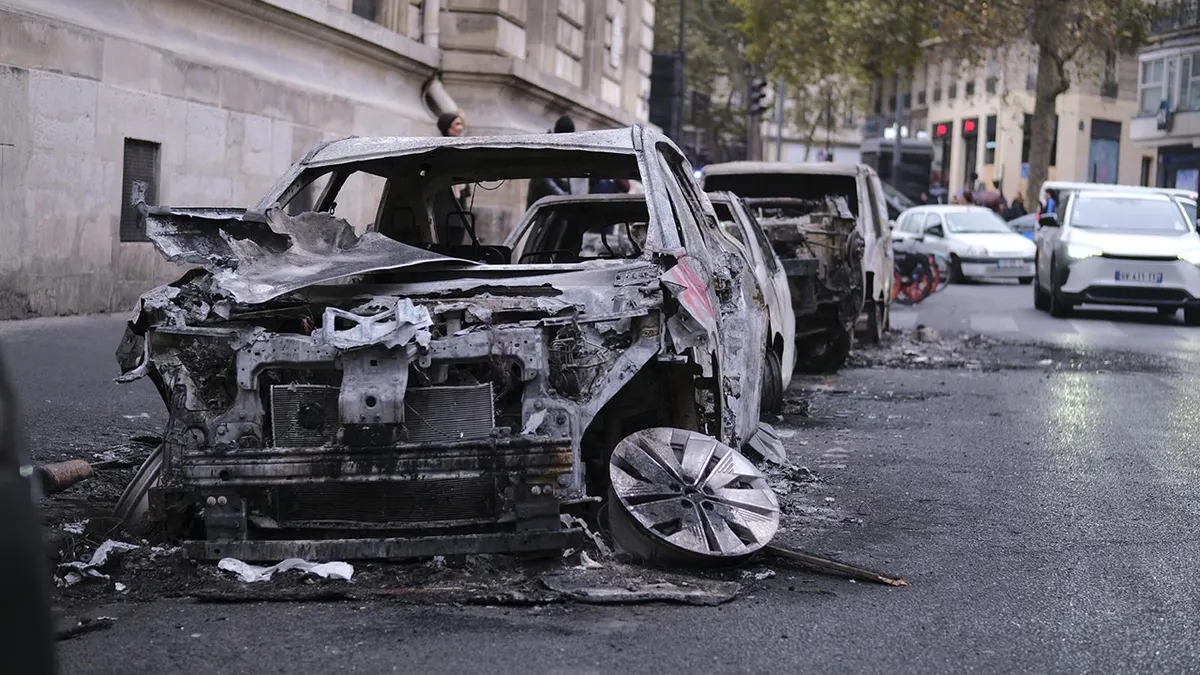
The violence produced staggering material costs. The French Insurance Federation estimates insured losses at €940 million (€1.02 billion), the highest since the 2005 suburban riots. Small businesses — bakeries, tobacconists, independent retailers — account for 68% of claims. Many operate on margins too thin to absorb deductibles or coverage exclusions for “civil commotion.”
Tourism bookings for the November-to-January period have dropped 22% year-over-year, according to Atout France, the national tourism agency. Hotel occupancy in central Paris fell to 41% last week, versus 78% in October 2025. The sector employs 1.3 million people and contributes 7.4% of GDP.
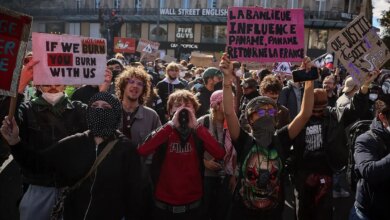
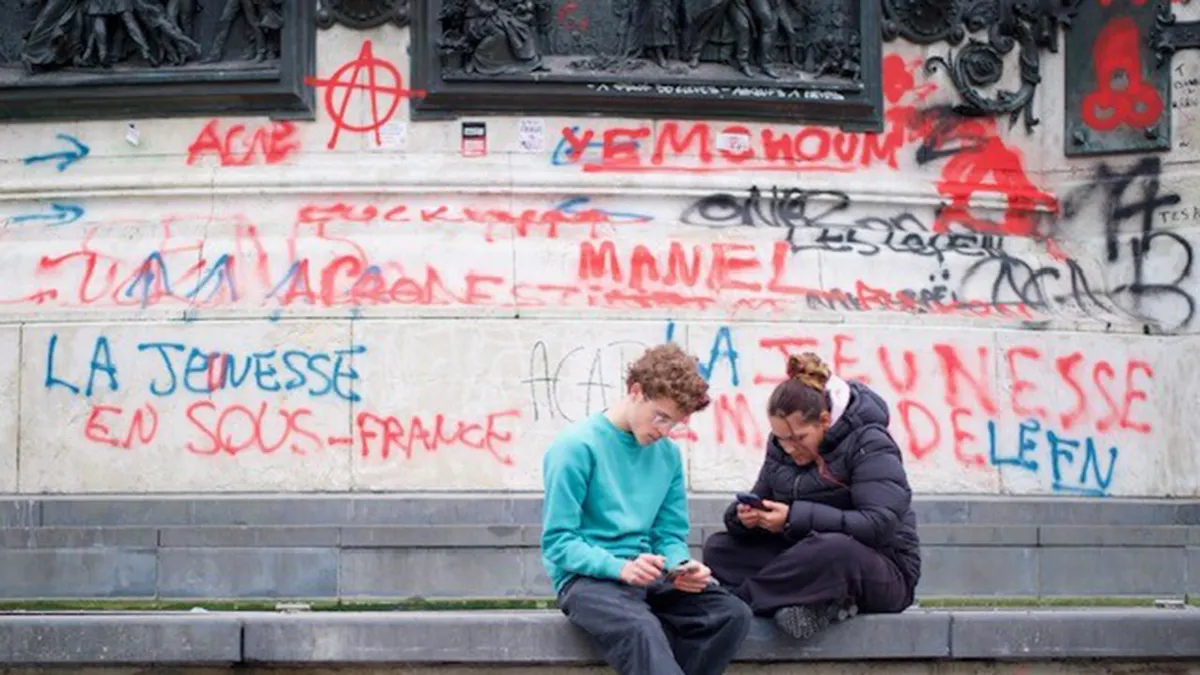
The unrest originated in student protests against the ParcourSup university admissions algorithm, which critics say reinforces class stratification. But the rapid escalation — 2,500 arrests nationwide, 1,000 officers injured, attacks on 17 prefectures or sub-prefectures — caught analysts off guard. The DGSI had assessed the threat level as “moderate” in its October 12 bulletin.
“The intelligence failure isn’t about missing a plot,” said Sylvain Besson, a security researcher at the French Institute of International Relations. “It’s about failing to see how localized grievances metastasize through encrypted channels into coordinated attacks on state symbols across 30 cities simultaneously.”
Investigators have identified 140 individuals suspected of coordinating violence via Telegram and Signal groups. Of those, 37 have prior convictions for property crimes, not political offenses. The profile complicates the government’s narrative of “ultra-left” orchestration. Interior Ministry data show 62% of those arrested are French nationals aged 18–29 with no organizational affiliation.
The crisis arrives as France faces a €154 billion budget deficit — 5.5% of GDP — and the European Commission has placed Paris under enhanced surveillance for excessive deficit. Lecornu’s government has ruled out tax increases, leaving spending cuts as the only lever. The Justice Ministry’s request for €400 million in emergency funding for court backlogs and prison overcrowding was denied last week.
With the presidential election six months away, the crisis has scrambled political calculations. National Rally leader Marine Le Pen has called for a state of emergency under Article 16 of the Constitution, which grants the president extraordinary powers. The Socialist Party opposes military deployments but supports a parliamentary inquiry into intelligence failures. Macron’s Renaissance party trails both in polling.
Saturday’s operation will test whether the state can reassert monopoly on force without deepening the legitimacy deficit that fueled the unrest. The barricades, as one prefecture official put it, are no longer just in the streets.