Ernest Wolfe’s 15,000-Object African Art Collection Faces an Uncertain Future
Ghanaian fantasy coffins find a future as Wolfe’s vast collection enters an uncertain dispersal

In June, approximately 40 monumental Ghanaian fantasy coffins will leave the Brooklyn cultural center Pioneer Works for the Chicago Cultural Center. Their final, permanent destination will be the Red Clay Studio in Tamale, Ghana, an open-access cultural institution founded by the internationally acclaimed Ghanaian artist Ibrahim Mahama.
The coffins are part of an extraordinary private archive assembled over fifty years by Los Angeles gallerist Ernest “Ernie” Wolfe III. Carved by legendary Ga artists including Seth Kane Kwei and Paa Joe, the collection of “Fantastic Afterlife Vehicles” is now endangered as Wolfe’s family confronts the task of dispersing his holdings.
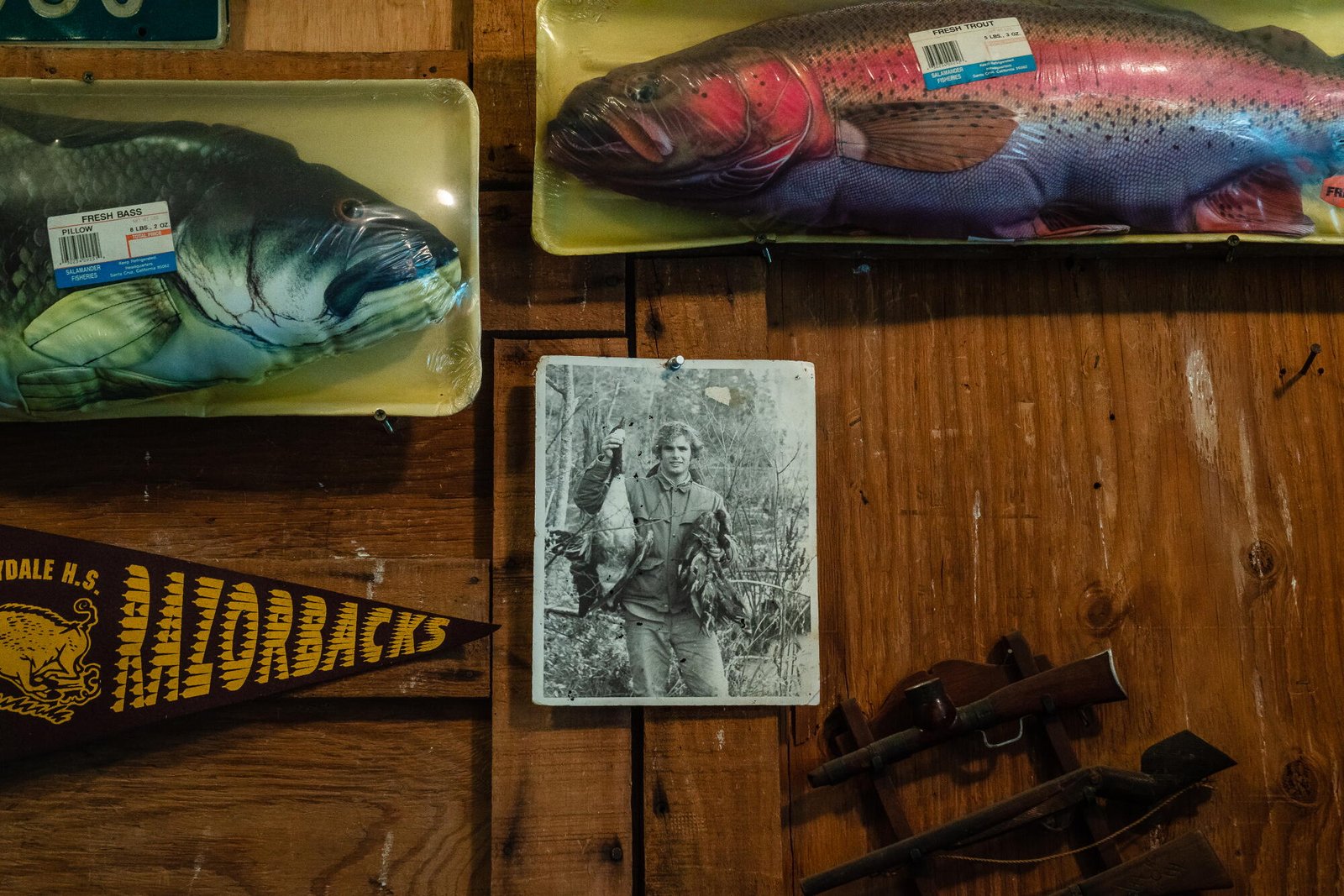


Wolfe, 75, is incapacitated by a traumatic brain injury that has left him unable to speak or move. His wife, Diane Wolfe, 72, and their sons Ernest Wolfe IV, 34, and Russell Wolfe, 32, are dealing with approximately 15,000 African art objects whose value has not been determined and whose contents have not been fully catalogued.
The material is divided between Wolfe’s namesake gallery, also known as Turkana, on Sawtelle Boulevard in West Los Angeles, and a massive off-site warehouse. The monthly lease on that storage facility has become financially unsustainable, prompting the family to seek buyers or institutional homes.
“My first choice would be to find that one person who might exist on the planet who would love to have all of it,” Diane Wolfe said. She acknowledged that keeping all 15,000 pieces together is highly unrealistic.
More than 100 fantasy coffins are included in Wolfe’s collection. Gabriel Florenz, the founding artistic and executive director of Pioneer Works, considers them the most significant such collection in the world. Mahama’s arts center has proposed building a dedicated facility to house the 40 coffins permanently after their exhibition in Brooklyn and Chicago.
Known as abebuu adeka, or “proverb boxes” in the Ga language, fantasy coffins emerged in the mid-20th century in Teshie, Ghana. Carpenters such as Seth Kane Kwei pioneered the figurative burial objects, which can take the form of giant fish, vegetables, cars, or tools and reflect the profession, character, or status of the deceased.
Over time, the functional burial items became highly sought-after sculptures in the global art market. Florenz’s plan to exhibit and then transfer the coffins to Red Clay Studio represents a rare model of restitution and preservation.
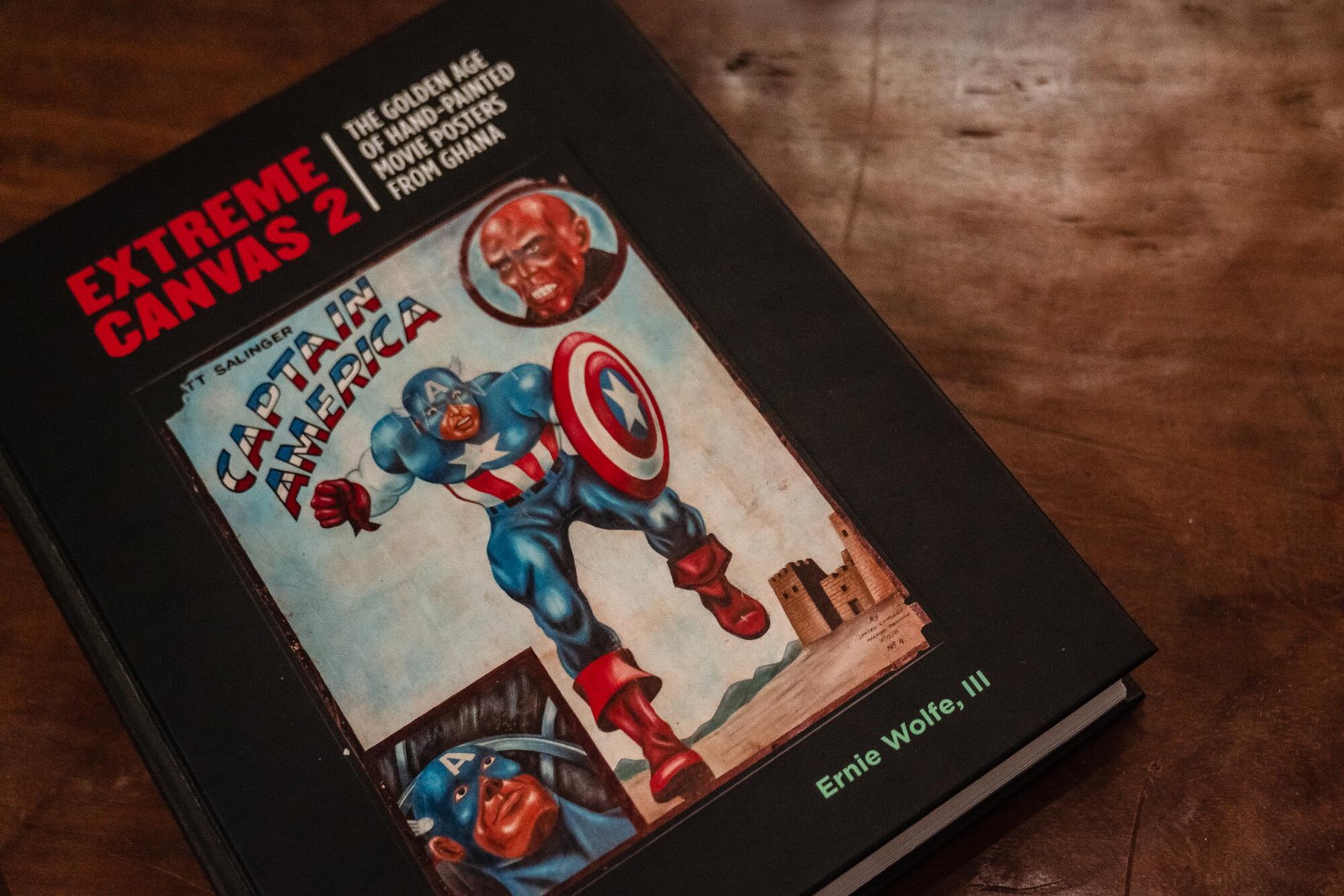
The scale of the wider collection reflects Wolfe’s appetite for objects that resisted standard Western collecting categories. Traditional Western connoisseurs of African art historically favored classical, polished figures and ritual masks from West and Central Africa. Wolfe instead concentrated on East African utilitarian design, contemporary painting, and popular culture.
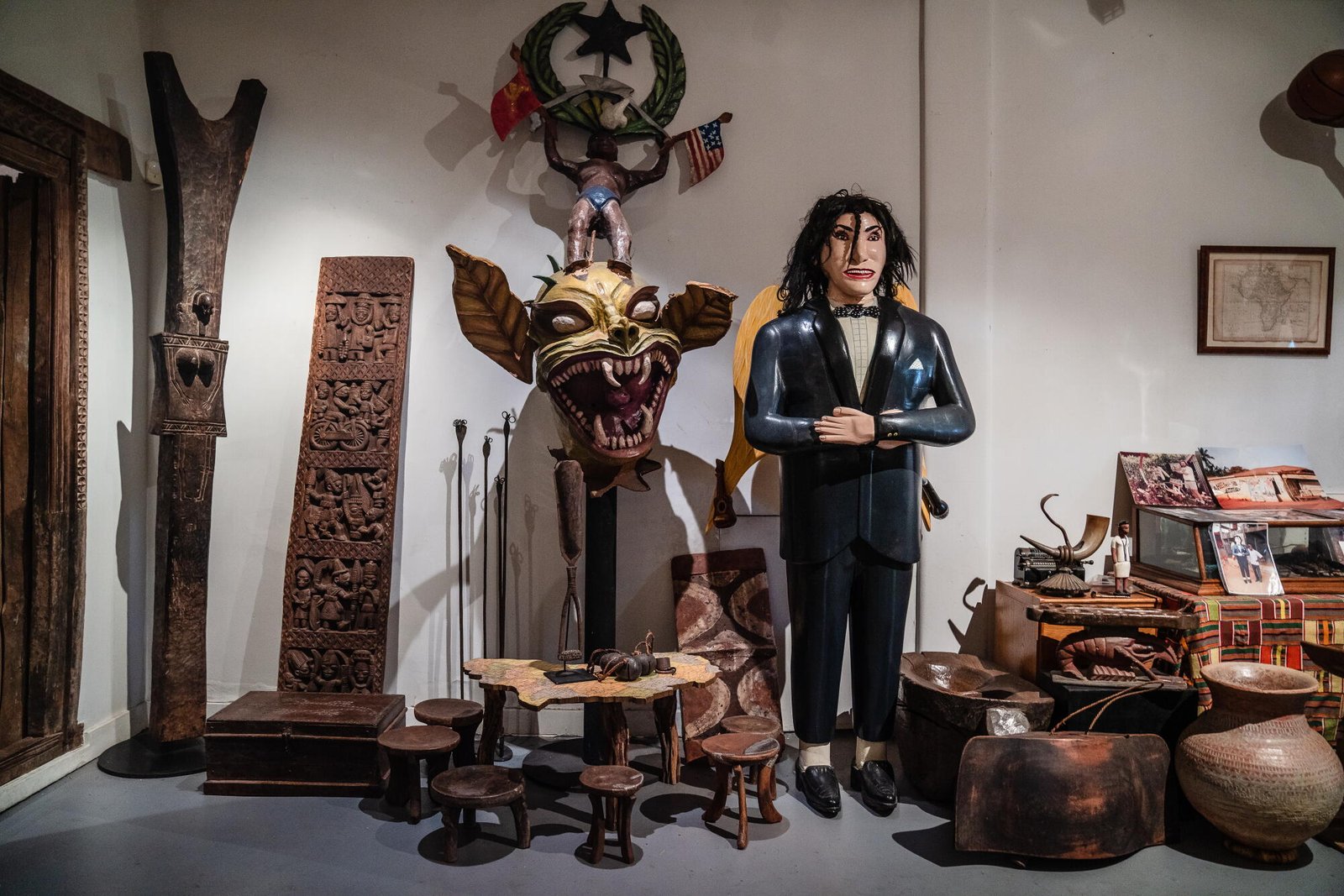
His 4,200-square-foot West Los Angeles gallery became a dense, eclectic maze. A car door by American assemblage artist Edward Kienholz and life-size sculptures of Michael Jordan and Michael Jackson stood alongside more than 800 hand-painted Ghanaian movie posters, 30 large papier-mâché masks from Guinea-Bissau, nearly 300 paintings by the satirical Kenyan artist Joseph Bertiers, and works by Ghanaian painters Isaac Azey and Kwame Akoto, popularly known as Almighty God.
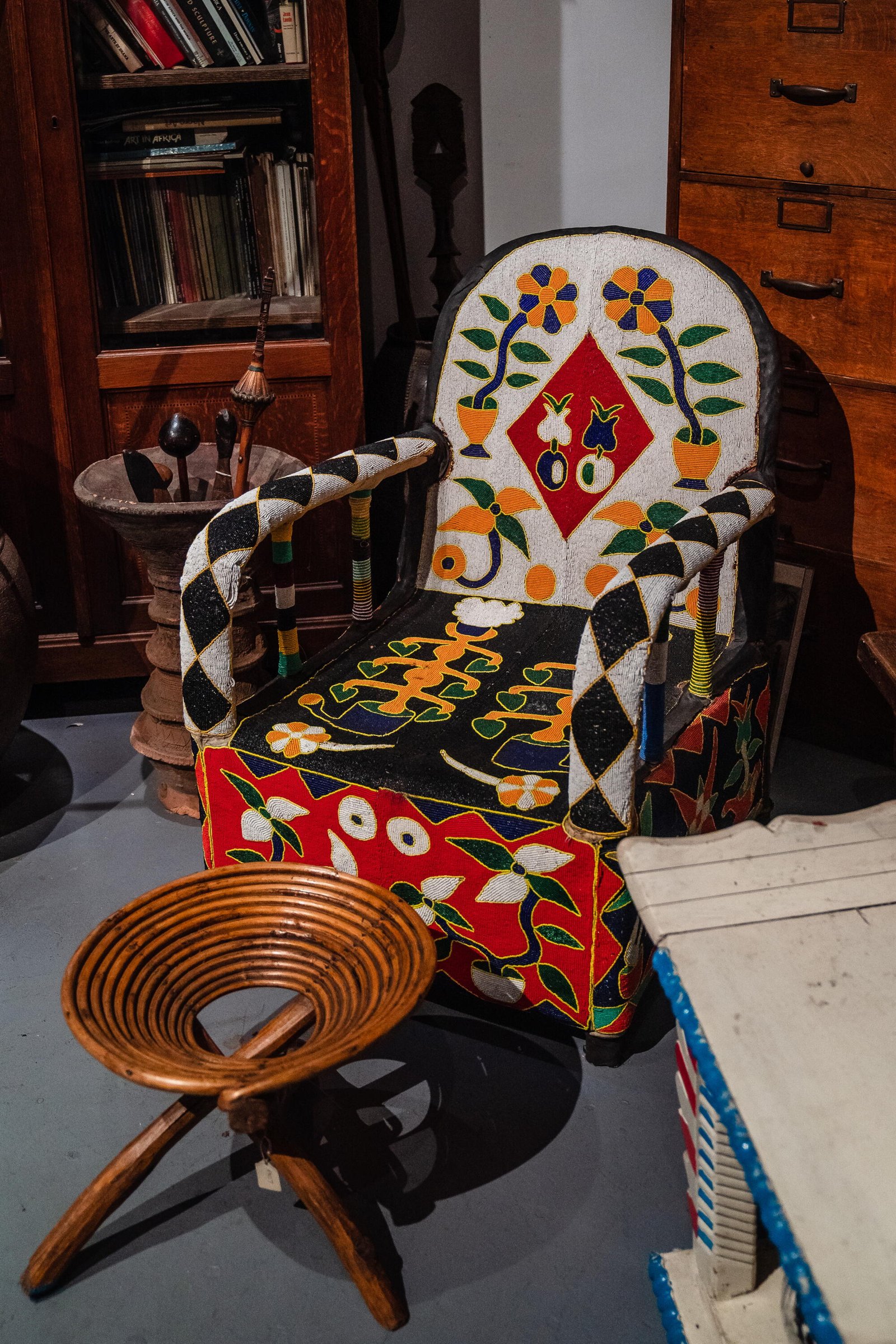
The gallery also contains portions of a reconstructed Ghanaian barbershop, a beaded club chair from the Yoruba people of Nigeria, and a Baganda tripod stool from Uganda.
Herbert “Skip” Cole, a professor emeritus of art history at UC Santa Barbara and a longtime associate of Wolfe, said the emphasis on unorthodox objects makes the collection unusually difficult to place. “It’s not what people normally think about as African art,” Cole said. “This is its uniqueness, in a way.”
The question of returning Wolfe’s objects to Africa also touches the museum world’s sensitive and highly publicized debate over collecting ethics. During decades of field-collecting, Wolfe purchased and sold numerous vigango, carved wooden memorial posts created by the Mijikenda peoples of Kenya’s coastal hinterlands.
Among the Giriama and other Mijikenda communities, vigango, singular kigango, are sacred, living representations of deceased members of the prestigious Gohu society of elders. They were erected in ancestral shrines and were never meant to be removed.
During the late 20th century, thousands of vigango were systematically stolen from shrines and sold to Western dealers and tourists. Local communities believed the theft brought severe ancestral curses, crop failures, and disease.

The ethics of collecting vigango became a major flashpoint. In 2018, the MIT Press academic journal African Arts published an article citing researchers who said that vigango sold by Wolfe were “probably stolen or acquired through ethically controversial means.”
Wolfe maintained throughout his life that he had obtained the sculptures legally, believing they had been ritually deactivated or abandoned before he purchased them. Diane Wolfe and Ernest Wolfe IV have both reiterated that he never wavered in his belief in the legality of his acquisitions.
Diane Wolfe does not believe the vigango currently in the family’s possession require formal repatriation. She is nevertheless receptive to returning other parts of the collection to Africa. “I would love to see some of the collection return to Africa where the right institutions exist and important works could be preserved and cared for in their home country,” she said.
Wolfe’s career as one of Los Angeles’s most distinctive art world figures began in 1973. A native of Santa Monica who grew up in Sherman Oaks, he graduated from Williams College and immediately traveled to Kenya, where he worked as a scuba diving instructor while beginning to collect local material culture.
His field-collecting soon attracted the attention of major cultural institutions. In 1979, he curated “An Introduction to the Arts of Kenya” at the Smithsonian Institution’s National Museum of Natural History in Washington, D.C. In 1981, he collaborated with Herbert “Skip” Cole on another major Kenyan art exhibition at UC Santa Barbara.
Paul Hayes Tucker, an art historian, professor emeritus at the University of Massachusetts Boston, and Wolfe’s former college roommate, described Wolfe’s passion for collecting as “insatiable.” His interests extended into a social life marked by legendary dinner parties at the Sawtelle gallery.
Major national publications covered the gatherings, which brought Hollywood figures such as actress Alfre Woodard and entertainment attorney Skip Brittenham together with West Coast artists including Ed Moses, Chris Burden, and Lita Albuquerque.
Wolfe’s relationships with artists were also collaborative. After the 2018 Woolsey Fire destroyed Lita Albuquerque’s Malibu home and studio, Wolfe exhibited her first new drawings. The gallery provided a venue and support system as she restarted her creative practice.
As the family manages Wolfe’s medical crisis, Cole and Tucker are discussing a possible acquisition with Williams College, his alma mater. The proposed acquisition would include the gallery’s extensive holdings of paintings by Joseph Bertiers and Kwame Akoto.
Many of the 15,000 objects still have no clear destination. “He loved mixing everything together and celebrating life,” Russell Wolfe said. “One of his sayings was, ‘When in doubt, go flat out.’”