Accelerating Heat Trend Threatens Bangkok with Severe Economic Loss and Public Health Strain
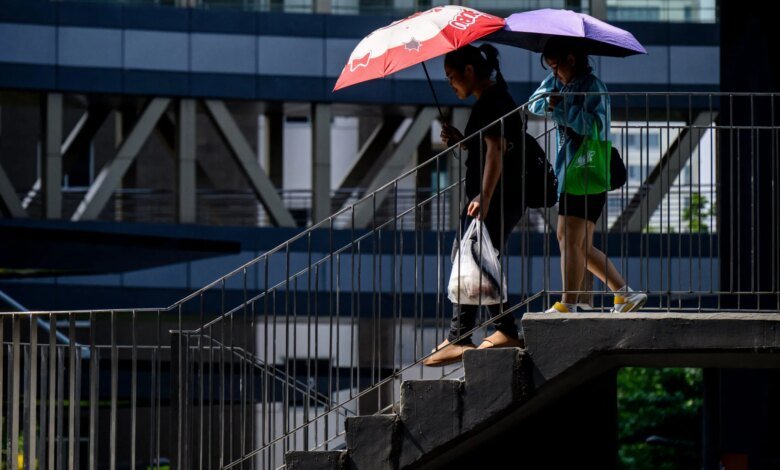
Bangkok is facing a sharp escalation in extreme weather, with climate projections indicating its average daily maximum temperature will reach 38.1 degrees Celsius by 2050—up from 33.3 degrees Celsius in 2000. According to data from the ASEAN Centre for Energy, this represents the steepest temperature rise projected for any capital city in Southeast Asia, with extreme heat days exceeding 35 degrees Celsius set to nearly triple to 120 days annually by mid-century. The long-term projections follow a severe heatwave in late June, when the city’s heat index climbed to a dangerous 51.9 degrees Celsius.
The financial and human toll associated with rising temperatures poses a major challenge to Thailand’s economy. World Bank estimates reveal that every one-degree Celsius increase in Bangkok’s average temperature could cause over 2,300 additional heat-related deaths each year. Financially, a single degree of warming is projected to result in more than 44 billion Thai baht ($1.3 billion) in lost wages from reduced labor productivity, alongside roughly 17 billion baht ($509 million) in elevated electricity expenditures. Key sectors supporting the national economy—including manufacturing, construction, agriculture, and tourism—face severe operational disruptions. Tourism, which historically contributes between 12 and 20 percent of Thailand’s gross domestic product, is particularly exposed as severe conditions deter outdoor travel during peak seasons.
These mounting economic impacts are expected to feature prominently during the annual meetings of the International Monetary Fund and World Bank Group, scheduled to take place in Thailand in mid-October 2026. The event marks the return of the global financial gathering to the country for the first time since 1991, a period when regional economic policy focused primarily on export-led manufacturing rather than physical climate risks. Today, international financial institutions increasingly view extreme heat stress as a direct macroeconomic risk capable of dampening sovereign growth and straining municipal budgets.
In response to immediate public safety concerns, the Bangkok Metropolitan Administration under re-elected Governor Chadchart Sittipunt has implemented an Urban Heat Management Framework. The municipality has deployed over 300 cooling centers, set up hydration stations, issued emergency health advisories, and mapped 379 high-risk zones to optimize emergency response teams. However, World Bank evaluations indicate these emergency measures are constrained because localized microclimate data is not fully incorporated into urban design, leaving the hottest neighborhoods vulnerable. Dense metropolitan areas frequently suffer from the urban heat island effect, a phenomenon where dense concrete, asphalt, and building structures absorb solar radiation and prevent effective night-time cooling.
To transition from emergency response to systemic urban planning, municipal authorities in the region are studying advanced technology platforms such as Singapore’s Digital Urban Climate Twin. The system utilizes 3D spatial modeling and fluid dynamics to simulate air movement and thermal radiation, enabling planners to assess the cooling impact of ventilation corridors and tree placement before allocating public funds. Simulations demonstrate that a single urban park can generate a cooling effect extending up to a 300-meter radius, offering a targeted solution in environments where structural density can elevate local temperatures by up to seven degrees Celsius.
Deploying large-scale urban adaptation projects across the region remains hampered by severe financial deficits. An analysis published by the Climate Policy Initiative in 2025 revealed that Southeast Asia requires an estimated $20 billion annually in adaptation investments, but receives only about $2.5 billion—creating an 88 percent funding gap that stands among the widest in Asia. Globally, climate finance continues to concentrate heavily on energy transition and carbon mitigation projects, leaving tropical megacities with limited international capital to finance built-environment resilience.