Congressional Hearing Highlights CFTC Staffing Deficit Amid Prediction Market Boom
Experts warn the understaffed regulator faces a steep climb as federal and state jurisdictions clash over event contracts.

The rapid expansion of prediction markets has left the primary federal commodities regulator struggling to keep pace, according to testimony delivered during a congressional hearing on Tuesday.
Speaking before the House Committee on Agriculture’s Subcommittee on Commodity Markets, Digital Assets, and Rural Development, legal experts warned that the Commodity Futures Trading Commission (CFTC) is currently ill-equipped to handle the oversight of platforms like Kalshi and Polymarket.
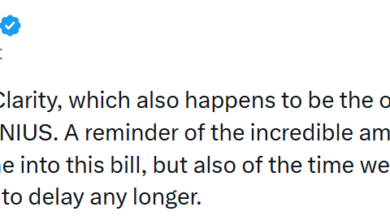
Carl Kennedy, a partner at the law firm Katten Muchin Rosenman, testified that the CFTC is significantly “short-staffed” given the explosive growth of these platforms. However, Kennedy suggested that the pending Digital Asset Market Clarity (CLARITY) Act, currently under consideration in the U.S. Senate, could provide the necessary resources and regulatory framework to address both digital assets and prediction markets.
The debate comes amid an aggressive push by CFTC Chair Michael Selig to assert federal authority over the sector. Since his Senate confirmation in December, Selig has maintained that the CFTC holds exclusive jurisdiction over prediction markets, categorizing their event contracts as “swaps.” Selig’s unilateral stance is particularly notable because he is currently the sole Senate-confirmed member of the commission, which is designed to have five members.
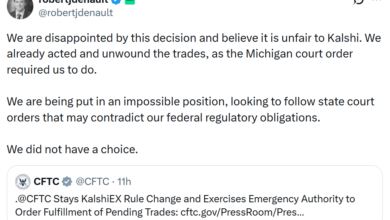
This aggressive jurisdictional claim has sparked a fierce backlash from state regulators and lawmakers. Several U.S. states have initiated legal action against Kalshi and Polymarket over sports betting offerings, arguing that local gambling laws should apply. The friction reached a boiling point recently when Selig instructed Kalshi to disregard a Michigan court ruling, a directive the platform warned left it trapped between conflicting state and federal mandates. Some legal analysts suggest the constitutional clash between state police powers and federal commodities regulation could ultimately be decided by the U.S. Supreme Court.
Meanwhile, legislative efforts to define the boundaries of this market are moving forward in Washington. Republican senators are pushing to bring the CLARITY Act to a vote before the August recess, with the bill’s text expected to be made public shortly.
The upcoming legislation has already become a focal point for intense lobbying. Traditional gambling industry groups have formally petitioned the Senate to include provisions that would explicitly ban event contracts tied to sports and casino-style gaming. To secure broader support, the White House confirmed that the administration has agreed to strict ethics provisions to address concerns raised by Senate Democrats.