Bunkerhill Health Secures $25 Million to Scale AI Platform Tackling Healthcare’s Dual Crises of Burnout and Missed Diagnoses
With backing from Khosla Ventures and Sequoia, the Stanford-born startup's Carebricks platform is deploying clinical and operational AI across 15 major health systems.
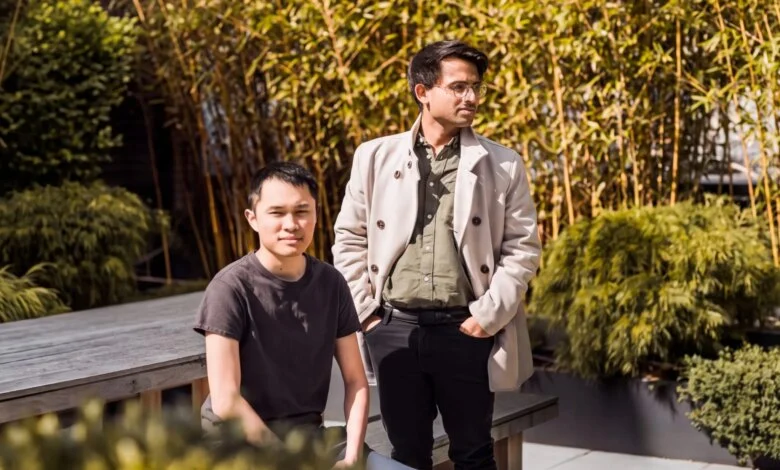
In 2017, Nishith Khandwala was a Stanford University computer science student with a compelling hypothesis: existing, routine radiology scans contained a wealth of overlooked data that, if analyzed at scale using artificial intelligence, could detect early signs of cardiovascular disease and prevent catastrophic heart attacks before symptoms ever appeared.
Alongside his classmate David Eng, Khandwala spent years refining the technology. Yet, even as their algorithms proved highly accurate in academic settings, they hit a formidable wall. Hospital administrators and clinical leaders, historically slow to adopt unproven software, repeatedly turned them away. The path forward seemed entirely blocked, and the co-founders faced the very real prospect of abandoning the project.
Then, in 2020, the mission became deeply personal. Khandwala’s father suffered a sudden heart attack.
“The cardiologist told us: ‘There was actually a scan in the past that showed he had an increased risk of heart disease, I think we could have caught this earlier,’” recalled Khandwala, who today serves as the CEO of
Bunkerhill Health
. “Can you imagine? Think about the millions of patients for whom you could prevent those kinds of heart attacks. The key thing though was: We weren’t unique in having a great idea. Great ideas are everywhere, we just don’t translate them into reality.”
Determined to bridge the gap between academic innovation and clinical execution, Khandwala and Eng co-founded their startup in 2019. They named it Bunkerhill Health—a nod to a short-lived, early 2010s medical drama on CBS. Though the television show was swiftly panned by critics, its core premise resonated deeply with the founders: the belief that modern medicine must find a way to iterate, adapt, and deploy new technologies at a dramatically faster pace.
Bridging the Gap Between Administration and Clinical Care
Unlike many niche AI startups that focus on a single, isolated problem, Bunkerhill has built a comprehensive infrastructure designed to address the operational and clinical bottlenecks that plague modern hospital systems. The company’s business model is demand-driven; rather than pitching pre-packaged use cases, Bunkerhill embeds its platform within hospitals and asks administrators which specific operational pain points they need solved. These challenges range from grueling patient wait times and administrative paperwork backlogs to missed clinical follow-ups.
The core of Bunkerhill’s offering is its
Carebricks
platform, which currently serves 15 major healthcare systems across the United States. Its roster of partners includes prestigious institutions such as the Cleveland Clinic, Mayo Clinic, Ballad Health, Intermountain Health, Sentara Health, Endeavor Health, and The University of Texas Medical Branch (UTMB) Health.
What sets the platform apart is its dual-layered architecture. Carebricks deploys operational AI agents to streamline administrative workflows while simultaneously running nine distinct, clinical FDA-cleared AI algorithms. Among these clinical tools is an algorithm designed to identify
silent heart valve disease
in its earliest stages, as well as another that evaluates a patient’s long-term risk of developing osteoporosis based on existing imaging data.
A $25 Million Series B Led by Khosla Ventures
To fuel its next phase of growth, Bunkerhill announced the close of a $25 million Series B funding round, bringing its total capital raised to date to $55 million. The round was led by
Khosla Ventures
, a firm with a long history of backing transformative healthcare and technology companies. Prominent venture capital firms
Sequoia
, Felicis, Optum Ventures, and Y Combinator also participated in the round.
Vinod Khosla, the legendary co-founder of Sun Microsystems and an early backer of OpenAI, has spent decades investing in the healthcare sector. He observes that the industry’s attitude toward technology has undergone a fundamental shift. While hospitals once viewed digital tools as an administrative burden, the integration of artificial intelligence has now become a strategic imperative.
“Software used to be a pain for hospitals,” Khosla said. “There wasn’t a push to adopt it, other than the medical record and it sort of got in the way. Now, every hospital system is trying to adopt AI. When you switch the words ‘AI’ from ‘software,’ everyone wants to and needs to talk about it.”
This shift in sentiment is highly visible at UTMB Health, which has already deployed 22 of Bunkerhill’s AI agents across its network. Dr. Peter McCaffrey, UTMB’s chief AI officer, emphasizes that while the sacred nature of the doctor-patient relationship must be preserved, AI is uniquely suited to alleviate the systemic pressures facing modern medicine.
“We may be in an AI bubble overall, but if there’s one place where the need for AI is extremely legitimate, I’d say it’s healthcare,” McCaffrey noted. “We don’t need superintelligence to solve our biggest problems. We need
average intelligence
.”
Navigating a Crowded Market and Regulatory Barriers
The massive influx of venture capital into healthcare administrative AI has raised questions about market saturation. Dozens of startups have emerged in recent months, each promising to automate clinical notes, billing, or scheduling. However, Alfred Lin, a partner at Sequoia who has backed Bunkerhill since leading its $6.5 million seed round in 2023, views this intense competition as a healthy catalyst for industry-wide innovation.
“If your premise is that there are too many, I think it’s great that there’s too many,” said Lin, whose notable investments at Sequoia include DoorDash, Airbnb, Citadel Securities, and Reddit. “Then, there’s innovation and competition and hopefully the best ones win. If it’s too few, that would be a bad thing. I much prefer having 1,000 flowers bloom, and the best ones will become durable over time.”
Lin points out that Bunkerhill’s long-term value lies in its ability to navigate highly complex, heavily regulated environments—a challenge he has encountered in several of his most successful tech investments.
“Like real estate with Airbnb, or Uber and DoorDash, there’s a
regulatory capture
in those industries, and healthcare isn’t any different,” Lin explained. “What [Bunkerhill] is trying to do across parties is hard, but it’s also undeniable that there’s opportunity to improve health outcomes.”
Khandwala echoes this sentiment, arguing that the future of healthcare AI belongs to consolidated platforms rather than isolated point solutions. “Why should a hospital need to work with 100 different companies to solve 100 different problems?” Khandwala said. “Most companies are still solving one narrow problem, and we’ve moved past that.”
Global Deals Intelligence: Venture Capital, Private Equity, and M&A
Beyond Bunkerhill’s Series B, the broader healthcare, technology, and industrial sectors continue to see robust deal-making activity globally. Below is a curated roundup of recent transactions:
Venture Capital Activity
-
Neko Health
:
The Stockholm, Sweden-based preventative health technology company secured $700 million in a Series C funding round. The investment was co-led by Lightspeed Venture Partners and O.G. Venture Partners, with participation from a syndicate of global investors. - AdvanCell: A developer of targeted cancer therapies based in Boston and Brisbane, Australia, raised $315 million in a Series D round led by Ally Bridge Group and Alpha Wave, with support from Bain Capital Life Sciences.
- Alpaca: The San Mateo, California-based agent-first brokerage infrastructure provider raised $135 million in funding, led by Peak XC alongside Elefund and Opera Tech Ventures.
- Emergent: An AI-powered software creation platform headquartered in Bangalore, India, closed a $130 million Series C round led by Creaegis, with participation from Claypond and Sentinel Global.
- Spectro Cloud: The San Jose, California-based AI infrastructure management software developer secured $100 million in a Series D round led by Growth Equity at Goldman Sachs Alternatives. Additional backers included AMD Ventures, Ericsson, LG Technology Ventures, and Maximus.
- Hemispheric: A Tel Aviv, Israel-based startup building an AI platform to decode human brain activity raised $52 million from Hanaco Ventures, OneMind/Awareness Capital, and Protocol Labs.
- TYLsemi: The San Jose, California-based chiplet platform developer raised $43 million in funding led by Matter Venture Partners, with participation from Viola Ventures, GHOVC, and Egis Technology.
- Velocity: A London-based enterprise stablecoin payments and treasury platform secured $38 million in Series A funding. The round was co-led by Dragonfly and Firstmark, with participation from Coinbase, Capital One Ventures, QED Investors, Activant Capital, Ripple, and Wintermute.
- Monumental: An Amsterdam-based startup developing autonomous bricklaying robots raised $32 million in Series B funding from Khosla Ventures, Plural, and Hummingbird.
- Risk Ledger: A London-based supply chain cybersecurity provider raised $32 million in Series B funding led by Axiom Equity, with participation from Mercia Ventures.
- Syntetica: A Paris-based sustainable technology company specializing in textile recycling raised $30 million in Series A funding led by Ecotechnologies 2, with participation from SWEN Capital Partners and athletic apparel brand lululemon.
- Rime: A San Francisco-based voice AI platform secured $24 million in Series A funding led by M13, alongside Twilio Ventures and Corazon Capital.
- Meticulous: A London-based code change verification platform raised $15 million in Series A funding from VC Chemistry and Menlo Ventures.
- Skalar: An AI-driven tax advisory firm based in Munich, Germany, raised €12 million ($13.8 million) in combined pre-seed and seed funding. Headline led the round, supported by futurepresent, QED Investors, Repeat, MS&AD, and Foreword.
- Cytronic: A San Francisco-based robotics company focused on e-commerce fulfillment raised $13.5 million in seed funding led by Slow Ventures, with participation from Geek Ventures, Failup Ventures, and Alumni Ventures.
- Aina: A consumer hardware startup operating out of San Francisco and Bangalore raised $5.5 million in funding led by Redstart Labs and 360 ONE Asset, alongside Antler and Blume Founders Fund.
- EverSettled: A San Francisco-based digital platform utilizing AI to streamline the administrative, legal, and financial tasks following the death of a family member raised $5 million in seed funding. Emergence Capital led the round, with participation from Seedcamp and Bridge Ventures.
Private Equity Transactions
- Amplix: The technology advisory portfolio company of Gemspring Capital completed its acquisition of OneConnect, a St. Petersburg, Florida-based technology advisory firm. The financial terms of the transaction were not disclosed.
- Ardian: The European private equity firm acquired a majority stake in Pflegia, a Berlin-based, AI-powered reverse-recruiting platform tailored for the healthcare industry. Financial terms were withheld.
- Podean: Backed by middle-market private equity firm Mountaingate Capital, Podean acquired Social Commerce Club, a Vancouver, Canada-based creative agency specializing in TikTok Shop marketing. Financial terms were not disclosed.
Mergers, Acquisitions & Exits
- Invex Group: The industrial group acquired Redo Oy, a Helsinki, Finland-based property remediation services provider, from Mutares. Financial terms were not disclosed.
- Leica Biosystems: The medical diagnostics company agreed to acquire StatLab Medical Products, a McKinney, Texas-based developer and manufacturer of anatomical pathology consumables, from Audax Private Equity and Linden Capital Partners. Financial terms were not disclosed.
Executive Appointments
- Northern Gritstone: The Northern England-focused venture capital firm promoted Simon Braham to the role of Chief Investment Officer.