Google Offers Web Publishers Embeddable Button to Protect Visibility in AI Search Era
New widget gives web publishers direct tools to drive reader loyalty across search and AI features
Google is letting online publishers install an embeddable button on their own websites that allows readers to mark them as a “favorite source,” giving publications a direct way to protect their visibility across Google Search, Discover, and Google News as artificial intelligence features reshape web browsing habits.
The technology company confirmed that the interactive “Preferred Sources” widget is now available for digital publishers to embed directly on their web pages.
The expansion builds on Google’s May launch of Preferred Sources within its AI Mode and AI Overviews, extending a capability that was first tested in the platform’s Top Stories section.
The update addresses growing friction between digital media outlets and search platforms, as referral traffic to news and content websites has steadily declined following the integration of generative AI summaries directly into search result pages.
The feature is designed to give users quicker access to verified sources they recognize and trust when searching for information or asking Google’s AI tools to summarize news and complex topics. Google stated that web users had designated more than 345,000 unique sources using the preference feature since its initial rollout in May.
To select a publication manually, readers can also visit Google’s source preferences page and search for specific outlets by name or web domain.
Securing preferred status offers measurable benefits for news outlets, according to Google, which noted in earlier testing that users are twice as likely to click on links from an outlet marked as a preferred source. Distributing these tools directly to content creators represents an effort to mitigate the traffic declines caused by the rapid expansion of AI-generated search responses.
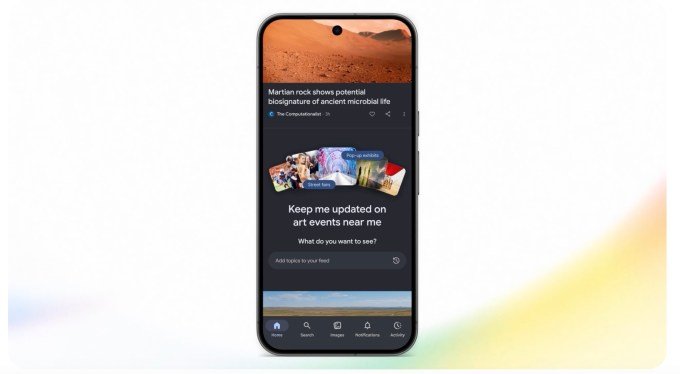
Alongside the embeddable button, Google revealed that mobile app users will soon be able to customize their Discover feed using natural language prompts. Readers can open any three-dot menu on a content card and instruct Google on what subjects to display more or less frequently, updating feed rankings in real time.
Image Credits:Google
Google is joining a wider industry movement toward AI-driven feed customization, as several major social media platforms have recently introduced user-facing algorithmic controls designed to refine content distribution.
The news customization options also cover audio content, with Google confirming that Android subscribers will soon gain control over the personal settings of their daily audio briefings inside the Google News app.
Purchases made through links featured in our content may earn us an affiliate commission, which has no bearing on our editorial independence.