Pakistan Border Closures Crush Afghan Grape Exports as Trade Drops 99%
Southern fruit exports collapse from 44,225 tons to 256 tons following border shutdowns
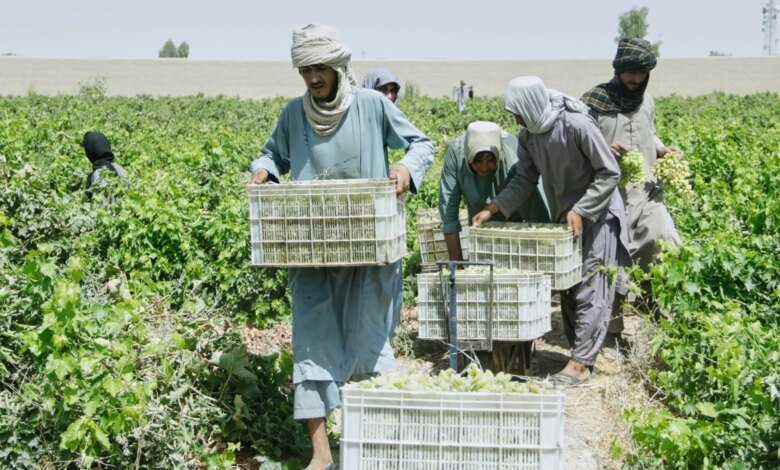
Cross-border military clashes between Afghanistan and Pakistan have halted fresh fruit trade out of Kandahar, dropping regional grape exports from 44,225 tons to 256 tons this year as key transit routes remain blocked.
Abdul Baqi Bina, the deputy director of the Kandahar Chamber of Commerce and Investment, said the border closure has dealt a severe blow to Afghanistan’s fruit exports — not just grapes, but also pomegranates.
In 2025, five southern Afghan provinces that make up the country’s main grape-producing region exported 44,225 tons — $13.8 million worth of grapes. Nearly all — 43,000 tons — went to Pakistan and the remainder headed to Bangladesh, Iraq and India, Bina said. So far this year, only 256 tons have been exported, at a value of $100,000.
The commercial standoff centers on the Spin Boldak-Chaman crossing, the primary trade corridor connecting Kandahar province to Pakistan’s Balochistan region. Persistent cross-border skirmishes and Pakistan’s enforcement of strict passport and visa requirements for commercial transport workers have repeatedly shut down freight traffic. According to data from the World Bank Afghanistan Economic Monitor, fresh and dried fruits constitute over half of Afghanistan’s total domestic merchandise exports, rendering agricultural regions immediate casualties of border closures.
Blocked from exporting fresh produce into Pakistan, grape growers have redirected harvests to the Afghan domestic market, creating an oversupply that has driven down wholesale prices. To prevent total crop spoilage, orchard operators are converting fresh grapes into raisins inside specialized drying structures. In a long warehouse in Kandahar’s Zhari district, fans whirl overhead, stirring the hot summer air around bunches of plump, green grapes draped over sticks set up in rows to dry.
However, the rapid influx of processed raisins has overwhelmed local markets as well. Sakhi Jan, an orchard owner in Zhari district who feeds a household of 10 people, reported that seven kilograms (15.5 pounds) of raisins previously sold for 1,000 to 1,200 afghanis ($13 to $16). The same quantity now sells for 400 to 450 afghanis ($5 to $6), undercutting producer margins across the province.
The loss of export channels has also triggered sharp layoffs across agricultural supply chains. Qudratullah Popal, a farm laborer in Kandahar, stated that a single grape orchard that employed roughly 1,500 harvest pickers last year retained only 15 workers this season due to lost revenues and halted distribution.
Grape exporter Haji Abdul Hai, who has operated in the regional trade for 50 years, stated that past border disputes typically resolved within days or permitted trade rerouting through secondary border points. The current total blockade across primary border points has effectively paralyzed entire supply chains for traders, field laborers, and orchard owners across southern Afghanistan.