California Adopts Tire Efficiency Rules Phasing Out Most Current Replacement Models
State regulators approve efficiency limits set to eliminate up to 70 percent of current replacement tires by 2033
California regulators approved new energy-efficiency standards restricting replacement tire sales across the state. The California Energy Commission voted 5-0 during a business meeting to establish rolling-resistance limits for passenger car and light-truck replacement tires.
The new regulations, unanimously adopted by the California Energy Commission (CEC), will phase out tires that fail to meet these standards — a move that could restrict a large portion of the tires currently available to drivers.
A tire at a manufacturing plant. (Getty Images / Getty Images)
Rolling resistance measures the energy lost as a tire rotates under load. Lower resistance reduces energy consumption in gasoline and electric vehicles. Factory-installed tires on new vehicles already meet higher efficiency benchmarks than standard replacement models.
Implementation occurs in two phases. Phase 1 takes effect in 2029, targeting the least efficient replacement models. Phase 2 begins in 2033 with stricter rolling-resistance thresholds.
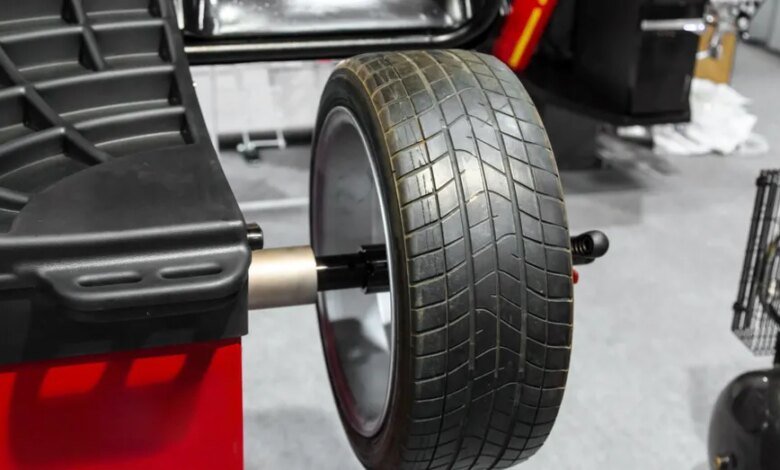
A mechanic fits a wheel on a car in Heilgersdorf, Bavaria, on Oct. 4, 2024. California regulators on Monday approved a new set of rules that would limit the kinds of replacement tires consumers could purchase. (dpa/picture alliance via Getty Images / Getty Images)
Commission estimates indicate Phase 1 will save drivers $79 in fuel or electricity over four months. Phase 2 projected savings reach $153 over seven months. The second phase will increase tire production costs by an average of $6.50 per tire.
“This ultimately is about protecting consumers,” said David Hochschild, Chairman of the California Energy Commission, as reported by KCRA-TV. “I see this as sheltering the public from higher costs in the long run.”
Goodyear voiced concerns over the mandate, arguing that it would pass additional costs onto consumers. Representatives noted that around 70% of tires currently sold in the state would be eliminated by 2033.
Used vehicle tires are piled outside an auto repair shop in Toronto, Ontario, Canada, on July 26, 2026. (Getty Images)
Exclusions apply to specific categories. Snow tires, motorcycle tires, deep-tread off-road tires, emergency vehicle tires, and used or retreaded tires are exempt from the standard. The regulations fulfill mandates under Assembly Bill 844, signed into law in 2003. California consumes approximately 30 million replacement tires annually.