U.S. Joins Japan in Rare Yen Rescue, But Unconventional Euro-Selling Tactic Triggers Market Doubts
The joint action marks the first coordinated yen purchase since 1998, but analysts warn that selling euros rather than dollars fails to fix underlying rate divides.

Washington has joined forces with Tokyo in a rare joint currency intervention to bolster the slumping Japanese yen after it sank to a 40-year low, deploying an unusual financial maneuver that has left Wall Street and monetary policy experts questioning its long-term impact.
The coordinated market move on Friday successfully lifted the yen to 157 to the dollar. It marks the first joint buying operation of the Japanese currency by the United States and Japan since the 1998 Asian financial crisis. However, instead of selling U.S. dollars to purchase yen, the Federal Reserve Bank of New York reportedly sold euros to fund the operation.
Japan is estimated to have spent $52.8 billion during the intervention. While Washington has not officially disclosed its contribution, a photographed page from U.S. Department of the Treasury Secretary Scott Bessent’s notepad suggested an American expenditure ranging between $5 billion and $10 billion.
The choice to offload euros rather than dollars has raised eyebrows across global currency desks.
Edwin Truman, a former assistant secretary for international affairs at the Treasury, described using euros as “weird” if the main objective was strengthening the yen against the dollar.
“Selling a third currency would not be as effective as selling just straight dollars,” Truman said.
Robin Brooks, a senior fellow at the Peterson Institute for International Economics, cautioned that the tactical pivot could confuse traders at a critical juncture.
“This kind of twist in my opinion undercuts the efficacy of US participation,” Brooks wrote in a Substack analysis. “FX intervention is a confidence game. The last thing you want is to give markets any kind of reason to ask questions.”
Brooks predicted the yen will ultimately resume its downward slide, citing Japanese bond yields that are being kept artificially low. He explained that the Bank of Japan must keep yields strictly in check to prevent the country’s massive national debt burden from triggering a severe fiscal crisis.
The yen has been steadily sliding against the greenback since 2012, fueled by wide interest rate differentials between Tokyo and Washington. Mark Sobel, who spent four decades at the U.S. Treasury and serves as U.S. chair of the Official Monetary and Financial Institutions Forum, attributed the yen’s chronic weakness to Japan’s “overly accommodative” monetary stance, sovereign debt risks, and recent fiscal policy direction under Prime Minister Sanae Takaichi.
“The US is unwise to enter the market in support of the yen—even if it makes a small profit in doing so—unless it is part of a Japanese plan to tackle the fundamental issues driving yen weakness,” Sobel said. “After all, the Treasury’s Exchange Stabilization Fund isn’t a hedge fund.”
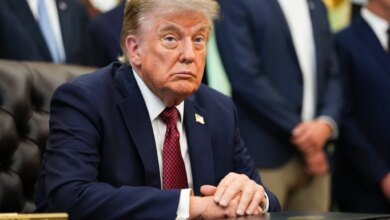
President Donald Trump and Japan’s finance minister both confirmed the intervention, helping the dollar ease slightly from its Monday high.
Joint actions involving the U.S. dollar are historically scarce. In 2011, following the Fukushima earthquake and tsunami, the U.S. partnered with G7 nations to weaken the yen after a sudden surge threatened Japan’s export-dependent economy.
ING economics analysts Chris Turner and Michiel Tukker noted that interventions typically buy time and create temporary inflection points rather than overturn underlying economic fundamentals.
“Without that, even coordinated intervention risks being remembered as another attempt to slow the dollar’s rise rather than reverse it,” Turner and Tukker wrote.
The operation follows Bessent’s use of the Treasury’s Exchange Stabilization Fund—originally created under the Gold Reserve Act of 1934—to stabilize the Argentine peso ahead of the country’s midterm elections, where Argentina drew $2.5 billion and later repaid the full amount.
“Taken together, the Argentine and Japanese episodes suggest a Treasury that is becoming more willing to use the ESF in support of broader economic and geopolitical objectives,” Turner and Tukker added. “That marks a notable departure from the relative passivity that has characterised US foreign exchange policy for much of the last two decades.”