Zcash Activates Ironwood Upgrade to Wall Off AI-Discovered Cryptographic Vulnerability
The privacy coin executes a major hard fork after security researchers used AI to uncover a critical supply inflation bug.
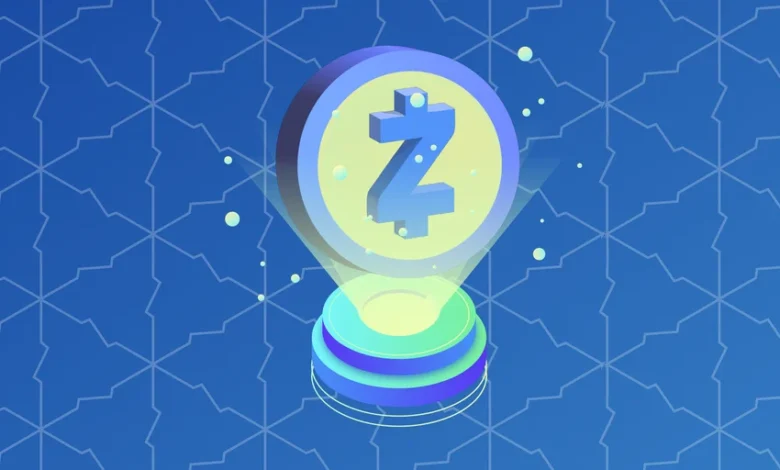
Zcash has officially deployed its Ironwood hard fork, replacing its primary Orchard privacy pool after security researchers discovered a four-year-old vulnerability that threatened the network’s token supply integrity. The overhaul represents one of the most substantial structural shifts in the protocol’s history, introducing a strict accounting mechanism designed to neutralize potential counterfeit coins without unmasking private balances.
At the core of the upgrade is a turnstile accounting rule that restricts total withdrawals from the retired Orchard pool to the exact volume of funds verifiably deposited prior to the fix. To complete the transition, network participants must migrate roughly 3.7 million ZEC—valued at $1.7 billion at the time of activation—into a new shielded pool. Any unverified or illicitly created tokens generated through the flaw will remain permanently trapped.
The mandatory asset migration triggered immediate privacy warnings from cybersecurity researchers. Decentralized privacy network Nym noted that transferring funds between pools without network-level protections could allow surveillance firms to link wallet balances with user IP addresses. Protocol founder Zooko Wilcox urged token holders to avoid rushing the process and recommended using obfuscation tools such as Tor or virtual private networks during transaction execution.
The crisis originated in late May 2026, when independent security researcher Taylor Hornby identified a critical flaw in Orchard’s mathematical circuits using Anthropic’s Claude Opus 4.8 model. While developers quickly coordinated a confidential emergency patch and stated there was no evidence of active exploitation, the public disclosure wiped billions in market valuation from the privacy-focused asset and reignited debate over the risks AI tools pose to cryptographic protocols.
The technical overhaul comes as global enforcement bodies intensify their focus on anonymity-centric digital assets. Regulators including the U.S. Financial Crimes Enforcement Network have consistently raised concerns over privacy features obscuring illicit transaction flows, prompting selective exchange delistings over recent years. However, Zcash has retained broader market accessibility than competitors like Monero due to its dual-address design, which offers optionality between transparent and shielded transfers.
The code deployment follows a volatile administrative stretch for the ecosystem. In January 2026, the Zcash Foundation announced that the Securities and Exchange Commission had formally closed its investigation without recommending regulatory action. Days later, internal disputes led to the entire development staff at the Electric Coin Company being constructively discharged. Former chief executive Josh Swihart subsequently formed cashZ to build fresh node tools, while independent group Shielded Labs secured $1.16 million from Gemini founders Tyler and Cameron Winklevoss.
First launched in October 2016, Zcash was developed to address Bitcoin’s public ledger visibility using zero-knowledge proofs known as zk-SNARKs. The network mirrors Bitcoin’s 21 million coin cap and quadrennial halving cycle, but relies on the memory-hard Equihash algorithm for proof-of-work consensus to restrict ASIC dominance. Its inaugural launch featured a multi-party trusted setup ceremony, which notably included intelligence whistleblower Edward Snowden operating under the pseudonym John Dobbertin.
Developers are currently completing a migration away from the legacy C++ client zcashd in favor of zebrad, a Rust-based node implementation, ahead of the protocol’s third block reward halving scheduled for November 2028.