Top Three Crypto Protocols Capture 80% of Revenue as Market Enters Massive Consolidation Phase
Revenue concentration reaches record levels as exchanges shut down and dominant protocols absorb market activity.
A sharp realignment is sweeping through the digital asset sector as capital deployment turns increasingly selective, forcing underperforming platforms to shutter while revenue pools into a concentrated group of category leaders.
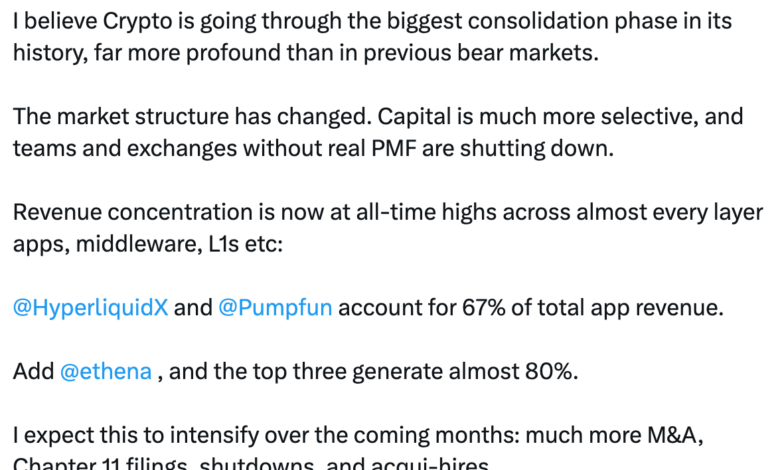
According to data highlighted by Ark Invest research associate Lorenzo Valente, roughly 67 percent of total crypto application revenue is now generated by just two platforms: perpetual futures decentralized exchange Hyperliquid and memecoin creation portal Pump.fun. When factoring in synthetic dollar issuer Ethena, the three protocols combined command nearly 80 percent of all fees generated across the sector.
Valente noted on social media platform X that investors are prioritizing clear utility, leaving projects without robust product-market fit stranded without funding. As speculative liquidity contracts, mid-tier decentralized applications are struggling to sustain operations, precipitating what he describes as the largest consolidation phase in the history of the industry.
This structural migration toward market leaders mirrors classical maturity curves seen in software and financial technology sectors, where early-stage fragmentation gives way to winner-take-most dynamics. In decentralized finance, where protocol revenues depend directly on transaction throughput and trading volume, top-tier platforms benefit from compounding network effects that draw liquidity away from smaller competitors.
Valente projects that this shakeout will accelerate over the coming months, driving a surge in corporate M&A, voluntary project shutdowns, talent acqui-hires, and formal Chapter 11 protection filings. Despite the impending operational fallout for weaker entities, he characterized the ongoing rationalization as an extremely bullish structural pivot for the long-term crypto ecosystem.
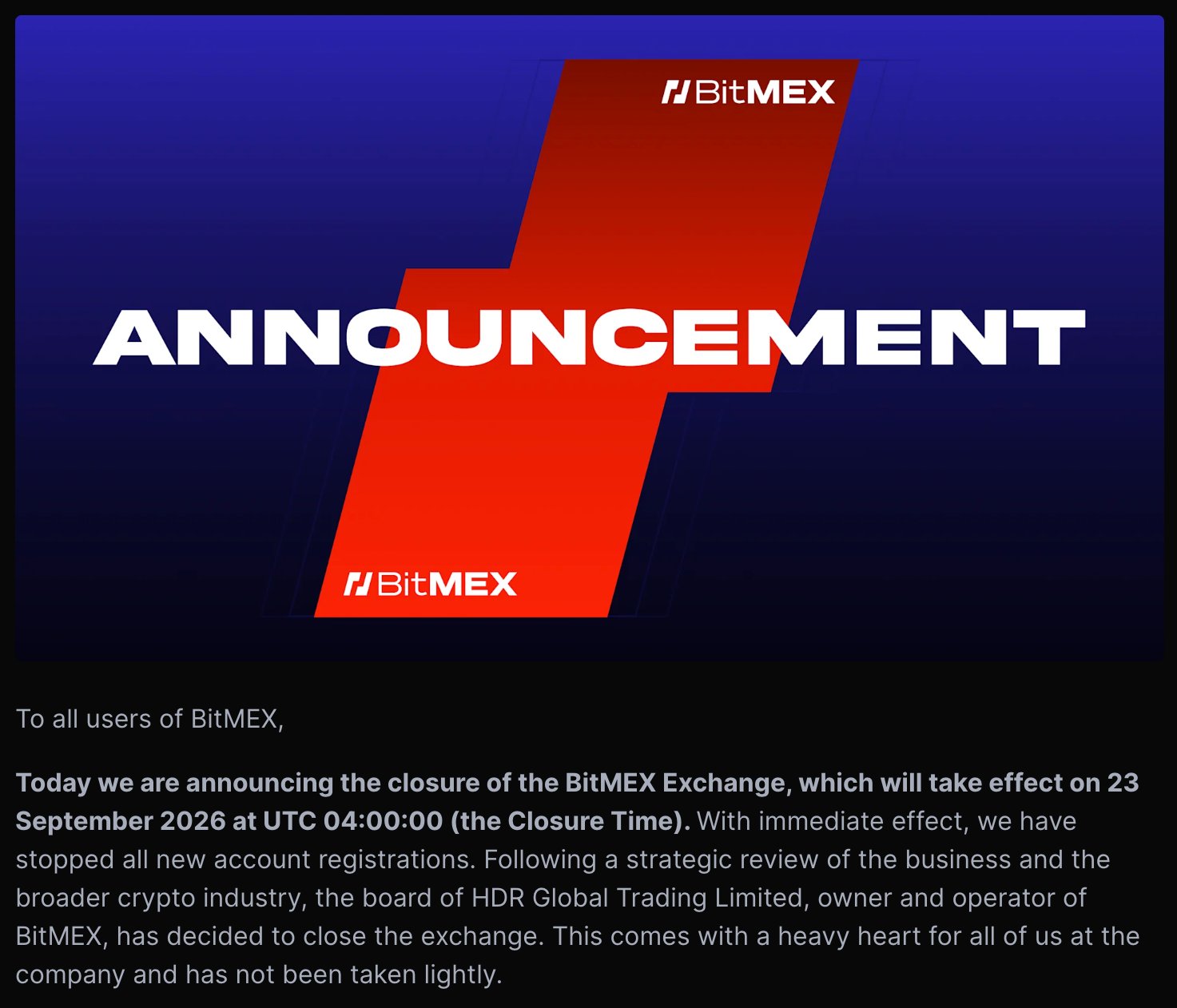
Signs of operational strain are already mounting across centralized trading venues. BitMEX, once among the world’s highest-volume derivatives exchanges, announced it will wind down exchange operations in September following a strategic review by owner HDR Global Trading. The decision comes after BitMEX aggressively delisted trading pairs and derivative contracts due to falling commercial interest.
In a parallel development, centralized exchange BitMart revealed plans to halt all trading services on August 26 before completing a full shutdown of its business in January 2027. The company attributed its exit to a broader review of its operating climate and long-term strategic viability.
Where expansion is occurring, it is happening via targeted consolidation rather than organic growth. Exchange operator Bybit recently launched a dedicated trading platform in Indonesia after acquiring a majority stake in local digital asset firm NOBI, enabling the exchange to secure immediate footprint in one of Asia’s primary crypto markets.