Defense Analysts Push for Israeli Missile Systems in U.S. Golden Dome Architecture
A JINSA report urges the White House to leverage battle-tested air defenses to counter immediate drone threats and trim a projected $1.2 trillion price tag.

Washington’s push to erect a comprehensive national missile shield, dubbed the “Golden Dome for America,” faces growing calls from defense strategists to leverage battle-tested Israeli air-defense hardware to address immediate low-altitude vulnerabilities and reign in soaring long-term costs.
The policy push, detailed in a study by the Jewish Institute for National Security of America (JINSA), coincides with high-level talks in Washington between President Donald Trump and Israeli Prime Minister Benjamin Netanyahu. While discussions center heavily on regional security and Iran, defense analysts argue the bilateral agenda must include incorporating Israeli interceptors into the broader architecture of U.S. homeland defense.
According to the report, titled “The Missing Shield: Acquiring Israeli Air Defenses Makes Golden Dome Sustainable,” current U.S. planning heavily prioritizes complex, long-range and space-based technologies. However, these strategic layers could take years to become fully operational, leaving American infrastructure, military facilities, and urban centers exposed to low-altitude threats like uncrewed aerial systems and cruise missiles.
“Right now, the current approach is spending the time and money primarily on space, long-range threats, which are absolutely needed,” noted Ari Cicurel, senior policy analyst at JINSA and author of the report. “But the most frequent and immediate threats are actually short-range projectiles, particularly drones.”
Cicurel highlighted recent unauthorized drone flights over major U.S. metropolitan areas, including Washington, D.C., alongside commercial aviation incidents, as stark warnings that low-altitude security breaches are no longer isolated to overseas operational zones.
The financial scale of building a multi-layered shield was recently underscored by the Congressional Budget Office, which modeled a multi-tier interceptor architecture consistent with presidential directives. The nonpartisan agency estimated that developing, procuring, and operating a national system comprising space-based assets, two wide-area surface layers, and regional defense layers could cost roughly $1.2 trillion over a 20-year lifecycle.

JINSA’s comparative analysis suggests that integrating Israeli-developed hardware could substantially mitigate these fiscal burdens. The report estimates that Israeli-designed launchers are between 58% and 88% cheaper than U.S. equivalents, while interceptor missiles cost 19% to 97% less and radar components run 32% to 87% lower in cost. The resulting savings could allow the Department of Defense to expand interceptor inventories and deploy significantly more launchers near high-priority targets without compromising capital meant for advanced space-based systems.
The proposed integration spans the full spectrum of Israel’s layered defense network: the short-range Iron Dome, the medium-range David’s Sling, the long-range Arrow ballistic missile interceptor, and Iron Beam, a high-power laser system designed to neutralize short-range threats at minimal cost per shot.
Historically, joint air-defense development has been a cornerstone of U.S.-Israel strategic military ties, governed by multi-year Memoranda of Understanding that facilitate co-funding and joint production. American defense firms already play a primary role in manufacturing these systems, with 102 defense suppliers spread across 34 states currently contributing to components for Israeli air defenses.
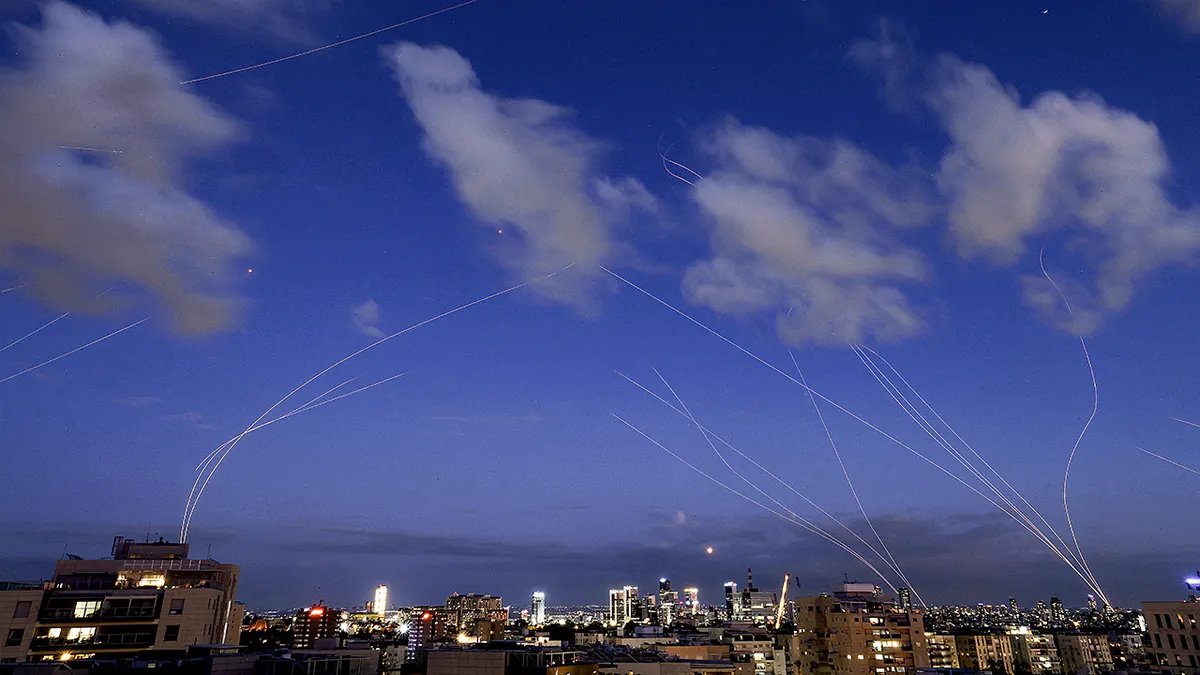
“What we’re really talking about is finally leveraging American tax dollars that have gone to help produce, help develop these Israeli systems,” Cicurel said, framing the initiative as an expansion of domestic manufacturing rather than foreign reliance.
Operational evaluations from recent high-intensity engagements against Iranian missile and drone salvoes revealed critical industrial limitations for both nations. Despite high tactical interception rates, combat operations exposed severe bottlenecks in interceptor manufacturing capacity, rapid inventory depletion, and vulnerabilities in early-warning radar arrays anchoring defensive rings.

In response to inquiries regarding potential procurement or expanded co-production of systems like Iron Dome or David’s Sling, Pentagon officials emphasized that the Golden Dome remains a flexible, evolving architecture designed to counter hypersonics, ballistic weapons, and uncrewed aerial systems.
Department of Defense representatives declined to specify whether specific foreign or joint systems were under active procurement evaluation, citing operational security and competitive advantages. Realizing joint deployment will require addressing regulatory obstacles, including updating technology-sharing protocols, navigating export control laws, resolving classified data access, and codifying mutual defense cooperation within the next decade-long U.S.-Israel Memorandum of Understanding.