NVIDIA and Tech Giants Form Open Secure AI Alliance to Counter Cyber Threats
A 27-member coalition featuring Microsoft, SpaceX, and Dell pushes for open-source AI tools in digital defense while warning against regulatory overreach.
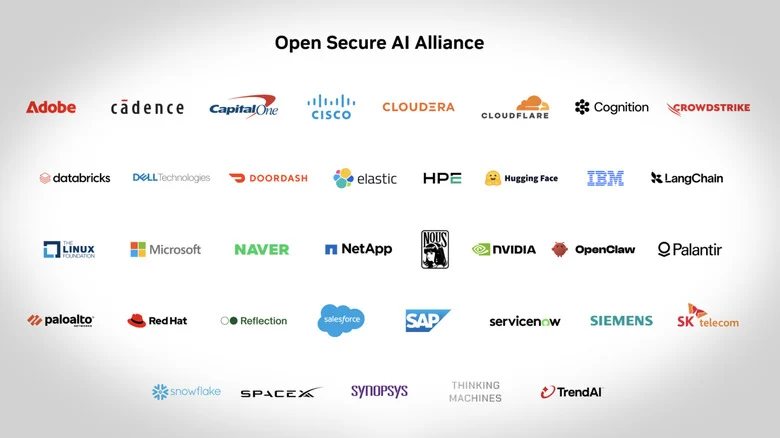
A coalition of 27 prominent technology leaders and institutional partners, spearheaded by Nvidia, has launched the Open Secure AI Alliance to overhaul cybersecurity defenses through open-source artificial intelligence tools. Founding members include Microsoft, SpaceX, Dell, Hewlett Packard Enterprise (HPE), IBM, Red Hat, and the Linux Foundation.
Building upon the Linux Foundation’s Akrites initiative and work conducted by the Open Source Security Foundation, the alliance aims to establish open technologies for identifying, disclosing, and remediating software vulnerabilities. The collective advocates for giving security researchers unhindered access to both open and proprietary frontier models to analyze sophisticated cyberattacks.
The coalition’s establishment highlights a growing operational divide between open-weight AI architectures and closed commercial systems. Commercial closed models often utilize strict API guardrails that can inadvertently hamper digital forensics. During a recent security breach, automated safety filters on proprietary platforms refused to process malicious attack traces submitted by Hugging Face investigators. Forced to pivot, analysts deployed an open-weight model, GLM 5.2, on internal infrastructure to evaluate more than 17,000 actions and neutralize the intrusion.
To fortify the defensive ecosystem, alliance participants are committing specialized technical resources. NVIDIA is providing open models, model weights, datasets, and specialized agent harnesses designed to accelerate security tool development. HPE is contributing cryptographic verification frameworks for AI services and agents, while Hugging Face is sharing its Safetensors technology—a secure file format designed to prevent code execution during model weight transfers.
The initiative also targets emerging regulatory frameworks. The alliance is advising governments to treat open AI models as vital defensive infrastructure rather than security liabilities, cautioning that broad restrictions on open-weight systems risk concentrating market control among a handful of closed-system developers.
This policy push comes amid reports that the U.S. executive branch is evaluating potential prohibitions on Chinese open-source AI architectures, which have gained global market share due to lower operational costs. Conspicuously absent from the coalition are major proprietary AI developers, including OpenAI, Anthropic, Meta, and Google.