Samsung Overhauls Foldable Strategy with Dual-Model Galaxy Z Fold 8 Launch
The tech giant introduces a wider aspect ratio and a new Ultra tier to its flagship foldable family.
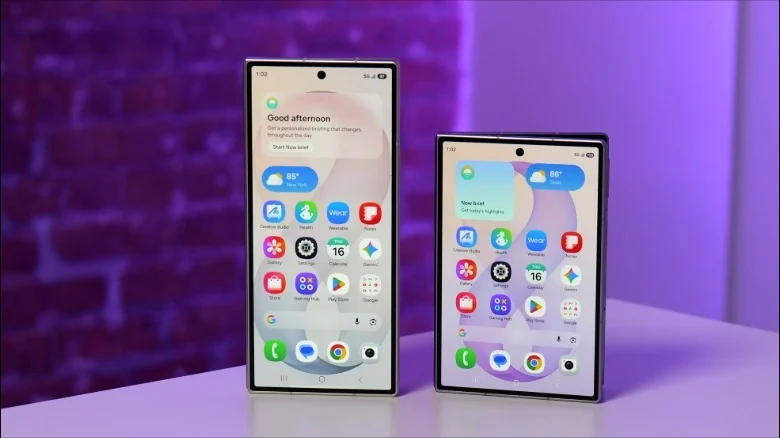
Samsung is pivoting its approach to the premium foldable market by splitting its flagship line into two distinct tiers for the first time. The newly announced Galaxy Z Fold 8 series introduces a redesigned base model alongside a high-specification Ultra variant, signaling a departure from the single-device strategy the company has maintained since the original Galaxy Fold debuted in 2019.
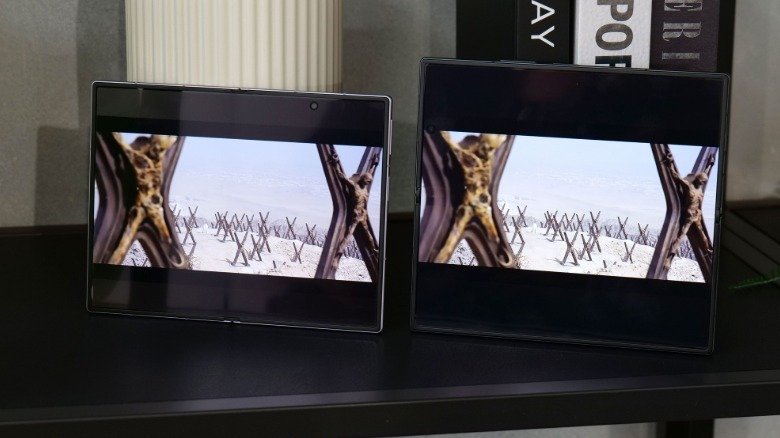
The most significant shift arrives with the standard Galaxy Z Fold 8, which adopts a wider, “passport-style” form factor. Moving away from the narrow, tall aspect ratios that defined previous generations, the base model features a 5.5-inch external AMOLED display with a 10:16 ratio. When unfolded, it reveals a 7.6-inch internal screen with a 4:3 aspect ratio. This design choice mirrors a growing industry trend toward more ergonomic cover screens, a move previously championed by competitors like the Google Pixel Fold.
In contrast, the Galaxy Z Fold 8 Ultra retains the familiar elongated silhouette but pushes the hardware boundaries. It features a larger 8-inch primary display and a slimmer 8.9mm profile compared to the 9.7mm thickness of the base model. Despite its thinner frame, the Ultra is the heavier of the two at 215 grams, while the standard Z Fold 8 becomes the lightest in the series’ history at 201 grams.
To address long-standing durability concerns associated with flexible panels, Samsung has engineered a new support structure. Both devices utilize a flexible titanium alloy combined with a reinforced titanium plate. This architecture is designed to minimize the visibility of the display crease and prevent the formation of air bubbles between the screen layers. While a slight indentation remains visible in the center of the panel, the structural reinforcement allows both phones to achieve an IP48 rating for dust and water resistance.
Under the hood, both models are powered by the Snapdragon 8 Elite Gen 5 for Galaxy. This custom-tuned chipset supports up to 16GB of RAM and 1TB of internal storage. The devices also see an upgrade in charging capabilities, now supporting 45W wired charging and 20W wireless charging. However, Samsung has opted not to include integrated magnetic rings for the Qi2 wireless charging standard, requiring specific first-party cases to achieve full magnetic compatibility.
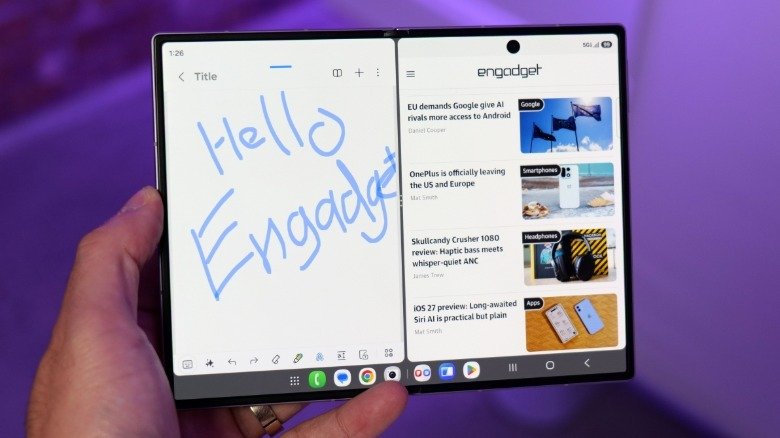
To achieve a lower entry price of $1,900—$200 less than the Ultra—the standard Z Fold 8 features a dual-camera array consisting of a 50-megapixel main sensor and a 50-megapixel ultra-wide lens. It lacks the dedicated telephoto lens found on the Ultra model. Additionally, the base model’s hinge mechanism utilizes a spring system that prevents it from staying partially open in a “tabletop” configuration, though it can still be used in “tent mode” for hands-free viewing.
Battery capacities also differ between the two, with the Ultra housing a 5,000mAh cell compared to the 4,800mAh unit in the base model. Both represent an increase over the previous generation’s 4,400mAh capacity, reflecting the increased power demands of the 3,000-nit peak brightness displays.
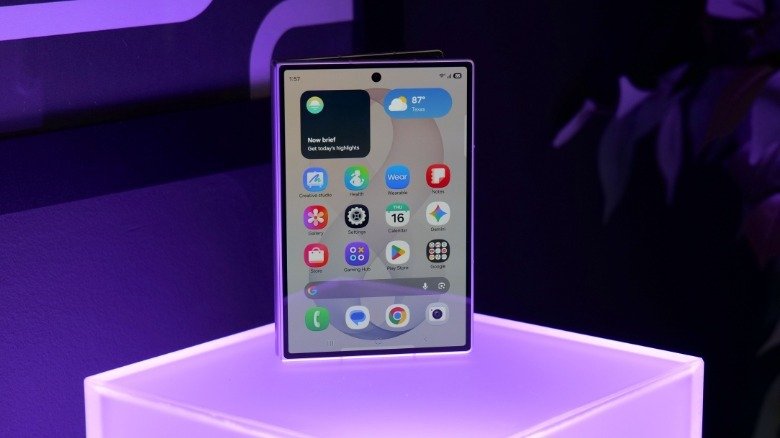
The Galaxy Z Fold 8 series is scheduled for official release on August 7. The devices will be available in Graphite, Cream, and Lavender, with a Pistachio colorway offered exclusively through Samsung’s online store.