Thinking Machines Lab Debuts Inkling, a 975-Billion Parameter Open-Source AI Model
Mira Murati's startup unveils a 975-billion-parameter model targeting enterprise agentic tool use.
Thinking Machines Lab has officially released Inkling, a massive 975-billion-parameter open-source artificial intelligence model built completely from scratch. Marking the first major public release from the startup founded by former OpenAI Chief Technology Officer Mira Murati following her departure in September 2024, the release represents a high-profile Western entry into an open-weights AI landscape recently dominated by overseas developers.
Published on Hugging Face under a permissive Apache 2.0 license, Inkling is structured on a Mixture-of-Experts (MoE) architecture. While its full footprint spans nearly a trillion parameters, the system activates only 41 billion parameters per token during inference. This design allows the model to process multimodal inputs—including text, vision, and audio—across a 1-million-token context window after being pretrained on 45 trillion tokens of data.
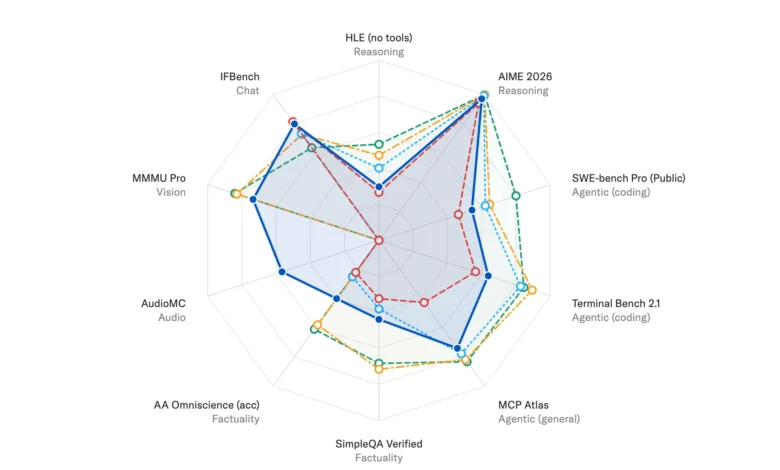
Inkling’s most notable performance strengths center on autonomous tool execution and workflow handling. On the Model Context Protocol (MCP) Atlas benchmark, which measures an AI agent’s ability to complete multi-step tasks through standard API integrations, Inkling registered a score of 74.1%—outperforming Nvidia’s Nemotron 3 Ultra by nearly 30 percentage points. The model also posted a 77.6% resolution rate on SWE-Bench Verified, a standardized test for automated GitHub bug fixes, leading several comparable open-weights models.
Enterprise developers can access the model via OpenRouter API endpoints at $1.00 per million input tokens and $4.05 per million output tokens, allowing integration into agentic frameworks like Hermes or OpenClaw without custom infrastructure setup.

Despite its performance on agentic metrics, practical evaluations reveal notable trade-offs when applying the massive model to software development. In code generation tests, Inkling struggled with high prompt complexity, failing to return functional code when given a detailed 1,955-word instruction set for a browser-based shooter game. When simplified to a 99-word specification, the model produced a playable game with keypress tracking and fluid enemy movement logic.

However, visual rendering defaulted to basic geometric shapes rather than distinct sprites, and enemy wave timing ran as an unstructured stream. In side-by-side comparisons, smaller localized models—such as Bonsai 27B, a compressed 3.9 GB model derived from Qwen3.6 built to run on mobile devices—generated more complete game mechanics under identical prompting. Because running Inkling requires data-center hardware, its large parameter scale presents high compute overhead relative to its raw coding output.
In logical reasoning challenges, Inkling demonstrated a common vulnerability in pattern recognition over step-by-step evaluation. When given a modified bridge-and-torch puzzle that omitted standard bridge capacity limits, the model’s internal thinking process flagged the prompt as a classic textbook riddle and outputted the traditional 17-minute answer, bypassing the simpler 10-minute solution available under the unconstrained prompt rules.

This behavior reflects a broader trend among leading language models, including Claude Fable 5 and GPT-5.6 Sol, which frequently default to memorized training patterns when encountering subtle variations of public benchmarks.
Inkling also incorporates strict safety guardrails. During evaluation, the model repeatedly declined prompts seeking seduction advice or sensitive interpersonal strategies. In scenarios involving delicate personal situations, such as a user asking for help drafting a workplace excuse while managing substance dependency, the system prioritized policy compliance against deception over pragmatic harm reduction, referring the user to healthcare resources instead.

In creative writing, Inkling displayed advanced agentic capabilities by autonomously initiating live web searches and fetching reference material before generating text. While this research-oriented approach produced rich narrative prose and detailed world-building, the model occasionally introduced factual errors regarding historical context and demographic details.
For Western organizations seeking a commercially permissive, open-weights foundation model that operates outside Chinese regulatory frameworks, Inkling provides a solid option for specialized agentic task pipelines—even as smaller, specialized models continue to offer strong competition in raw efficiency and local code execution.