AI-Driven Crypto Hackpocalypse Fears Ease as Private Key Theft Remains Top Web3 Threat
Security data shows basic operational breaches still drive the vast majority of cryptocurrency exploits despite rising automation.

Despite widespread industry panic earlier this year that artificial intelligence would trigger a catastrophic wave of automated smart contract exploits, security data shows that classic human and infrastructure failures remain the dominant cause of cryptocurrency losses.
Concerns surged following a brutal string of breaches in April that led to $630 million in losses, prompting OpenZeppelin founder Manuel Aráoz to warn that decentralized finance (DeFi) protocols faced systemic vulnerability. However, market metrics have since indicated a decline in the average size of protocol hacks, leading Haseeb Qureshi, managing partner at venture firm Dragonfly, to dismiss fears of an AI-driven “hackpocalypse” as premature.
Data compiled by blockchain security firm CertiK indicates that Web3 ecosystems suffered over $1.3 billion in losses across 344 security incidents during the first six months of 2026. While establishing direct causality between AI tools and specific exploits remains complex, security analysts note a structural shift in how cybercriminals operate.
Rather than discovering novel vulnerability types, machine learning systems are primarily enabling attackers to automate the audit of historical, unverified, and complex codebases at unprecedented speed. According to CertiK, 73 code vulnerability exploits in the first half of 2026 targeted smart contracts that had been deployed for more than a year—a sharp increase from the 45 such cases recorded throughout all of 2025.
“AI is likely to have its greatest impact where human effort has traditionally been the bottleneck,” noted Natalie Newson, senior blockchain investigator at CertiK, highlighting that automated tools allow threat actors to systematically review raw contract code that previously required manual effort.
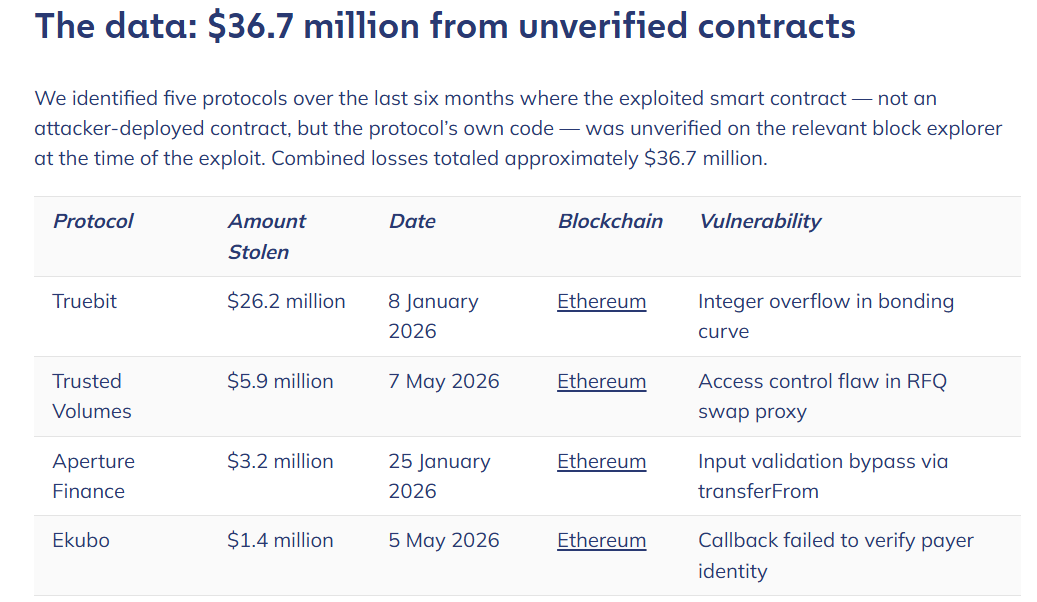
Analysis from blockchain intelligence platform Chainalysis reveals that attackers are also using large language models to analyze raw bytecode from unverified contracts, a method linked to $36.7 million in stolen funds. Chainalysis public sector director Sully Hanif pointed out that AI-enhanced fraud schemes yield significantly higher payouts, averaging $3.2 million per operation compared to $719,000 for standard scams. Furthermore, social engineering and deepfake impersonations surged by more than 1,400% year-over-year in 2025.
Despite the growing automation of code scanning, the most devastating financial losses continue to stem from fundamental operational security failures rather than automated smart contract exploits. CertiK reported that wallet compromises alone accounted for over $444 million in losses across 33 incidents in the first half of the year.
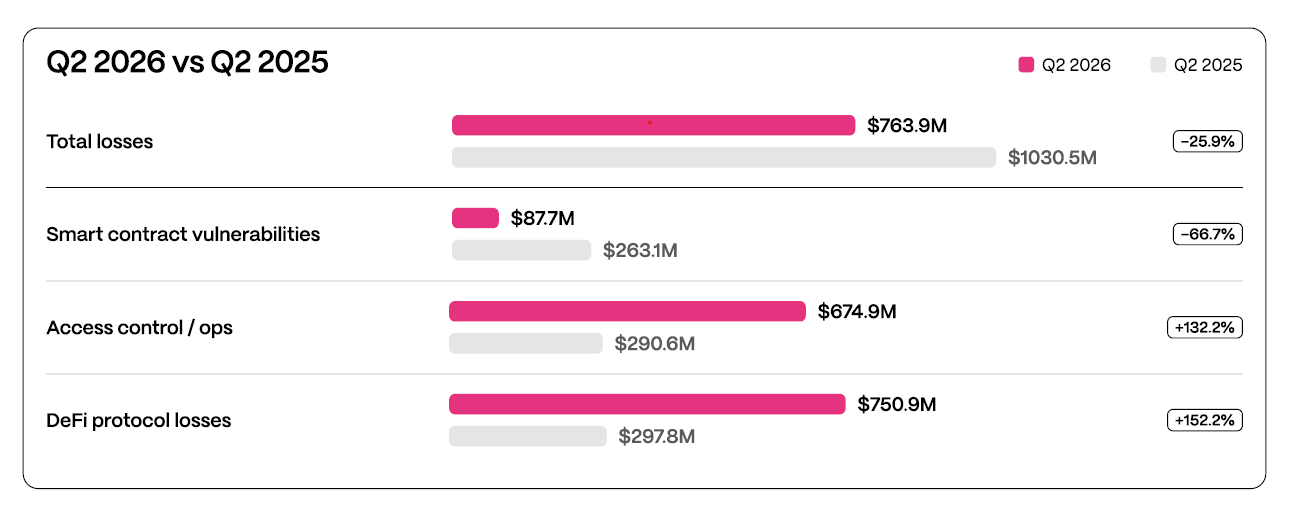
Research from cybersecurity provider Hacken revealed that approximately 88% of all funds stolen in the second quarter of 2026 resulted from compromised private keys, multi-signature controls, and key management systems, totaling more than $674 million out of $763.9 million lost. Major incidents attributed to state-sponsored actors, including breaches targeting Drift Protocol and KelpDAO, relied primarily on infrastructure intrusion rather than automated protocol exploits.
Stephen Ajayi, leading offensive security engineer at Hacken, emphasized that while AI capabilities are steadily progressing, human operational errors and weak key management remain the key determinants of breach severity. Meanwhile, defensive teams are increasingly adopting machine learning systems to detect real-time transaction anomalies and block fraudulent operations before funds can be drained.