China Restricts Helium Exports, Deepening Supply Crisis for European Tech and Healthcare
Beijing’s export controls close a vital backdoor route for Russian gas, compounding shortages caused by Middle East conflicts.
Europe’s high-tech and healthcare industries are bracing for a severe shortage of helium supplies after China imposed new restrictions on shipments, closing a critical backdoor route that European buyers had used to source the essential gas.
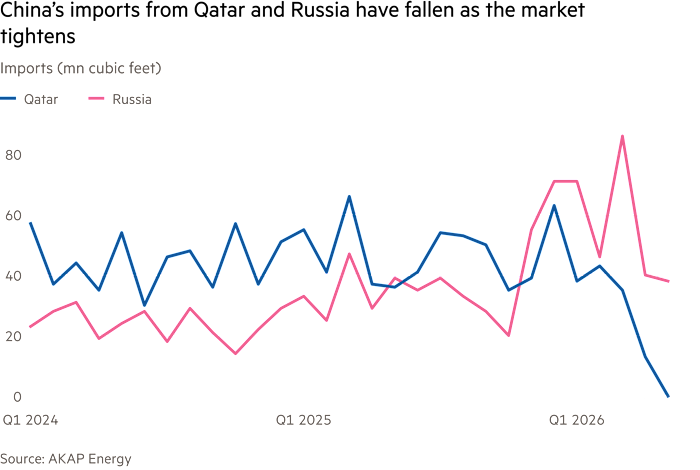
Beijing’s decision to implement export controls on the natural gas byproduct threatens to choke off indirect flows of Russian helium to Western markets. While China is not a major producer of the gas, it has functioned as a vital intermediary. Following the European Union’s 2024 ban on direct imports of Russian helium, European buyers increasingly relied on Chinese re-exports to bypass the restrictions.
According to data from the energy consultancy AKAP Energy, China re-exported an average of 16 percent of its helium imports between March and May of this year. This conduit has now been shut down as Beijing moves to safeguard its own domestic industries and hospitals, which rely heavily on imports.
The timing of China’s restrictions compounds an already severe global shortage triggered by geopolitical conflict. The outbreak of war involving Iran has severely disrupted shipments from the Middle East, particularly from Qatar, which previously accounted for one-third of global supplies. The conflict forced a production halt at QatarEnergy’s Ras Laffan complex, the world’s largest liquefied natural gas facility and a primary source of global helium.
Consequently, spot prices for the gas have roughly doubled since the onset of the Middle East conflict, while long-term contract prices continue to climb. The tightening market is putting pressure on critical sectors. Helium is indispensable for cooling the superconducting magnets in MRI scanners and is a fundamental component in manufacturing microchips.
“China isn’t a source; it’s a conduit,” explained Seokjoon Kwon, a professor at Sungkyunkwan University in Seoul, noting that the ban restricts a key re-export valve Europe had depended on. He added that the move indicates Beijing is bracing for prolonged scarcity.
The supply squeeze is also being felt in Russia, which accounts for nearly 10 percent of global helium production. Moscow imposed its own export restrictions in April, and supply capabilities were further degraded in June following a Ukrainian attack on the Orenburg gas processing and helium plant in western Russia.
Industry representatives warn that prolonged shortages could have cascading effects. Sabina Ciofu, international policy and strategy lead at the trade association techUK, noted that while members are exploring alternative channels, “prolonged constraints could have wider implications across global technology supply chains.”
The semiconductor supply chain appears better positioned to absorb the rising costs than other sectors, though it still faces operational hurdles. Ajit Manocha, president of the global industry association SEMI, stated that the helium market has clearly tightened, forcing semiconductor companies to navigate higher prices, tighter allocations, and increasingly complex sourcing strategies.
In contrast, the United States remains largely insulated from the crisis due to its robust domestic production. Premier Inc, which secures healthcare supplies for American hospitals, reported no disruptions to MRI operations, ensuring that medical-grade helium remains prioritized for clinical use.
For Europe, however, the immediate outlook is highly uncertain. With pre-war inventories rapidly depleting, the coming weeks will test whether rapid diversification efforts can prevent widespread industrial disruptions.