Apple Introduces Manual Equalizer Controls for AirPods in Latest Beta Software
Users can now manually adjust bass, mids, and highs on H2-equipped AirPods models.
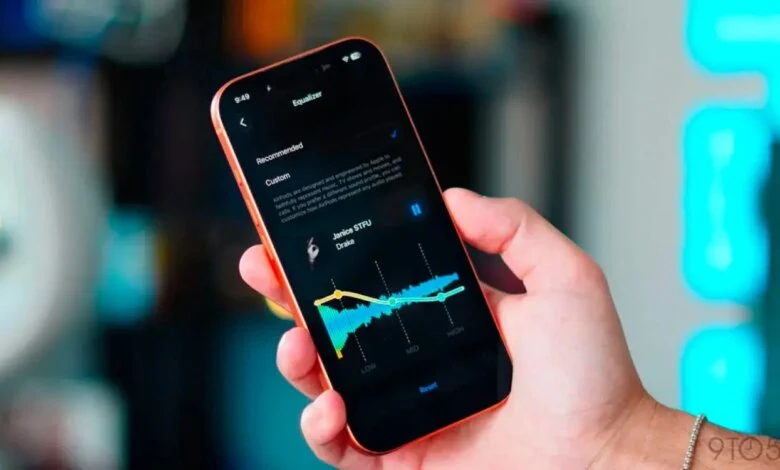
Apple has released a new beta software update for its AirPods lineup that introduces a long-awaited feature: a manual, customizable equalizer. This development marks a significant shift in Apple’s philosophy regarding personal audio, which has historically prioritized automated sound profiles over user-driven adjustments.
The new functionality allows users to fine-tune their listening experience by adjusting three specific frequency ranges. This three-channel control covers bass, mids, and highs, providing a level of hardware-level personalization previously unavailable on Apple’s wireless earbuds. While the interface does not offer the granular multi-band control found in professional audio equipment, it provides a functional middle ground for users looking to emphasize vocals or increase the punch of low-end frequencies.
For years, Apple has relied on its proprietary Adaptive EQ technology. This system uses inward-facing microphones to monitor the sound being delivered to the ear and automatically adjusts the low and mid-frequencies in real-time. While effective for maintaining a consistent sound signature, it offered no manual override for users with specific acoustic preferences. In contrast, competitors like Sony and Bose have long integrated robust equalization tools within their respective mobile applications.
The inclusion of this feature is tied closely to the hardware capabilities of the H2 chip. This silicon, which debuted with the second-generation AirPods Pro, handles the complex computational audio tasks required for high-fidelity sound processing and active noise cancellation. Consequently, the new equalizer settings are restricted to the most recent hardware iterations.
According to the beta software documentation, the following models are compatible with the new customization tool:
- AirPods Pro 2 (both Lightning and USB-C versions)
- AirPods Pro 3
- AirPods 4
- AirPods Max 2
Users running the beta can access these settings by navigating to the Settings app on a paired iPhone, selecting their AirPods, and then entering the audio and routing section. From there, a new ‘Custom’ option under the equalizer menu reveals the sliders for frequency adjustment. This implementation differs from the existing EQ presets found in the Apple Music app, as these new settings apply directly to the hardware, affecting all audio passing through the earbuds regardless of the source application.
The release of this feature in a beta capacity suggests that Apple is in the final stages of testing before a wider public rollout. Industry analysts expect the stable version of this software to be bundled with the release of iOS 26.6 Update”>iOS 26.6, which is tentatively scheduled for late July. This timeline aligns with Apple’s traditional summer update cycle, which often focuses on refining the ecosystem’s existing features ahead of major autumn hardware launches.
While the three-channel control is a major step forward, it remains a simplified version of the equalization tools available on other platforms. By focusing on bass, mids, and highs, Apple aims to keep the interface accessible to casual listeners while still providing the flexibility that power users have requested for nearly a decade.