Nvidia CEO Backs American Use of Chinese AI Models as Washington Weighs Sanctions
Jensen Huang argues open-source Chinese models drive hardware demand and improve security, defying Treasury Secretary Scott Bessent's warnings over intellectual property theft.
Nvidia CEO Jensen Huang has defended the right of American companies to utilize open-source Chinese artificial intelligence models, setting up a direct ideological clash with Washington policymakers who are threatening sanctions over intellectual property theft.
Speaking at a Wistron manufacturing facility in Fort Worth, Texas, Huang dismissed fears that Chinese labs could overtake their American counterparts, declaring there is “zero possibility” of such a shift. Instead, he argued that high-performing open-weight models from China should be embraced globally.
The comments come at a highly sensitive geopolitical moment. Hours before Huang spoke, U.S. Treasury Secretary Scott Bessent told Fox Business that the administration is investigating whether Chinese AI models are built on stolen American intellectual property. Bessent warned that the U.S. Department of the Treasury could impose sanctions within weeks, pointing to “watermarks” of U.S. models allegedly discovered inside Chinese systems.
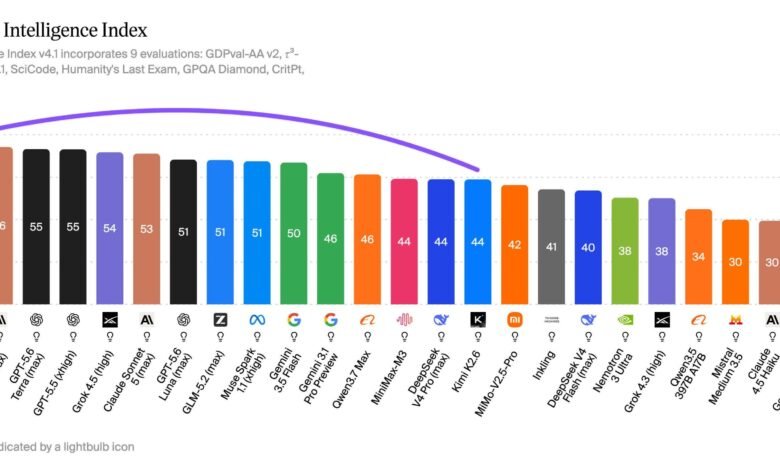
The debate has been supercharged by the July 16 release of Kimi K3, a highly advanced model developed by Beijing-based startup Moonshot AI. According to data from Artificial Analysis, Kimi K3 ranked third on its intelligence index, trailing only Anthropic’s Claude Fable 5 and OpenAI’s GPT-5.6 Sol. It also claimed the top spot on the LMArena blind Frontend Code Arena board.
The rapid advancement of Chinese AI has rattled global markets. The Philadelphia Semiconductor Index fell 12.5% over a single week—its steepest decline in 15 months. Stock markets in Taiwan and Japan dropped by 6% and 4% respectively, while Chinese AI firms also suffered heavy losses, with Zhipu falling up to 30% in Hong Kong trading.
Huang, however, characterized the market’s reaction as a misunderstanding. From Nvidia’s perspective, the proliferation of highly capable, free AI models is a commercial boon. “Free AI should be great for hardware,” Huang noted, explaining that lower barriers to entry inevitably drive up global data center usage and the demand for advanced processors.
This pragmatic view aligns with Nvidia’s broader economic incentives. U.S. export controls, managed by the U.S. Department of Commerce, have severely restricted Nvidia’s ability to sell its most advanced chips to China. This has effectively wiped out a market Huang once estimated could be worth $50 billion annually. While Huang has supported keeping next-generation architectures like Blackwell and Rubin out of Chinese hands, he has consistently lobbied against overly broad trade restrictions.
Addressing national security concerns, Huang flipped the traditional defense argument. Rather than viewing downloaded Chinese models as potential backdoors for foreign espionage, he argued that open-source models are inherently safer because their weights can be inspected, modified, and run entirely offline. He warned that relying on a single, closed proprietary system creates a dangerous “single point of attack.”
In a move targeting domestic competitors, Huang urged Anthropic to open up Claude Mythos, its specialized cybersecurity model currently restricted to select partners. Nvidia is already a partner in Anthropic’s Project Glasswing initiative, which has expanded to roughly 200 partners across 15 countries. Huang argued that keeping such models closed does not benefit U.S. security, especially when alternative open models remain widely accessible.
The geopolitical tension surrounding “model distillation”—the practice of training new AI models using the outputs of existing ones—remains a flashpoint. Anthropic previously accused Moonshot AI of training its systems on millions of Claude conversations. While some experts, including those at Epoch AI, note that the performance gap between open and closed models has shrunk to approximately three months, the practice of distillation is viewed by some in Washington as theft, while Huang described it as fundamental to the nature of machine learning.
The true capabilities of Moonshot’s Kimi K3 will face rigorous scrutiny when its full weights are scheduled to be released publicly on July 27. If the model’s performance holds up under independent testing, it will further complicate Washington’s efforts to isolate Chinese AI developments, raising questions about whether regulatory bans can be effectively enforced once open-weight models are distributed globally.