DIY Radiator Covers: How One Renter Built Custom Magnetic Covers for $100 Each
Renter transforms painted-shut radiators into removable, perforated-metal covers for $100 per unit using Home Depot materials and basic power tools
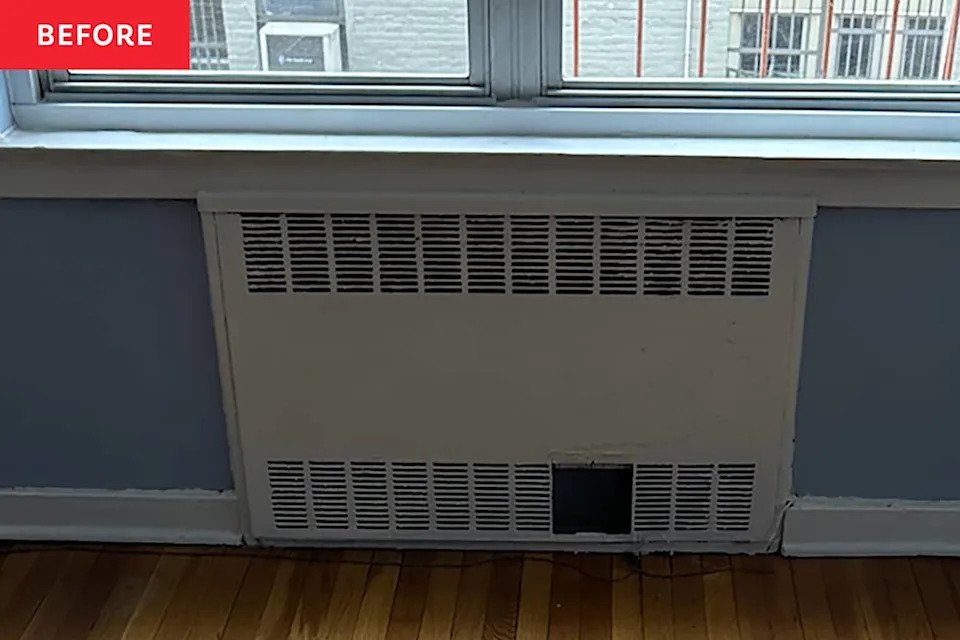
A first-time DIYer transformed painted-shut, debris-clogged radiators into removable, perforated-metal covers using basic power tools and materials from Home Depot — spending roughly $100 per unit and zero contractor fees. The project, completed two years ago in a rental apartment, has since drawn repeated requests from neighbors asking for replicas.
The original radiators suffered from two common problems in older buildings: decades of “landlord special” paint jobs had sealed the factory covers shut, and the remaining vents were too small to allow adequate airflow. Behind the covers, the radiator fins were packed with pet hair, lint, and dust — a fire hazard and efficiency killer that routine cleaning couldn’t reach.
Rather than replace the units or hire a pro, the renter built frames from dimensional lumber using a picture-frame construction method, then skinned them with pre-cut perforated aluminum sheets purchased at Home Depot. Tin snips handled the metal cutting; a staple gun secured the sheets to the frame backs. The critical innovation: cabinet-grade magnets recessed into the frame sides, allowing the entire cover to pop off for cleaning or valve access without tools.


Building codes typically require at least 2 inches of clearance above and 1 inch on each side of a steam or hot-water radiator to prevent overheating and allow convection currents. Perforated metal with 40–60% open area meets airflow requirements better than solid wood or MDF, which can trap heat and warp. The aluminum sheets used here cost about $25 each; lumber, magnets, staples, and tin snips brought the total to roughly $100 per cover — a fraction of the $300–$600 price for custom-fabricated metal covers from specialty suppliers.
For renters, the magnetic attachment avoids wall damage. The 2-inch square dowels used as mounting cleats screw into the radiator’s existing bracket holes or the wall studs behind the unit, leaving only small holes that spackle easily at move-out. Always confirm with the landlord before drilling; some leases prohibit any alterations to heating equipment.
Safety note: Never cover electric baseboard heaters with DIY enclosures. They require specific clearances and airflow paths dictated by UL listing. Steam and hot-water radiators are generally safer to enclose if clearances are maintained and materials are non-combustible or rated for 200°F+ sustained temperatures.
The project took a weekend per radiator, including measuring, cutting, assembly, and installation. A table saw speeds frame work, but a circular saw with a straightedge guide works for beginners. Tin snips ($15) cut aluminum cleanly; aviation snips handle curves if needed. Staple guns ($20) with 3/8-inch staples hold the metal securely. Rare-earth cabinet magnets ($8 for a four-pack) provide strong hold without visible hardware.
Since completion, the covers have survived two heating seasons without warping, discoloration, or magnet failure. The perforated metal wipes clean with a damp cloth; the radiator fins behind get vacuumed annually during the magnetic removal. Heating bills didn’t change noticeably — confirming the open-area ratio preserves convection.
Commercial alternatives include slotted MDF covers ($150–$400), welded steel grilles ($200+), and retro-fit cabinet enclosures ($500+). None offer tool-free removal for cleaning. For tenants in pre-war buildings with cast-iron radiators, the DIY magnetic approach remains the lowest-cost, highest-flexibility solution.
The builder’s only regret: not documenting the measurements for future units. Each radiator in the apartment varied by up to 1/2 inch in width and height — a reminder to measure every opening individually, even in the same building.