

Canon EOS R8 II Brings Retro Design and 40fps Shooting to Full-Frame Cameras
Retro styling meets IBIS and high-speed shooting in Canon’s new full-frame mirrorless camera
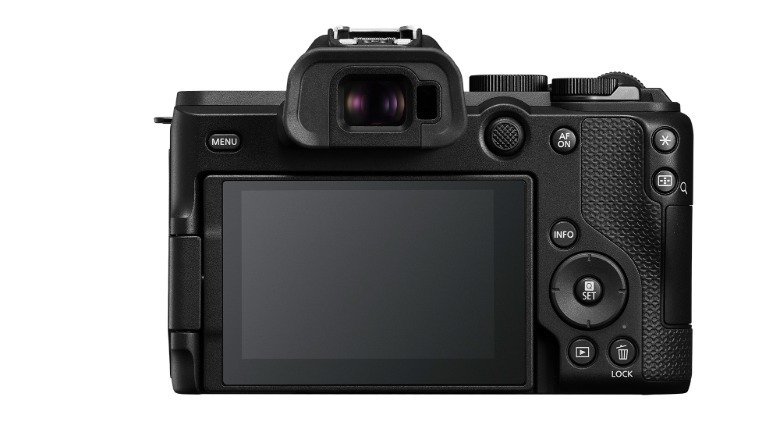
MELVILLE, N.Y. — Canon has announced the EOS R8 II, a retro-inspired successor to its compact full-frame lineup that is positioned between amateur and professional equipment. The camera arrives as inflation, supply chain adjustments, and international tariffs continue to raise the financial entry point for full-frame photography across the consumer electronics sector.
The EOS R8 II costs $1,899 for the body only. Canon’s entry-level EOS RP debuted at $1,299 in 2019, while the original EOS R8 launched in 2023 at $1,499.
Canon has replaced the generic, rounded styling of its recent entry-level mirrorless bodies with a blockier, more squared-off design based on the classic Canon EOS 650. Introduced in 1987, the EOS 650 was a landmark 35mm film camera that brought the Canon EF lens mount and electronic autofocus technology to the market.


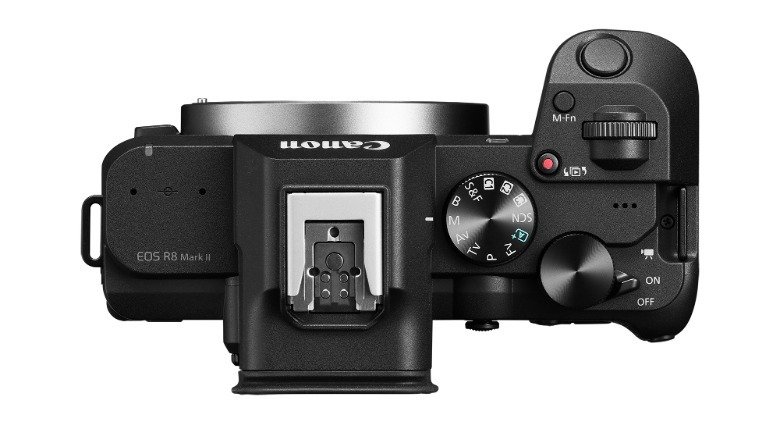
The EOS R8 II uses a sharply angled right corner and, with the optional EG-E2 extension grip, a more horizontally aligned shutter button platform. It is physically larger than its predecessor and adds modern ergonomics, including a dedicated multi-controller joystick for selecting autofocus points. Photographers frequently criticized the original R8 for lacking that control.
Its 24-megapixel sensor is paired with a 5-axis in-body image stabilization system, or IBIS, which was previously omitted from Canon’s lightest full-frame offerings to save weight and cost. With compatible optically stabilized lenses, the system compensates for up to 7.5 stops of camera shake. The camera weighs 1.2 pounds, or 546 grams, making it the lightest full-frame mirrorless camera on the market with in-body image stabilization.
Using an electronic shutter, the EOS R8 II can shoot at up to 40 frames per second with continuous autofocus and auto-exposure. Canon has also expanded the buffer, allowing bursts to produce 58 percent more JPEG files and 30 percent more RAW images than the predecessor before slowing down.
Autofocus comes from Canon’s Dual Pixel CMOS AF II system, which provides 100 percent sensor coverage. Its tracking algorithms are trained to recognize and maintain focus on people, animals, and vehicles. The camera also inherits software features previously reserved for higher-end bodies such as the EOS R6 Mark III, including face registration that lets it prioritize specific people in crowded scenes.
A pre-continuous shooting mode continuously buffers and saves up to 20 frames before the shutter button is fully pressed, equivalent to half a second of action. Video specifications remain largely aligned with the previous model, which was already highly regarded for its class: the EOS R8 II records 4K video at up to 60 frames per second, oversampled from the full 6K width of the sensor.
The camera also records uncropped 1080p slow-motion video at 180 frames per second. Internal recording supports 10-bit 4:2:2 using Canon Log3 in either HEVC or AVC codecs, with bitrates reaching 250 Mbps.
For content creators, Canon has added Positive Filmtone, Negative Filmtone, and Night Scene color profiles. The enhanced A+ Automatic Exposure mode includes an electronic background-blur option for video, while enhanced electronic stabilization modes and a dedicated Slow & Fast motion setting are also included.
Several basic hardware specifications remain unchanged to help retain the EOS R8 II’s entry-to-mid-tier position and control production costs. The camera has one UHS-II SD card slot, a 2.36-million-dot electronic viewfinder, and a 3-inch, 1.62-million-dot vari-angle touchscreen. Its compact LP-E17 battery is rated for approximately 340 shots per charge in power-saving mode.
Pre-orders for the Canon EOS R8 II are open, with shipping scheduled to begin in late October. Alongside the $1,899 body-only configuration, Canon is offering a kit with the compact RF 24-50mm f/4.5-6.3 IS STM lens for $2,099. The EG-E2 Extension Grip costs $100, and the revised Speedlite EL-5 Ver.2 hot-shoe flash accessory will retail for $379.









One Comment