

Can You Use an Old PlayStation Power Cable With a PS5?
Most older C7 PlayStation cables fit, but wire gauge and the C13 exceptions matter.
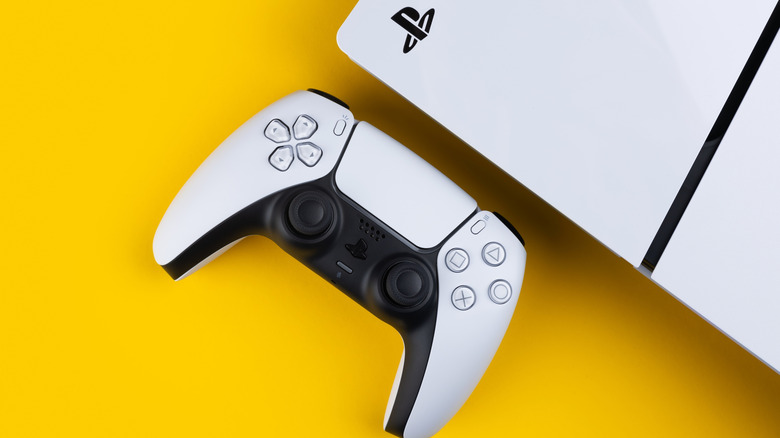
Yes. The PS5 uses a non-polarized IEC 60320 C7 power cord, so undamaged cables from several older PlayStation consoles can also power it. The important exceptions are the original “Fat” PlayStation 3 and early PlayStation 4 Pro models, which use a larger IEC C13 connection. Any replacement must also be in good condition and have adequate wire gauge: an incorrect or substandard cord can cause voltage instability, hardware failure or electrical fires.
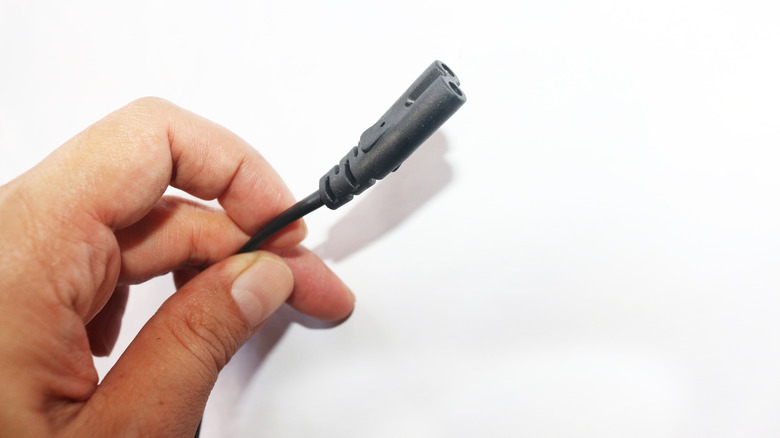
Sony has kept the C7 “figure-8” connector across much of its console lineup. It appears on the PlayStation 1, PlayStation 2, PS3 Slim, PS3 Super Slim, original PS4, PS4 Slim and all PS5 models. Official, undamaged power cords from those legacy systems can be used with any PS5 model if the cable uses adequate copper gauge.


The exceptions are the original “Fat” PlayStation 3, which has a high-draw internal power supply and an IEC 60320 C13 connection, and early PlayStation 4 Pro models. The PS3’s heavy-duty, three-prong grounded connector is identical to those used on desktop PC power supplies and computer monitors. Early PS4 Pro CUH-7000/7100 series consoles had a 310W power supply and also used C13. With the quieter CUH-7200 series, Sony optimized the internal power design and returned to the standard, low-profile C7 connector. The PS4 Pro’s connector therefore varies: early models use IEC C13, while the CUH-7200 series uses C7.
At the back of every PS5 model, an IEC 60320 C8 inlet mates with the IEC 60320 C7 cord. The connector is commonly called a “figure-8” or “shotgun” plug because of its symmetrical, dual-lobed cross-section. It is non-polarized, so it can be inserted in either orientation.
The console’s internal power supply converts AC to DC, leaving the external cord to carry mains voltage directly to the PS5. The supply accepts 100–240V AC at 50/60 Hz, allowing the console to operate globally, but the cord must be rated for the local current and have the correct regional wall plug. The U.S.-standard maximum cable rating is 10 Amps at 125 Volts.
Power demand differs by model and workload. Launch models in the CFI-1000/1100/1200 series have an internal PSU rated up to 350W, while real-world peak consumption during intensive gameplay is about 200W to 220W. The revised PS5 “Slim,” or CFI-2000 series, has a similar peak draw of approximately 200W to 220W. The PS5 Pro has a more powerful 390W power supply to support its upgraded GPU architecture, resulting in higher peak current draw.
At standard North American household voltage of 120V, a 220-watt draw pulls roughly 1.83 Amps; the PS5 Pro’s 390-watt peak draws approximately 3.25 Amps. For extended use without thermal degradation, the cable’s copper conductors should ideally be 18 AWG (American Wire Gauge). Standard 18 AWG copper wire is rated to safely handle up to 10 Amps, providing a safety buffer for the console.
The IEC C7 connector’s widespread use means households may have similar-looking cords from digital clocks, smart speakers or basic inkjet printers. Those low-power cables often use much thinner 22 AWG or 24 AWG wire. Under a sustained 200W+ load, a thin 24 AWG cable’s higher internal resistance can generate excessive heat. That heat can melt the external PVC insulation over time, leading to short circuits, damage to the console’s internal PSU or localized electrical fires.
Some inexpensive third-party cords use Copper-Clad Aluminum (CCA) rather than Oxygen-Free Copper (OFC). CCA has an aluminum core coated with a thin layer of copper; because aluminum has lower electrical conductivity and higher resistance than copper, CCA wire must be significantly thicker to safely carry the same electrical load. Uncertified cables rarely disclose CCA construction, creating a hidden hazard for high-draw appliances such as gaming systems.
The C7 connector used by the PS5 has two rounded lobes. Polarized C7 connectors, often called polarized C7 or C7P, instead have one squared-off edge and one rounded edge. That design aligns the wall outlet’s “hot” (live) and “neutral” wires with the device’s internal circuitry, preventing exposed metal chassis components from remaining energized when the power switch is off.
The PS5 does not require a polarized or grounded three-prong plug: it has a fully insulated, double-shielded internal power supply and no exposed external metal chassis components connected to the electrical pathway. A standard symmetrical C7 connector is suitable.
Sony does not currently sell standalone, official first-party replacement AC power cords through its retail channels. Users who have lost a stock cable, had it damaged by pets or found it pinched behind entertainment furniture must turn to third-party manufacturers. When buying a replacement, users should check for independent safety testing rather than relying on marketing labels.
A UL Listed mark from Underwriters Laboratories indicates testing against rigorous U.S. national safety standards, specifically UL 817 for cord sets and power-supply cords. The CE Mark (Conformité Européenne) indicates compliance with European Union safety, health and environmental protection requirements. TÜV Certified (Technischer Überwachungsverein) identifies validation by a German certification body that the product meets stringent international safety and performance baselines.
Aftermarket manufacturer TPLTECH supplies certified, UL-listed C7 cables rated for 10 Amps at 125 Volts and made with 18 AWG copper conductors. They are sold in varying lengths, offering more setup flexibility than the standard cord provided in the retail box. Meeting these specifications protects the PS5’s internal components from voltage drops, minimizes electrical resistance and eliminates the fire hazards associated with uncertified, thin-gauge cabling.









