California Bans Public Officials from Meme Coins as Federal Crypto Ethics Deadlock Persists
State Law Targets Speculative Tokens Tied to Elected Leaders as Congress Fails to Pass Federal Ethics Framework
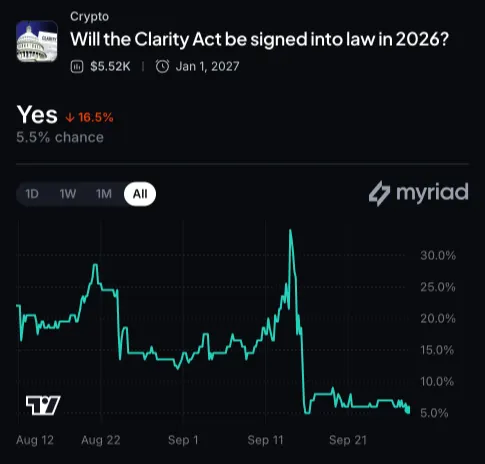
Governor Gavin Newsom has enacted Assembly Bill 2409, a strict prohibition on California public officials and employees issuing meme coins, marking the first significant state-level firewall between political office and speculative digital assets. The law closes a loophole that allowed elected leaders to monetize their influence through tokens whose value derives primarily from internet culture, speculation, or community engagement rather than utility.
The statute’s reach extends beyond individual conduct to the infrastructure supporting these assets. Digital asset service providers operating in California are barred from listing meme coins issued after January 1, 2027, if those tokens are offered by or partnered with any federal, state, or local public official. This forward-looking effective date gives exchanges nearly three years to adjust compliance frameworks, but it creates an immediate chilling effect on new ventures tied to sitting politicians. Enforcement powers are distributed among the Attorney General, district attorneys, city attorneys, and county counsels, who may seek civil injunctions and demand disgorgement of illicit profits.
AB 2409 defines a “meme coin” narrowly to target low-utility, high-volatility instruments marketed via associations with internet memes, characters, current events, or trends. By focusing on the marketing mechanism and value derivation, the legislation avoids banning legitimate cryptocurrency projects while specifically intercepting tokens designed to exploit political fame. The bill does not prohibit all crypto activity by officials; it targets the issuance of specific classes of speculative assets that lack traditional financial backing or technological innovation.


This state action occurs against a backdrop of federal paralysis. While Congress debates broader market structure reforms under the stalled Clarity Act, no comprehensive national ban exists for politicians launching personal tokens. Senator Kirsten Gillibrand (D-NY) has repeatedly introduced measures to restrict such activities, citing disclosures that President Donald Trump earned over $635 million from his Solana-based TRUMP meme coin in a single year. Total crypto-related earnings for the former president exceeded $1.2 billion during the same period. Without federal intervention, states like California are moving ahead to establish ethical boundaries for public trust.
Newsom’s administration framed the move as a direct response to perceived corruption at the federal level. Press statements linked the legislation to accusations of “unprecedented” conflicts of interest within the Trump camp, with the Governor stating unequivocally that no official should profit from their office. This rhetoric aligns with earlier executive orders signed in March 2026, which prohibited California appointees from leveraging inside government information for gains in prediction markets.
Simultaneously, the state strengthened its anti-fraud toolkit through Senate Bill 1208, authored by Senator Tim Grayson (D-Concord). This companion measure expands California’s money-laundering statutes to explicitly cover digital asset transactions. Law enforcement agencies gain new authority to seize and forfeit wallets, accounts, and tokens connected to specified crimes, with provisions ensuring victims can recover distributed assets. These enhanced seizure powers include warrant procedures based on probable cause and mechanisms for freezing assets pending resolution of ownership claims. The digital-asset-specific provisions of SB 1208 carry a sunset clause set for January 1, 2032, allowing future legislatures to reassess the regulatory landscape.
For the cryptocurrency industry, this dual legislative push adds complexity to an already fragmented U.S. regulatory environment. Exchanges serving California residents must now navigate state-specific bans on politically affiliated tokens alongside evolving federal guidance from the SEC and CFTC. The divergence between state ethics laws and federal inaction creates compliance challenges for multi-jurisdictional platforms, particularly as other states consider similar prohibitions. The absence of a unified federal standard leaves firms to patch together localized rules, increasing operational costs and legal risk for products touching political figures.