Banks Race to Verify AI Agents Before They Move Trillions
Mastercard, Visa and Ant International build a framework for verifying autonomous financial agents
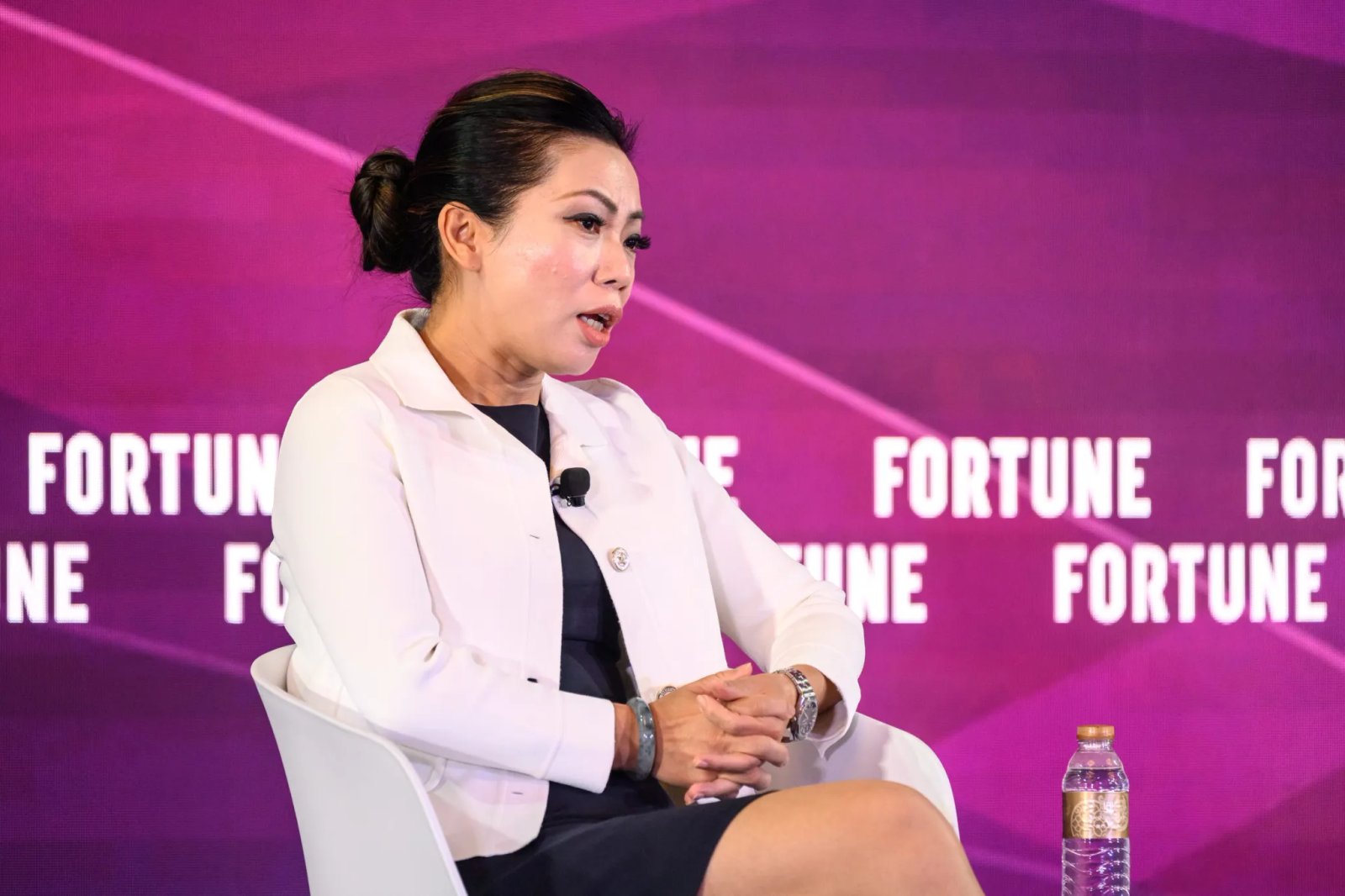
SINGAPORE — The global banking industry is confronting a structural challenge as autonomous artificial intelligence moves beyond answering queries to executing complex financial transactions: its regulatory and physical plumbing must be rebuilt to verify digital “agents” rather than human customers.
The financial system was built exclusively for human interactions, according to Zhuoqun Bian, president of Ant Digital Technologies, the enterprise technology division of Ant Group. Speaking at the Fortune Leaders Forum in Macau on Sept. 8, Bian asked: “Who’s the agent? Who does it belong to? Who authorized it?”
For decades, financial compliance has rested on “Know Your Customer” (KYC) protocols. Established under frameworks including the U.S. Bank Secrecy Act of 1970 and strengthened globally after the 2001 terrorist attacks through the USA PATRIOT Act and Financial Action Task Force (FATF) standards, KYC requires institutions to verify physical identities to combat money laundering and fraud.


The legal framework for electronic transactions already recognizes automated systems. In the United States, laws including the Uniform Electronic Transactions Act (UETA) and the federal ESIGN Act allow electronic agents to form legally binding contracts. Those laws, however, were drafted before modern LLMs (Large Language Models) could independently negotiate and deviate from pre-programmed scripts. When an AI agent carries out an unauthorized or erroneous transaction, liability among the software developer, the user, and the financial institution remains a grey area.
agentic AI is changing the risk profile. These autonomous software systems can make independent purchasing, trading, and operational decisions on behalf of users, while an informational error from an AI chatbot might produce only an “embarrassing moment” for an institution. Benson Wong, managing director and head of digital at JPMorgan Private Bank, said, “If you ask an agent…an information-seeking question and [it answers] wrongly, it’s not good, but you have an embarrassing moment. If you don’t get agentic workflows correct, there are vastly scaled impacts.”
Wong said the main hazard is not necessarily a sudden software crash but the way autonomous tools fit into existing banking processes. “I personally have never come across a situation where the technology of an agent failed us—or rather, led to an undesirable outcome,” Wong said. “It’s always around the operating model, the processes, and the compliance and the controls.”
The scale of the shift could reach $5 trillion in global consumer spending by 2030, according to a January report by McKinsey & Co. Financial technology firms and payment giants are preparing for that machine-to-machine economy through a new compliance framework known as “Know Your Agent” (KYA).
Payment rails are built around a different operating logic. Credit card networks and real-time gross settlement (RTGS) systems, which process high-value interbank transfers, require absolute predictability, uniform execution, and legal certainty. In an April advisory note, the International Monetary Fund (IMF) said AI agents are probabilistic and adaptive, with machine-learning algorithms capable of producing different actions or decisions in response to the same prompt.
“Payment rails, from card networks to real-time gross settlement (RTGS) systems, rely on predictable rules, legal certainty, and clear accountability structures to ensure trust and financial stability,” the IMF authors wrote.
On Sept. 6, Ant International, the global payments arm of Chinese fintech giant Ant Group, announced a collaboration with Mastercard and Visa to develop a KYA interoperability framework. The proposed system would allow card networks, digital wallets, and online marketplaces to recognize, verify, and trust AI agents across different proprietary digital ecosystems.
The companies are working through BuildFin.ai, an industry platform convened by the Monetary Authority of Singapore (MAS). Singapore’s central bank has previously launched initiatives such as Project Guardian to test asset tokenization and institutional decentralized finance, and MAS has long been a key testbed for advanced financial technology.
Bian said an autonomous agent can initiate thousands of high-value transactions in seconds without human oversight. He added that the parameters for verifying an agent’s identity and authority must therefore be far more stringent than those applied to human bank account holders.
“From the financial institutions’ perspective, when we initiate a transaction, we have to do the KYC,” Bian said. “In the agent economy, you need to know your agents. Who’s the agent? Who does it belong to? Who authorized it?”
“Looking forward, all the infrastructure needs to be rebuilt or enhanced for agents,” Bian said, concluding: “You need to know your agents much more than you know your customers.”