

Al-Azhar Institutes Unveil Extensive Development Drive, Boosting Digital Skills and Infrastructure
Al-Azhar's educational sector reports a year of comprehensive upgrades, from digital learning to teacher training and facility enhancements.

Al-Azhar institutes sector implemented a wide-ranging development initiative over the past year, reflecting Al-Azhar Al-Sharif’s vision for pioneering education that blends tradition with modernity. This initiative addresses national aspirations for advancing the educational process and its tools, with efforts concentrated on key pillars to enhance sector efficiency and achieve a qualitative transformation in performance and outcomes.
Digital Transformation and Technological Infrastructure Development
The year saw significant expansion in digital transformation projects. This included developing electronic systems, integrating data for over one million students into unified digital databases, and creating an electronic monitoring system for schools and institutes. Administrative records were digitized, and reliance on digital learning platforms increased. A total of 22,000 teachers received training on effective use of technological tools.

For the first time, Al-Azhar launched a Japanese platform project dedicated to teaching programming and artificial intelligence to secondary school students. This initiative covers approximately 198,970 students across 2,381 Al-Azhar secondary institutes, marking a significant step towards preparing a distinguished generation that combines traditional values with contemporary skills, ready for the digital and knowledge-based era.
Preparations are also underway for the ‘Al-Azhar-Tech Platform’ project. This platform represents a qualitative leap in Al-Azhar education, embodying Al-Azhar Al-Sharif’s vision to equip students with future digital tools and hone their technical and scientific skills, positioning them as leaders in information and communication technology fields.
Teacher Professional Development and Capacity Building
Teacher professional development received significant attention, with diverse training programs implemented both centrally and locally. A large number of educational staff benefited from these programs, which covered skill development for teachers of students with disabilities in inclusive institutes, computer science teachers on programming fundamentals and AI, and training for new institute sheikhs, deputies, and supervisors.
Programs also focused on enhancing skills for teachers in model language institutes in mathematics and ‘Discover’ subjects in English. Kindergarten teachers received training on Tajweed rules for ‘Juz’ Amma’ and AI utilization. Additionally, initiatives included developing skills for primary Quran teachers on the new simplified Tajweed curriculum, and training for educators on learning difficulties. Training courses were organized for primary teachers in Cairo, Giza, and Qalyubia on positive family education awareness, alongside sessions on population education, family planning, and pre-marital counseling.
Two hundred trainers were prepared to deliver mental development sports for youth. One thousand kindergarten and primary teachers were trained on pronunciation principles, while 100 French language teachers and 120 English language teachers received training on effective teaching methods in collaboration with the American University in Cairo. An additional 30 teachers underwent English language arts training at the British University in Cairo.
Overall, 15,059 faculty members (7,465 male teachers and 7,594 female teachers) benefited from professional development. Another 4,605 teachers received training through other programs. New training initiatives included 1,064 teachers in Al-Azhar’s special education sector and 120 teachers and supervisors. A major training project engaged 8,000 male and female teachers and 1,000 supervisors in English language arts and leadership, with 1,000 teachers annually participating in the Nile TESOL conference.
A hierarchical system for sustainable professional development was introduced, alongside travel grants for eight individuals to attend international conferences in the United States and Britain. Task forces were formed, including 27 supervisor trainers (under the ‘Trainer for Each Governorate’ initiative) and 182 educational trainers (under the ‘Trainer for Each Administration’ initiative). A new, informal structure comprising 27 coordinators was also established.
Al-Azhar teachers participated in the international TOEFL program. High-level textbook series were redeveloped, and four-stage training and development plans were designed for sustainable professional growth. Training also encompassed an educational program for preparatory students titled ‘Al-Azhar: Religion and Worldly Life,’ modern activity-based teaching methods, digital transformation skills, and the use of educational platforms. Supervisors received training on electronic monitoring mechanisms.
Five hundred Al-Azhar institute library staff received training and skill enhancement. This included 125 workshops for all library personnel and approximately 400 seminars and lectures as cultural activities.
Quranic Competitions, Cultural, and Sports Activities
Al-Azhar institutes sector prioritized developing students’ skills and cultural aspects this year, focusing on nurturing creative talents and preserving Al-Azhar’s identity. The Al-Azhar Holy Quran Competition saw broad participation from over 152,000 male and female students. Quran Affairs convoys conducted 38 field tours to monitor judging committees, leading to the discovery of hundreds of outstanding talents.
The sector also organized cultural and sports activities benefiting over 2 million students. These included reading challenges, decoration, Arabic calligraphy, religious chanting, and theater competitions. Competitions for the best educational tool were activated, and the ‘Participate and Create’ initiative was launched. Thirty lists were prepared for the Al-Azhar National Spelling Bee, alongside the ‘Pioneers of Arabic’ competition. The fourth season of ‘I Am Refined by My Morals’ and the second season of ‘Together We Learn’ initiatives were inaugurated, in addition to ‘Unbreakable Souls’ for foreign students.
Al-Azhar students participated in local, regional, and international mental development championships. The General Department of Educational Computing launched the ‘Al-Azhar Technology’ initiative, offering four scholarships to Al-Azhar students. Thirty-one Al-Azhar teams competed in the Future Science Challenge. Students also engaged in the fifth edition of the Arab Programming Week competitions, the preliminary and main studies for the international PISA test, and national tests in Arabic and mathematics. The ‘Little Azhari,’ ‘Role Model Teacher,’ ‘Eloquent Speaker,’ ‘Chanter,’ and ‘Little Talent’ competitions were held. An awareness campaign for Attention Deficit Hyperactivity Disorder (ADHD) was implemented across 12 Al-Azhar regions.
Educational and Awareness Efforts to Build an Authentic Al-Azhar Generation
Educational efforts intensified through a comprehensive awareness plan. This included numerous awareness events within institutes, extensive meetings with students and parents, behavioral campaigns on discipline, cleanliness, and time management, and support for student initiatives. Workshops were established to innovate and implement systematic educational tools. The initiative to create psychological and educational counseling units in Al-Azhar regions was completed.
A new unit, ‘Binaa’ (Building), was established to foster a creative Al-Azhar generation. It developed a plan for various educational, advocacy, cultural, skill-based, and behavioral initiatives and projects aimed at preserving Al-Azhar’s civilizational identity. Awareness seminars were conducted as part of the ‘No Touch’ program to address harassment risks. Initiatives like ‘Midad,’ ‘Qawl wa Fasl,’ ‘Oasis of Preservation,’ ‘Ala Bayyinah,’ and ‘Voiced’ were launched. The ‘Midad’ (Read – Ascend) competition project commenced its first season, attracting nearly 5,000 students. Additionally, the ‘Your Mind is a Trust’ initiative was introduced to promote moderate Al-Azhar thought.

Monitoring, Evaluation, and Field Performance Development
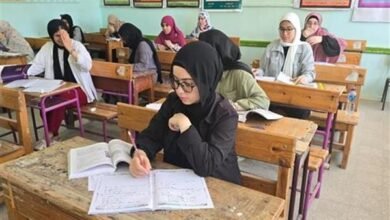
The sector executed one of the largest field monitoring operations across Al-Azhar regions, intensifying efforts to oversee institutes and administrations nationwide. Visits aimed to assess discipline levels, review study regularity, examine exam preparations, and test the effectiveness of educational tools. Continuous monitoring of laboratories and educational resources identified and resolved obstacles. Primary education directors’ adherence to the new education system and addressing teacher shortages were also tracked. Semi-regular meetings with heads of departments identified optimal methods for educational development, complemented by field visits to understand implementation challenges and propose solutions. Exam results were analyzed to identify academic achievement levels for students scoring below 65%, leading to plans for improving underperforming students’ levels during holidays.
Educational Infrastructure Support and Institute Efficiency Enhancement
The sector aimed for a fundamental shift in the educational environment through a comprehensive plan to upgrade infrastructure and ensure institutional performance quality. A significant achievement involved 1,839 Al-Azhar institutes receiving accreditation from the National Authority for Quality Assurance and Accreditation of Education (NAQAAE) across various stages. Preparations are underway for accreditation visits to 184 Al-Azhar institutes in the first semester and 240 institutes in the second semester. The number of NAQAAE-accredited kindergartens increased to 620.
Over 700 institutes underwent maintenance, and educational buildings were upgraded. New activity halls were equipped, and urgent needs were met. The Supreme Council of Al-Azhar Al-Sharif approved initiating procedures for establishing private Al-Azhar institutes with tuition fees in Al-Adwa (Minya), New Akhmim (Sohag), New Qena, and Al-Obour. Approval was also granted for three branches of the private Tala’e Al-Azhar Institute. Existing phases saw an increase in classrooms, and new phases were opened and operated in existing private Al-Azhar institutes.
The number of kindergarten classrooms expanded to nearly 5,000. Libraries received 10,000 cultural and scientific books, and 27 central libraries were established and activated across all Al-Azhar regions, evolving into cultural centers.
In summary, Al-Azhar institutes sector achieved a clear developmental leap across all areas over the past year. This ranges from precise monitoring and enhanced education quality to teacher training, nurturing gifted students, boosting digital transformation, and upgrading infrastructure. The sector continues its progress towards realizing Al-Azhar Al-Sharif’s vision: cultivating aware students proud of their identity and equipped to carry Al-Azhar’s message both domestically and internationally.