

AI Is Rewriting the Corporate Playbook Before Companies Are Ready
From comb-shaped employees to 100-unit manufacturing, AI is forcing companies to redesign how they work
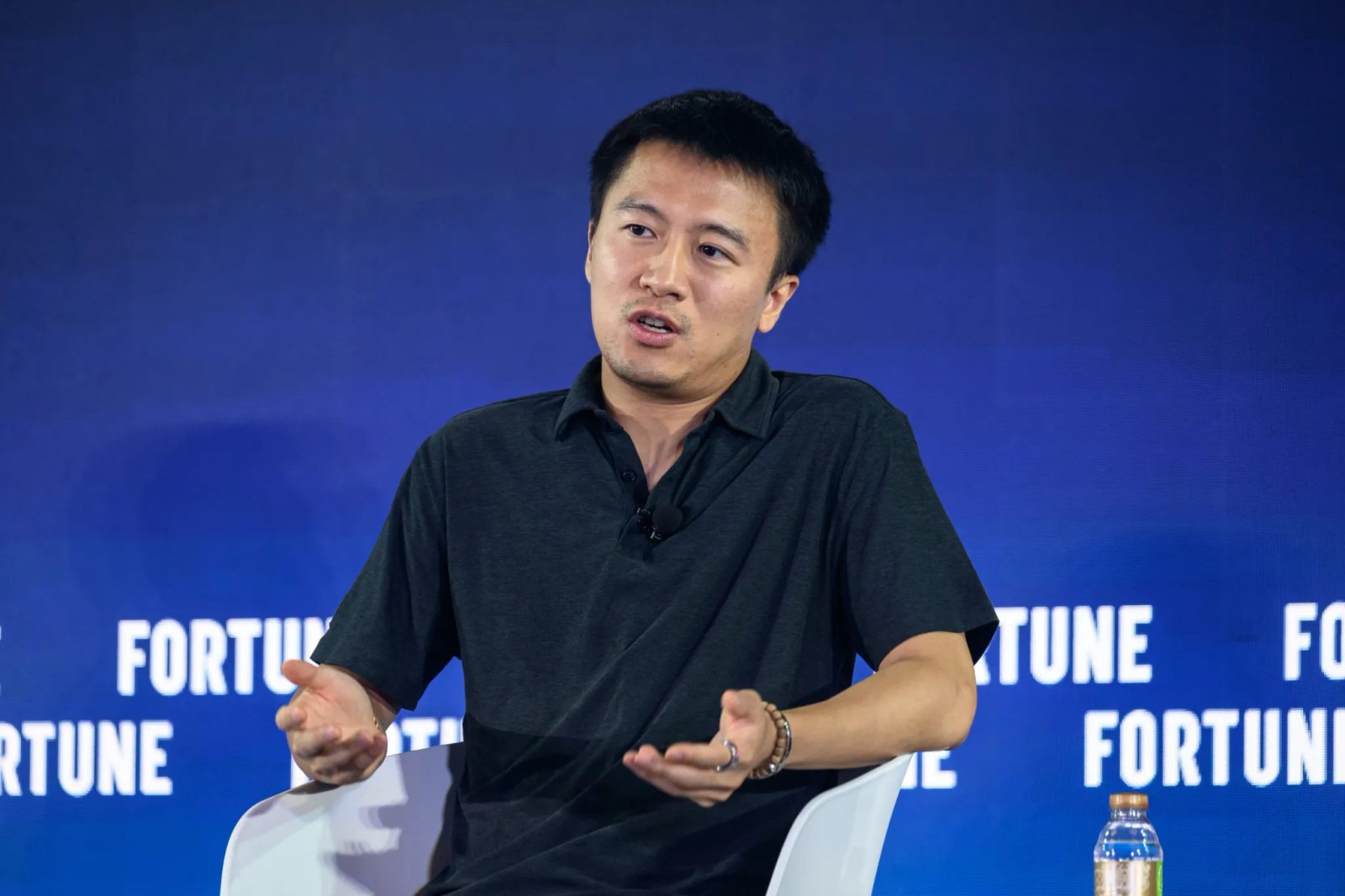
MACAU — artificial intelligence is moving beyond administrative automation as large language models and autonomous software agents take on responsibilities once reserved for executive reasoning and project execution. At the Fortune Leaders Forum in Macau on Sept. 8, executives from Black Lake Technologies, Wipro, and IDEO discussed the resulting pressure on talent models, management roles, and supply chain logistics.
For Becca Carroll, chief strategy officer at IDEO, the change is undermining familiar ideas about competitive advantage. Speed to market and fast-follower strategies no longer offer a “durable” moat when rivals equipped with AI tooling can deploy an identical product feature within days or weeks of its creation.
IDEO, the global innovation firm that pioneered human-centered design, had previously popularized the workplace model of the “T-shaped person.” Championed by former Chief Executive Officer Tim Brown, the model combined deep vertical expertise in one discipline with broad horizontal empathy for cross-functional collaboration.


Carroll now proposes a different archetype: the “comb-shaped” employee. It describes polymathic workers with deep, specialized expertise across multiple distinct fields who can move between them as automated tools lower technical barriers across disciplines.
That change in frontline talent is accompanied by a shift in executive responsibility. James Arnett, managing director for Southeast Asia, Greater China, and South Korea at Wipro, said corporate leadership is moving “from directing to orchestrating.”
Wipro, the Bengaluru-headquartered IT services provider, is no longer treating machine learning merely as a tool for reducing client costs. The company is redesigning its core service offerings from scratch to integrate autonomous workflows.
Arnett said technology is rarely the main constraint on enterprise transformation. “A lot of the time, we can see that AI can do something—but is the organization ready for it?” he said. Human adoption, workplace culture, and client readiness, he added, create greater hurdles than algorithmic capability.
Carroll also pointed to organizational capacity. Installing software alone cannot deliver enterprise adaptation, she said. Companies must “move at the speed of trust” and deliberately design a “trust journey” aligned with their long-term corporate vision.
At Shanghai-based Black Lake Technologies, founder Yuxiang Zhou has been testing how AI can alter day-to-day commercial operations. The startup provides cloud-based manufacturing software and industrial AI agents to factories across China and Southeast Asia.
Zhou began with a limitation in standard Customer Relationship Management (CRM) software. Sales representatives typically enter text manually, a process that can reduce a full day of complex client interactions to “a very subjective one paragraph” for managers to analyze.
Black Lake equipped its sales representatives with wearable location-tracking pins to record their client interactions. Audio recordings were sent directly to a specialized AI agent trained to analyze sales dynamics and provide real-time coaching.
In a blind test, Zhou compared the AI coach’s strategic recommendations with those of Black Lake’s top human sales leader. Seven out of 10 senior sales representatives voted for the machine’s advice.
The result changed Zhou’s own leadership framework. Rather than using AI to co-pilot human leadership, he shifted toward “co-piloting the AI,” with strategic decisions distributed among software agents, large language models, and human executives.
Yet Zhou said human management remains necessary because AI models are inherently “emotionless.” Software agents can assess conversational metrics and prescribe deal strategies, while human leaders still have to motivate, inspire, and manage team dynamics.
Zhou said the broader business community has not yet seen the technology’s full transformative potential. “I’m still looking for the Google moment for AI,” Zhou said. “I don’t think it has happened yet.”
He defined that moment as the point at which artificial intelligence restructures an industry’s underlying economic architecture, rather than merely automating human jobs to reduce headcount.
Black Lake is testing that possibility through an agile manufacturing platform that connects celebrity concepts directly to digitized production lines. Custom merchandise manufacturing has traditionally required high minimum order quantities (MOQs), often batches of at least 10,000 units to offset setup costs for factory tooling, material sourcing, and assembly lines.
The platform automates design translation and factory scheduling, reducing minimum order requirements to 100 units. That makes low-volume custom manufacturing commercially viable while the company continues to test how industrial AI can reshape production.
The executive panel’s discussion in Macau centered on corporate operations reaching a friction point: algorithmic intelligence is advancing faster than institutional adaptability, forcing technology providers, management consultancies, and design firms to overhaul traditional organizational structures and workplace archetypes.










2 Comments