

TianGong Ultra Trades Sprint Records for Stability
X-Humanoid shifts from record speed to controlled stopping and industrial reliability
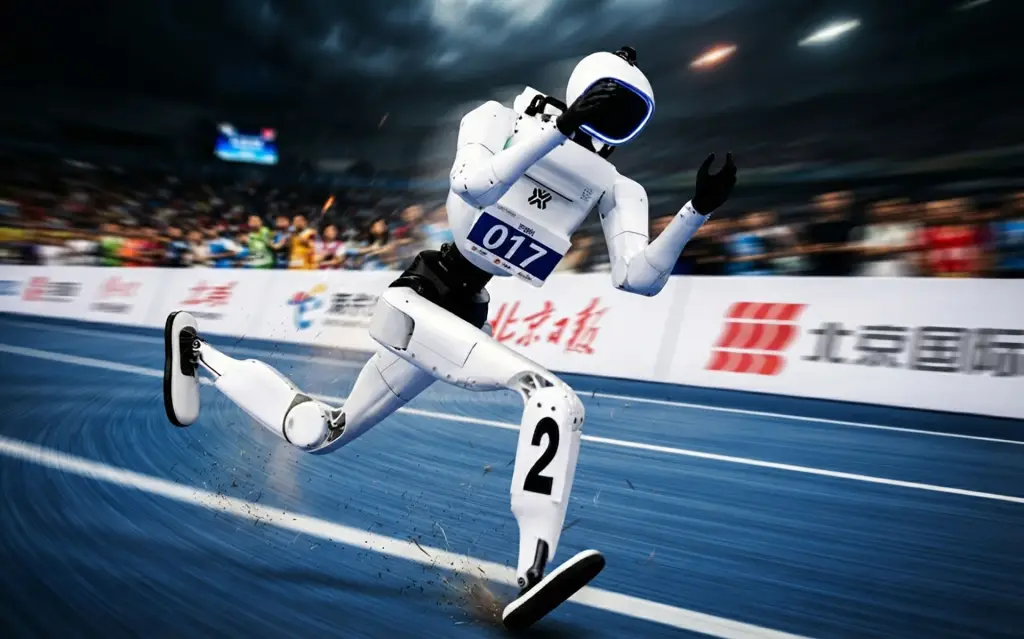
BEIJING — X-Humanoid is redesigning its flagship bipedal machine, the TianGong Ultra, as engineers shift attention from sprint records to mechanical stability. The Beijing-based robotics venture is backed by Chinese technology corporations Baidu and Xiaomi and is confronting deceleration and control hurdles as it works to move laboratory prototypes into real-world industrial and emergency environments.
The 75-kilogram (165-pound) robot reached peak velocities surpassing 17 meters per second during the World Humanoid Robot Games. That pace outran the 9.58-second 100-meter world record set by Usain Bolt in 2009 by nearly a full second, but the extreme kinetic forces exposed severe structural vulnerabilities.
During track demonstrations, stopping the machine required impact-absorbing crash barriers. Multiple competing bipedal units at the event also suffered catastrophic mechanical failures, including chassis fractures upon deceleration.


Jack Guo, the 34-year-old lead engineer directing development at X-Humanoid, said the next hardware revision will target mass reduction and enhanced braking torque. The redesign will also use dynamic deceleration postures intended to bring the robot to a controlled stop without external intervention.
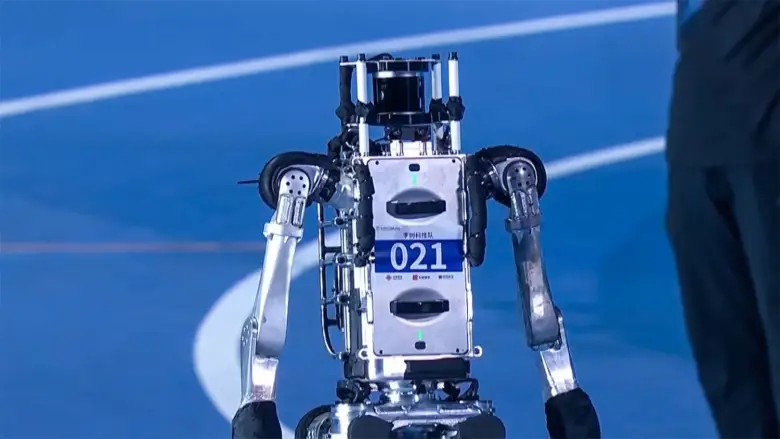
In an interview, Guo said the team’s immediate priority is establishing fundamental physical reliability before expanding the robot’s autonomous artificial intelligence capabilities. He compared the current state of bipedal robotics with the early decades of the automotive industry, saying basic chassis controllability must precede complex decision-making software.
The company’s two-tier hardware strategy addresses different commercial sectors. The TianGong Ultra is slated for rugged outdoor applications, including remote infrastructure inspection and emergency search-and-rescue operations, while the lab has engineered a more compact sibling unit named Omni.
Omni is designed for indoor commercial services and light manufacturing. The platform recently completed an unassisted vertical climb of more than 17 flights of stairs, emphasizing continuous balance and step negotiation rather than sprint velocity.
The effort to commercialize bipedal systems is unfolding amid intensifying global competition in humanoid robotics. American firms such as Boston Dynamics and Agility Robotics have initiated pilot programs deploying bipedal and quadrupedal machines into automated logistics hubs and automotive assembly plants.
Chinese developers, supported by domestic tech conglomerates and state manufacturing incentives, are accelerating tests of general-purpose humanoid platforms for unstructured environments. X-Humanoid’s development roadmap outlines parallel tracks: refining the mechanical actuators and balance algorithms required for safe locomotion, followed by integrating large language and vision models to support autonomous task execution on industrial work sites.





One Comment