

Canada’s EU Pivot Opens the Door to an Unprecedented Alliance
Ottawa’s trade realignment brings an unprecedented EU proposal
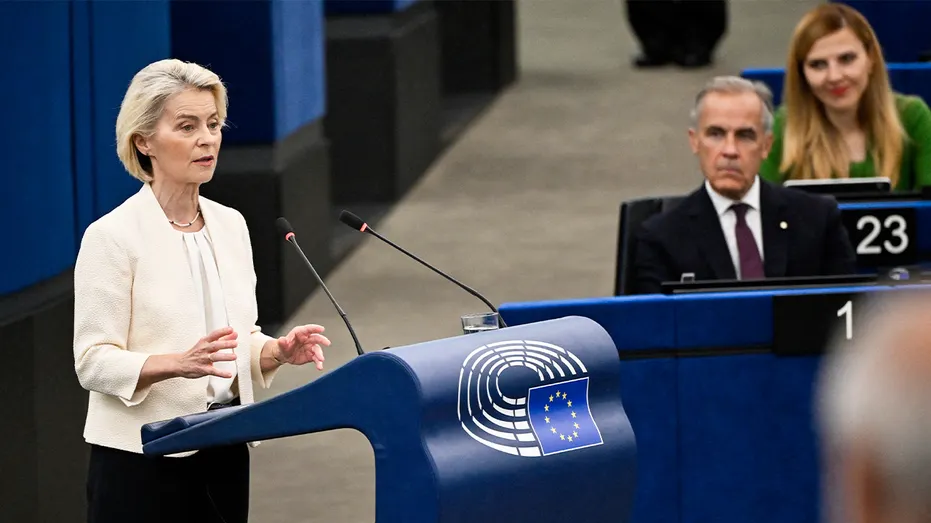
Canada’s effort to diversify its trade is moving toward an unprecedented diplomatic framework after the European Union proposed making the country its first “associate member.” Prime Minister Mark Carney has committed to doubling Canada’s non-U.S. trade over the next ten years, while clarifying that Ottawa is seeking a “unique alliance” rather than full EU integration.
The proposal follows a complete breakdown in bilateral trade negotiations between Canada and the United States, followed by a series of tit-for-tat tariffs. Since the United States has historically accounted for more than 70 percent of Canada’s exports, the opposition has closely examined the economic consequences of the dispute and the government’s response.
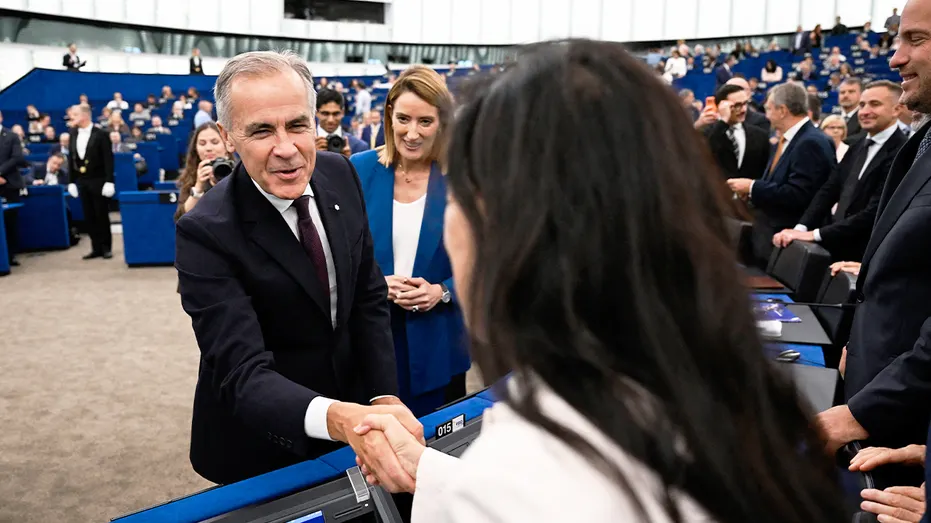


European Commission President Ursula von der Leyen made the offer during her annual State of the European Union address in Strasbourg, France. Speaking directly to Carney, who was present in the legislative chamber, she proposed opening negotiations to establish Canada as the EU’s first “associate member.” European lawmakers responded with a standing ovation.
The trade conflict threatens North America’s highly integrated supply chains, which have been governed by the United States-Mexico-Canada Agreement since it succeeded NAFTA in 2020. The USMCA is scheduled for a joint review in 2026, adding urgency to the tensions between Ottawa and Washington.
Von der Leyen called the proposed relationship an “Alliance for the Future.” It would move the Canada-EU relationship beyond the Comprehensive Economic and Trade Agreement, which has been provisionally in effect since September 2017 and eliminated approximately 98 percent of tariffs between Canada and the EU. Full implementation of CETA has faced protracted ratification challenges in several European national parliaments.
Carney’s trade agenda follows a career that includes serving as Governor of the Bank of Canada during the 2008 financial crisis and later as Governor of the Bank of England. He is scheduled to address the European Parliament, while formal, detailed discussions on the alliance are expected to begin at the upcoming Canada-EU summit in Montreal.
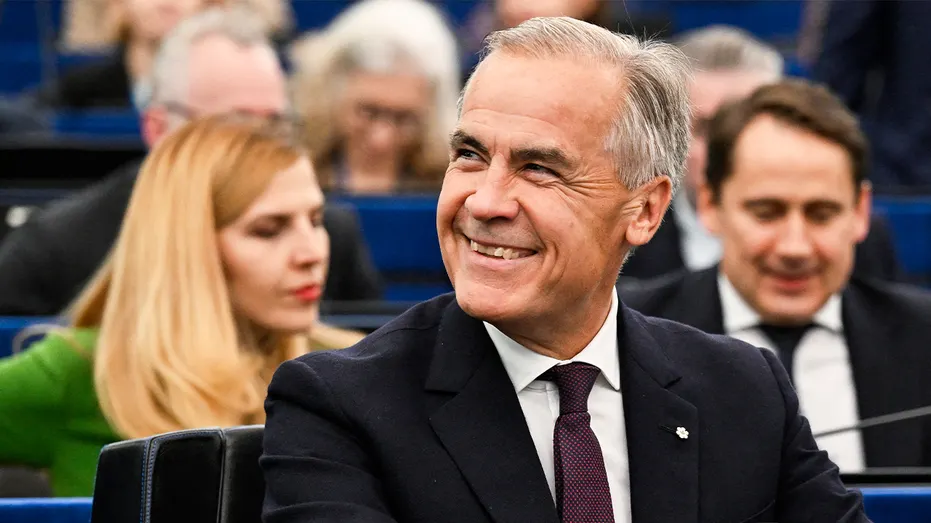
The proposed “Alliance for the Future” would create a shared economic security space covering advanced manufacturing, defense production, energy, critical minerals, artificial intelligence, quantum technology, cybersecurity, and Arctic security. Von der Leyen said the partnership is rooted in shared democratic values and aligned positions on defense, climate change, supply chain resilience, and the conflict in Ukraine.
Domestic political pressure has also followed the rupture with Washington. Pierre Poilievre, the Leader of the Official Opposition, recently appeared on the Fox Business Network program “Kudlow” to discuss the deteriorating trade relations. The government’s subsequent trade policy has been scrutinized alongside the dispute’s economic impact.
Despite the symbolic warmth of the Strasbourg announcement, the proposed arrangement faces political, legal, and economic hurdles. The European Union has historically maintained a rigid legal structure for its external relations and resisted flexible alliances that do not require full regulatory alignment.
An EU diplomat, speaking on the condition of anonymity, expressed surprise at the announcement, calling the proposal vague and questioning whether the Commission president was overpromising on a framework that cannot be easily delivered.
Deeper economic integration would also have to address long-standing trade disputes. Mark Manger, a professor of political economy and global affairs at the University of Toronto, said European officials have long been frustrated by Canadian protectionism in telecommunications and the federally protected dairy sector.
Those domestic policies have previously complicated trade negotiations and are expected to remain key friction points as discussions proceed. Any final agreement establishing associate membership for Canada must secure the unanimous approval of all EU member states.









