The historical division between high-fidelity home audio and portable convenience is rapidly eroding as advanced wireless protocols and digital processing redefine how sound is transmitted and reproduced. The choice between wired and wireless speaker configurations is no longer a simple trade-off between sound quality and convenience. Modern hardware design, network bandwidth, and signal processing have made the physical connection method only one of several variables dictating performance.
Traditional passive speakers need an external amplifier or receiver. That component translates source signals into electrical current and sends them through physical speaker cables, typically copper wires measured by American Wire Gauge (AWG) standards.
Active, or powered, speakers place amplification components inside the speaker cabinet. Most wireless models belong to this category and receive digital audio data over Wi-Fi or Bluetooth networks. Although they remove analog speaker cables from the room, many home-oriented wireless models still need a physical power cable connected to an electrical outlet. Portable models instead rely on internal rechargeable batteries.


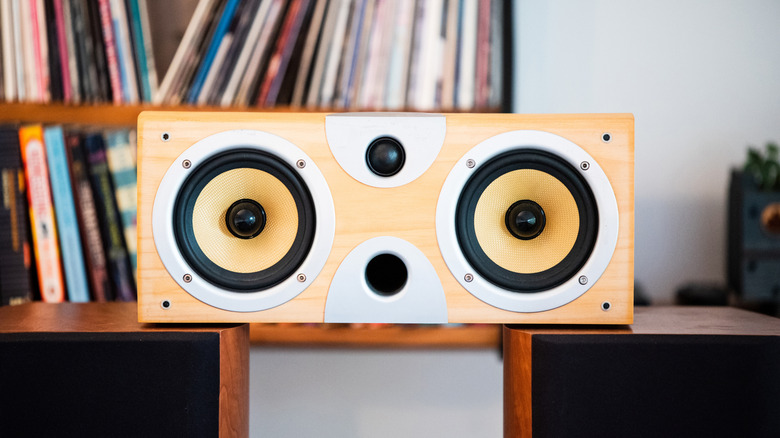
Wireless transmission also introduces latency. Encoding, transmitting, decoding, and buffering digital audio can create a perceptible delay between the source device and the physical drivers. Modern video playback applications can automatically offset this by delaying the video track to match the audio, but real-time interactive tasks such as video gaming and live audio monitoring do not allow for predictive buffering.
Bluetooth transmission has historically contributed substantially to this lag. The Bluetooth Special Interest Group introduced LE Audio, or Low Energy Audio, to address it. LE Audio uses the LC3, or Low Complexity Communication Codec, to reduce latency and power consumption compared with the older Bluetooth Classic standard.
For permanent home theaters and dedicated stereo listening spaces, passive wired systems retain fundamental advantages. Their source component, digital-to-analog converter (DAC), preamplifier, power amplifier, and speaker cabinet remain separate units, allowing listeners to upgrade or replace individual components without discarding the rest of the system.
That modular lifecycle allows high-quality passive speakers to remain functional and acoustically competitive for decades, unaffected by changing software standards or obsolete wireless protocols. Physical copper wiring also provides a stable signal path free from RF interference.
Yet a physical cable cannot restore information removed from a compressed, lossy digital file. A standard MP3 or basic streaming track remains limited by its original compression, regardless of whether the signal reaches the speaker through a wire.
The overall acoustic output is also bound by the weakest link in the audio chain: the original recording quality, the speaker’s internal driver design, the amplifier’s distortion characteristics, and the physical acoustics of the listening room. Multi-channel wired systems, including 5.1 or 7.1 surround sound setups, bring another practical issue because their cables may need to run across walls, under flooring, or behind furniture.
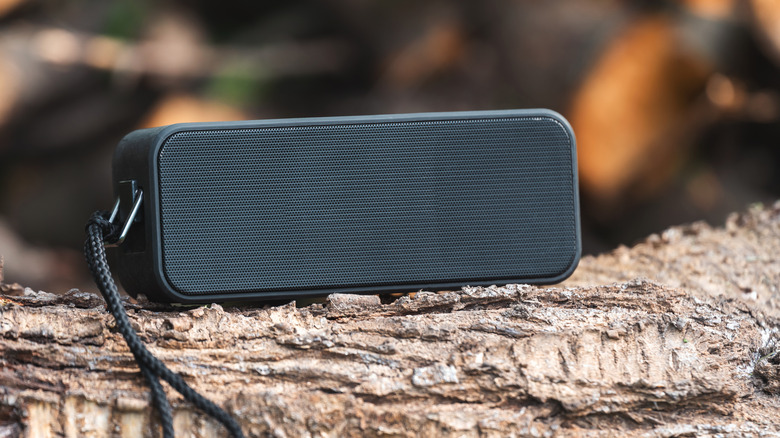
Wireless systems remove those room-layout restrictions and have expanded multi-room home integration. Bluetooth remains the dominant protocol for portable, off-grid listening because it establishes a direct peer-to-peer connection between a source device, such as a smartphone or laptop, and the speaker without relying on local area network infrastructure.
For fixed home environments, Wi-Fi-based audio systems are generally preferred over Bluetooth. Wi-Fi networks provide substantially higher bandwidth, supporting uncompressed or lossless audio formats such as FLAC or ALAC without downsampling.
Wi-Fi systems can also distribute synchronized audio across multiple rooms. Manufacturers use proprietary software ecosystems or established protocols such as Apple AirPlay 2, Google Chromecast, and DTS Play-Fi to group speakers together.
Denon’s HEOS, for example, lets users control and synchronize speakers in different rooms through a unified smartphone application. The system can work with models including the Denon Home 200, 400, and 600.
This convenience increases reliance on local network stability and software lifecycles. Router congestion or interference can cause Wi-Fi audio dropouts, while proprietary wireless platforms often require users to remain within one manufacturer’s ecosystem to preserve multi-room synchronization.
Some manufacturers have developed hybrid models to combine portable versatility with home network performance. Devices such as the Sonos Play series and associated portable units use home Wi-Fi networks for high-resolution streaming when docked and switch to direct Bluetooth connections when carried outdoors.
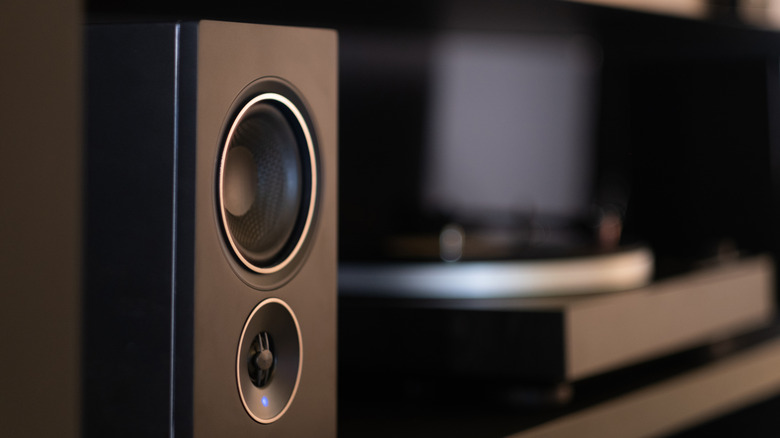
The perceived fidelity gap between wired and wireless systems has narrowed through advances in digital signal processing (DSP) and high-resolution wireless codecs. Standard Bluetooth connections use highly compressed codecs such as SBC or AAC, while newer protocols provide much higher bitrates.
Sony’s LDAC and Qualcomm’s aptX Lossless are engineered to transmit high-resolution or CD-quality lossless audio, including 16-bit/44.1 kHz audio, over wireless connections under optimal signal conditions.
Integrated DSP gives many active wireless speakers another capability. Built-in microphones can analyze the reflective properties of the surrounding room and dynamically adjust frequency response to compensate for placement limitations, including placement inside a bookshelf or near a corner. Passive wired speakers cannot perform this process without external equalization hardware.
The appropriate audio architecture depends on structural constraints, intended use cases, and expectations regarding hardware longevity. Dedicated home theaters, high-end stereo listening rooms, and situations requiring zero latency, such as gaming or audio production, continue to favor wired passive systems. Their component-level upgradeability protects against technological obsolescence.
Active wireless configurations suit spaces where running physical speaker wires is structurally impractical, as well as situations where multi-room synchronization and portability are the primary objectives. As high-bandwidth wireless protocols and real-time DSP continue to mature, the speaker cabinet design, integrated digital-to-analog converter, and acoustic properties of the room have become more critical to the final listening experience than whether the input signal arrived through an electrical current or a wireless data packet.