

Spirit Airlines’ 600 Million Files Fuel a Battle Over AI Training Data
A bankruptcy sale puts millions of Spirit Airlines messages under scrutiny
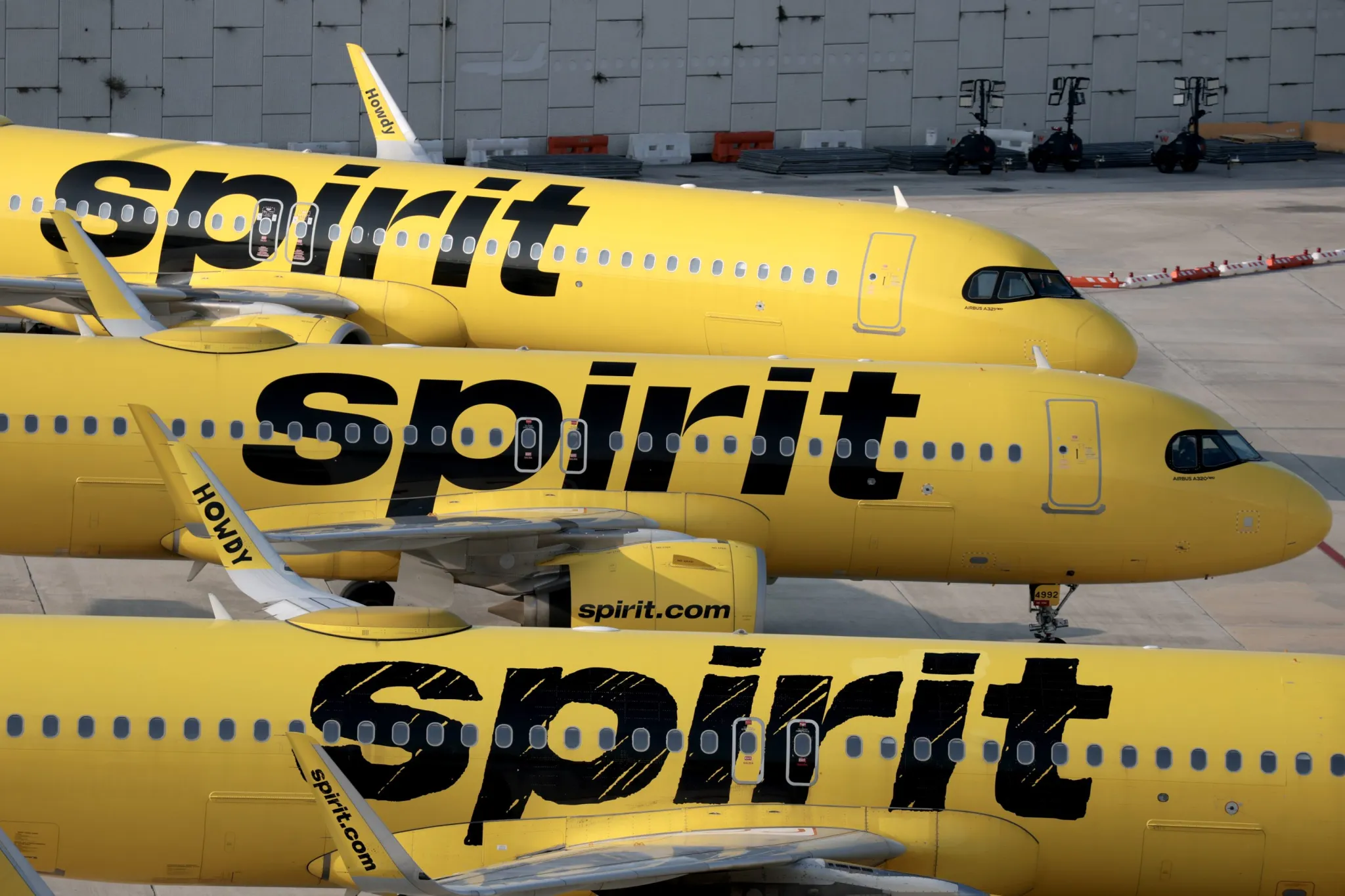
A federal bankruptcy judge is scheduled to consider the proposed multimillion-dollar sale of Spirit Airlines’ digital archive on Sept. 16. The collection includes roughly 100 million internal emails and 500 million Microsoft Teams messages, and the auction has drawn objections from major labor unions and a court-appointed privacy watchdog over sensitive worker communications and personal passenger data.
The bidding began as a quiet scramble for assets before escalating. Palo Alto-based AI startup Micro1 submitted a preemptive $12.5 million cash bid for the carrier’s decades-old archive, surpassing a previous $10 million offer from Google. Google had outbid Mercor, an AI-focused talent and data provider that offered $7.5 million.
The transaction is being reviewed under Section 363 of the U.S. Bankruptcy Code, which allows debtors to sell assets to satisfy creditors. Because the archive includes potentially sensitive customer and employee information, the court appointed Lucy Thomson, a veteran cybersecurity attorney, as Consumer Privacy Ombudsman under Section 332 of the code.


In a report filed late on Sept. 8, Thomson said Google had offered to narrow the scope of the personal data it would acquire while negotiations continued over safeguards for passenger information embedded in Spirit’s operational systems. Google’s legal team said the data would be fully de-identified and used strictly to train machine learning and AI models.
Thomson also said she needed more time to thoroughly vet Micro1’s operational history and privacy protocols before the court could approve the startup as the buyer. Micro1’s court filing separately promised to pay for independent privacy reviews, keep all acquired records exclusively on U.S.-based servers, and destroy raw, unprocessed employment files after de-identification was complete.
The Association of Flight Attendants-CWA (AFA), which represents Spirit’s flight attendants, and consumer privacy advocates filed formal legal objections to Google’s bid. They argued that the dataset contains sensitive personal, medical, and financial records belonging to former employees and passengers that may not be adequately redacted or anonymized before transfer.
The Air Line Pilots Association (ALPA), representing Spirit’s pilots, filed a separate objection focused on aviation safety records and pilot performance files. The union said those materials must remain confidential and outside the sale, warning that even de-identified safety reports could compromise industry-standard non-punitive reporting systems if they were leaked or improperly reconstructed.
Spirit’s 600-million-item archive is valuable to AI developers because it contains real-world workflows from a complex, heavily regulated business. Customer profiles and contact lists are explicitly excluded from the sale, but the remaining operational files include the step-by-step digital exhaust of workplace activity.
Developers seeking to build the next generation of “AI agents”—autonomous systems that execute complex multi-step tasks rather than simply generate text—need what researchers call “trajectories.” A trajectory is a chronological record of how a human worker handles a real-world problem, such as receiving an IT support ticket, discussing it on Microsoft Teams, editing code, and observing the operational outcome.
The demand for such records has grown as public data sources on the open web become exhausted. AI laboratories face what researchers call a “data wall,” and a 2025 report by Epoch AI, commissioned by Google’s AI research division DeepMind, projected that the supply of high-quality, human-generated public text could be entirely depleted before 2030.
Micro1, founded in 2022 by Ali Ansari while he was studying computer science and mathematics at the University of California, Berkeley, has presented itself as a more privacy-compliant option than larger competitors. The company offered an independent reviewer a 1% random sample of the de-identified assets to verify compliance before the data was transferred to clients.
Ansari wrote on LinkedIn that the acquisition was necessary to move AI development beyond synthetic data toward “the messiness of the real world.” Micro1 raised $35 million in a Series A funding round in September 2025, giving the startup a valuation of $500 million. By August 2026, reports said the company had reached an annualized gross run rate of $500 million.
In its bankruptcy filing, Micro1 asserted that it had closed more than 50 data acquisition transactions during the 45 days before its bid. The Spirit contest is part of a broader trend in which insolvent or winding-down corporations monetize internal data to recover value for creditors.
Micro1’s $12.5 million offer is the largest publicly recorded bid for a bankrupt company’s data archive, but smaller transactions have become routine. Jonathan Siddharth, CEO of Turing, a platform providing human-annotated training data to AI labs, said his firm had acquired five to ten codebases from failed startups, paying an average of tens of thousands of dollars for each.
Dori Yona, CEO of SimpleClosure, which specializes in winding down distressed startups, said his service had facilitated nearly 100 asset sales over a 12-month period and recovered more than $1 million for creditors. Typical transactions, Yona said, range from $10,000 to $100,000 per company.
SimpleClosure reported in September that the number of AI-related buyers on its platform had grown ninefold compared with 2025. More than 350 companies were listing codebases and workplace archives on its digital marketplace, AssetHub. The digital transcription firm cielo24 previously received hundreds of thousands of dollars for selling a 13-year repository of internal Slack messages, Jira tickets, emails, and shared documents.
As the Sept. 16 hearing approaches, the bankruptcy court must weigh its duty to maximize recovery for Spirit’s creditors against the privacy and labor issues raised by selling decades of employee correspondence. The ruling could establish a legal precedent for how the digital histories of bankrupt American corporations are treated in the AI era.









