
Trump’s $5,000 Dividend Runs Into a $1.2 Trillion Wall
Tariff revenue falls far short as Congress would need to authorize Trump’s proposed payout
The proposal was first unveiled on Wednesday during the Republican Party’s midterm convention in Dallas, Texas. During his address to party members, President Donald Trump explicitly conditioned the $5,000 dividend on voters delivering control of both the House of Representatives and the Senate to the Republican Party.
The plan would distribute a $5,000 “dividend” to every American adult if Republicans win the upcoming midterm elections. House Speaker Mike Johnson acknowledged on Sunday that Congress would have to draft and pass legislation to authorize the program, because the executive branch lacks the legal authority to issue the payments without a cooperative legislative branch. The November midterms are therefore a structural prerequisite for the proposal.
Under Article I, Section 9 of the U.S. Constitution, the authority to appropriate federal funds—often referred to as the “power of the purse”—rests solely with Congress. The White House has not yet released a detailed legislative blueprint, specific eligibility criteria, or a formalized economic plan explaining how the Treasury Department would reconcile the funding gap without expanding the national debt.

The proposed payment would reach the nation’s approximately 240 million adult citizens, creating an estimated $1.2 trillion federal cost. That figure rivals major emergency economic relief packages enacted during national crises, including the 2020 CARES Act and the 2021 American Rescue Plan. The scale is historically unprecedented for a peacetime, non-emergency domestic policy.

Vice President JD Vance has pointed to tariff revenues as a primary funding source, suggesting that aggressive trade duties imposed on foreign nations and corporations would offset the cost of the dividend. Vance also said the administration could use income caps to exclude wealthy Americans from receiving the checks, reducing the overall $1.2 trillion price tag.
Official Treasury Department figures, however, show a substantial gap between current customs collections and the projected cost. Treasury data shows that the federal government collected $34.2 billion in customs duties in a single month, bringing year-to-date gross collections since January to approximately $208.5 billion. Even if customs revenue continues at that pace, annualized tariff income would remain far below the $1.2 trillion required.
The figures are gross collections and do not include potential refunds. The federal government faces ongoing legal challenges over its tariff policies, while previous Supreme Court rulings have occasionally required the government to return billions in collected duties to domestic importers. Economists also point out that tariffs are ultimately paid by domestic companies importing foreign goods rather than by foreign countries themselves, meaning a tariff-funded payout could indirectly raise consumer prices.
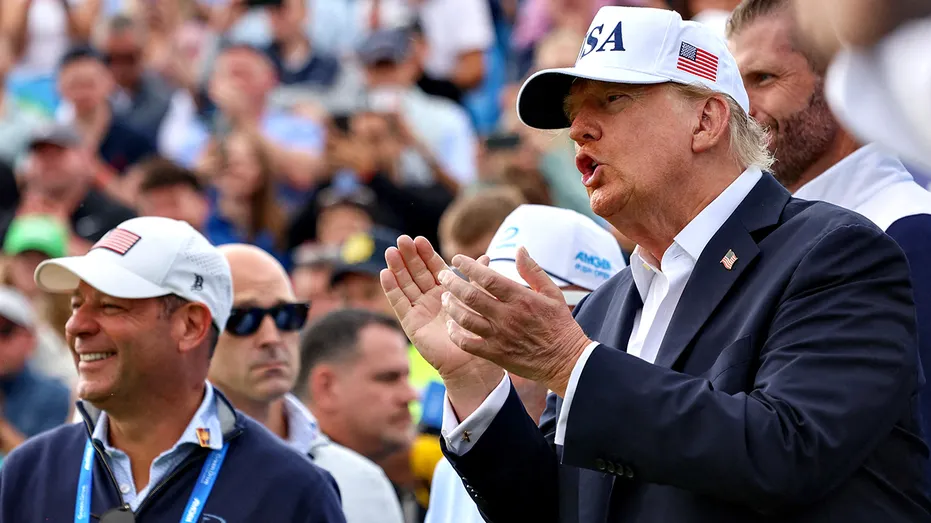
Despite the fiscal gap, President Trump defended the plan on Sunday during an appearance at the Amgen Irish Open at Trump International Golf Links in Doonbeg, Ireland. He dismissed concerns about the national debt and said the United States was bringing in enough money to cover the payments easily.
“If the Republicans win, as they said, it’s $5,000 [for] all adults in the country,” Trump said in County Clare, Ireland. “And we can easily handle that because we’re taking in so much money. We’ve never done better.”
Trump presented the policy as a way to sustain current economic growth and warned that a Democratic victory in the midterms would produce a severe economic downturn. “The Democrats get in, you’ll go into a depression. If we get in, we will continue this incredible situation,” Trump said. “We have trillions of dollars coming into the country, and the 5,000 is going to everybody.”
Critics, including some fiscal conservatives within the Republican Party, have opposed the plan. Some have labeled the multi-trillion-dollar proposal a “socialist vote-buying scheme” that conflicts with traditional conservative principles of fiscal restraint and deficit reduction.