
A Popping-Out Trackpad Can Signal a Dangerous Laptop Battery

A lifting trackpad, cracking glass surface, or warping chassis in a modern laptop is a primary physical warning sign of severe internal battery failure. Although a loose internal screw or chassis impact can occasionally displace a trackpad, battery outgassing remains the primary cause of hardware displacement in modern portables.
Modern thin-profile laptop architectures—including Apple MacBooks, Microsoft Surface devices, and various Windows ultrabooks—use flat lithium-ion polymer (LiPo) pouch cells instead of rigid cylindrical batteries. These soft pouch cells sit directly beneath the palm rests and trackpad module so manufacturers can maximize battery capacity while maintaining ultra-thin enclosures.



Lithium-ion cells generate electric current through chemical reactions that transfer lithium ions between electrodes during charge and discharge cycles. Continuous exposure to elevated thermal levels, physical impacts, overcharging, or manufacturing defects can cause the liquid electrolyte inside a cell to break down.
That chemical breakdown creates gases, including carbon dioxide, carbon monoxide, and volatile hydrocarbon compounds. The soft outer pouch of a lithium-polymer cell is designed to expand and contain the gases, preventing immediate exposure to atmospheric oxygen. As the internal battery degrades, the expanding cell pushes upward against the components above it and can force the trackpad out of its housing.
Hardware failures connected to expanding power cells have led to major consumer safety recalls and structural changes across the industry. In June 2019, Apple and the U.S. Consumer Product Safety Commission (CPSC) announced a voluntary recall of approximately 432,000 15-inch MacBook Pro units sold in the United States and 26,000 sold in Canada between September 2015 and February 2017 because of battery overheating hazards.
Multiple generations of Microsoft Surface Pro and Surface Book devices likewise required updated service advisories and extended three-year warranty programs after battery expansion caused screen separation and frame distortion. Standard manufacturer warranties or extended protection plans usually cover replacement of defective batteries that swell within their coverage periods.
When a swollen cell is punctured by internal frame edges or broken glass, or when internal breakdown progresses to a short circuit, thermal runaway can occur. Internal cell temperatures during thermal runaway can rapidly exceed 600 degrees Celsius (1,100 degrees Fahrenheit), potentially igniting adjacent components and releasing toxic fumes.
Standard safety protocols require any device showing physical chassis deformation to be powered off, unplugged from external power sources, and removed from active use immediately. Forcing a displaced trackpad back into place or opening the casing without specialized equipment raises the risk of puncturing the pressurized cell.
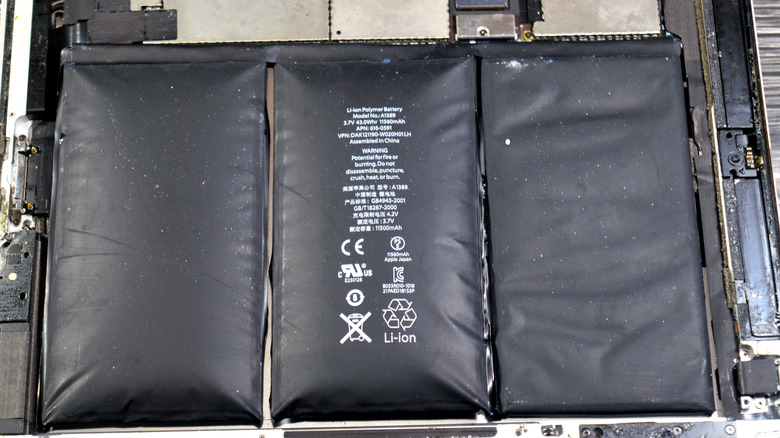
Repair requirements and expenses depend heavily on the device architecture and warranty status. Standard out-of-warranty battery replacement costs from Apple range from $149 to $249, depending on the specific model. On many modern unibody laptops, battery cells are attached with strong adhesives to the top-case housing, which contains the keyboard, upper deck, and trackpad wiring.
Because of that construction, replacing a swollen battery often requires replacing the entire upper deck assembly. If the battery is replaced before structural components are permanently bent or fractured, the trackpad normally realigns with its original position.
To limit long-term degradation, major operating system developers and original equipment manufacturers (OEMs) have introduced automated battery management tools. These include optimized charging routines in macOS and charge-limit controls in PC BIOS software, both designed to reduce the amount of time cells remain at a 100 percent charge state while connected continuously to AC power.
Once removed, swollen lithium-ion cells are classified as hazardous waste and cannot go into standard municipal trash or conventional recycling bins. According to environmental health guidelines established by the U.S. Environmental Protection Agency (EPA) and battery recycling management organizations such as Call2Recycle, compromised cells create severe fire risks for municipal waste collection vehicles and sorting facilities.
Compromised units must be placed in non-conductive, fire-retardant storage containers, often packed with specialized insulation or sand, and delivered directly to designated hazardous waste disposal facilities.
Operational guidelines for maximizing battery longevity and minimizing swelling risks recommend keeping devices away from extreme heat sources and direct sunlight. For long-term storage, manufacturers advise discharging or charging the battery to approximately 50 percent capacity, keeping the unit in a climate-controlled environment, and powering on the machine every three months to monitor battery health and prevent total cell discharge.