

How Bill Ackman Runs a $35 Billion Empire With 48 People
Why Pershing Square gives every employee millions in company stock
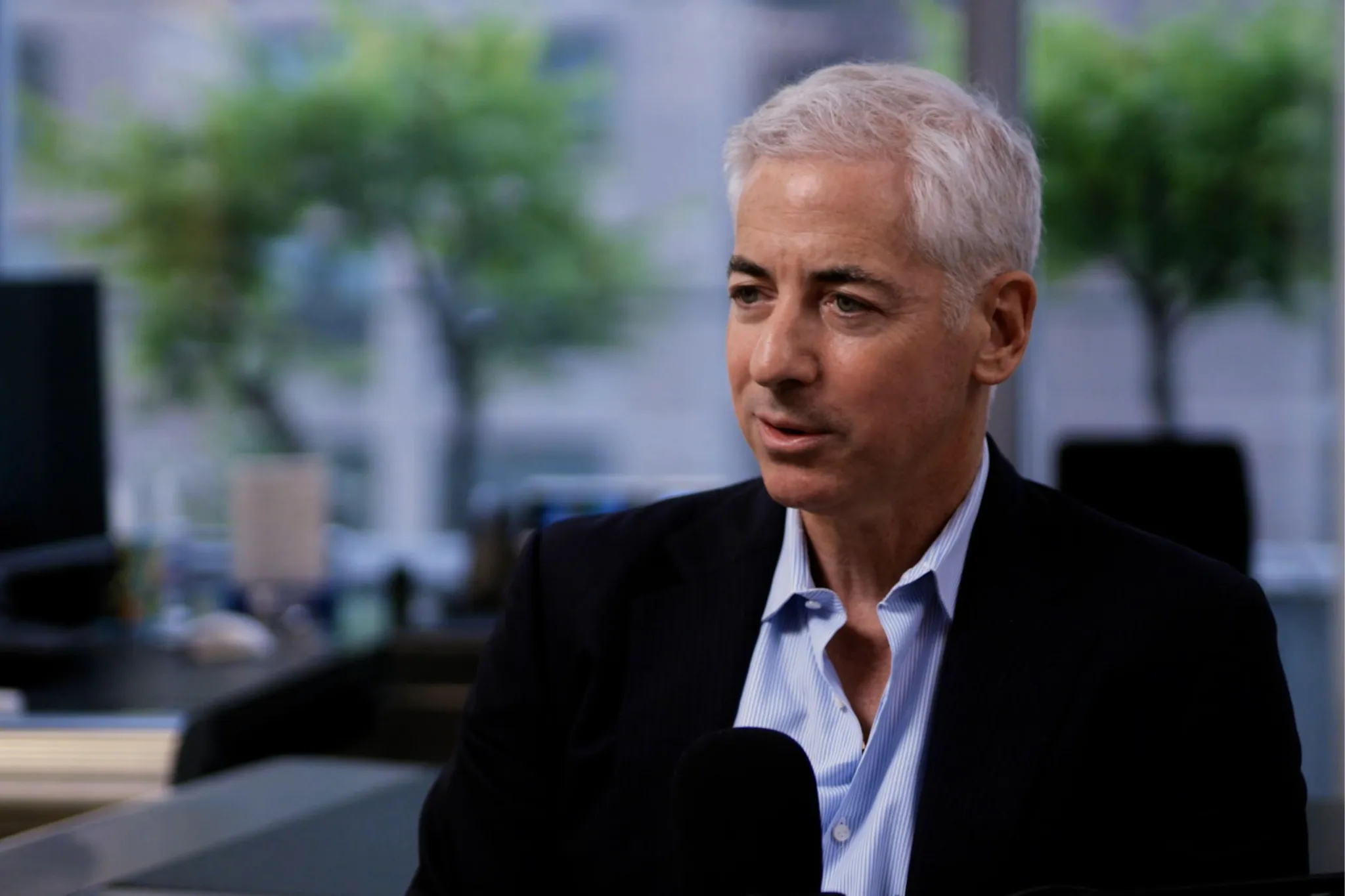
NEW YORK — Bill Ackman’s Pershing Square Capital Management manages roughly $35 billion with a staff of just 48 people, even as multi-strategy hedge funds employ thousands of traders, analysts, and support staff. The firm’s structure combines a highly concentrated investment portfolio with an aggressive, equity-heavy employee retention program designed to eliminate turnover entirely.
Pershing Square typically holds significant stakes in only 8 to 12 large-cap, highly liquid North American companies at any given time. Unlike quantitative or high-frequency trading firms that require massive computational infrastructure and hundreds of desk traders, the activist fund allows a small investment committee to oversee the entire portfolio.
Ackman’s retention strategy includes direct equity ownership, comprehensive wellness benefits, and seasonal geographic flexibility. “There’s not a person at Pershing Square that doesn’t own multiple millions of dollars of stock in the company—whether you’re cleaning the space or at the front desk or another role in the company,” Ackman said in a recent interview on *Fortune’s* podcast, *Titans and Disruptors of Industry*. “We believe in taking care of our people.”


The firm reports having no “undesired departures.” Employees must work in person five days a week for 10 months of the year, but the physical office requirement is lifted during July and August. During those months, the investment team regularly relocates together to the Hamptons on Long Island, working from rented or owned homes.
Pershing Square also provides daily healthy meals in an in-house café, private gym access, and comprehensive healthcare coverage. Many of those services are integrated into the firm’s corporate headquarters at 787 Eleventh Avenue in Manhattan, a historical building that Ackman’s firm redeveloped and moved into in 2017.
Ackman links the absence of turnover to the team’s character as well as its financial upside. “[I’m a] big believer in only hiring people of the highest character, human qualities—people you want to hang out with, spend time with,” Ackman told *Fortune*. “There are a lot of super talented people, but when you combine a super talented person with great human qualities, that’s a great base to build a great culture.”
That emphasis on structural stability followed the collapse of Ackman’s first investment venture. After graduating from Harvard College in 1988 and earning his MBA from Harvard Business School in 1992, he co-founded Gotham Partners with fellow Harvard alumnus David P. Berkowitz. Gotham grew rapidly and managed hundreds of millions of dollars before large, illiquid bets on private operating businesses, including golf courses and real estate, created severe liquidity constraints.
Redemption demands and regulatory scrutiny eventually forced Gotham to wind down its funds in 2003. Ackman founded Pershing Square Capital Management the following year with $54 million in initial capital, focusing almost exclusively on large, publicly traded companies where the firm could purchase significant stakes and advocate for operational or structural changes to unlock value.
Over the past two decades, Pershing Square has engaged in high-profile, sometimes contentious activist campaigns involving Chipotle Mexican Grill, Universal Music Group, J.C. Penney, and Canadian Pacific Railway. Ackman also launched Pershing Square Holdings, a closed-end fund that went public on the Euronext Amsterdam exchange in 2014 and later joined the London Stock Exchange.
Pershing Square Holdings gave the firm a permanent pool of capital and reduced its reliance on traditional, volatile hedge fund investment terms. That structure was intended to protect the firm from the sudden investor redemptions that had helped sink Gotham.
Ackman sees another source of efficiency in artificial intelligence. For a firm that relies on a small team to analyze massive corporate entities, he believes AI can further amplify individual productivity and radically democratize specialized knowledge, putting elite-level analytical capability within reach of average workers and small teams.
“This is the era in which you can learn anything, and you don’t actually have to read books now,” Ackman said. “You can just ask your AI to teach you whatever it is that you need to learn.”
Earlier this year, Amazon founder Jeff Bezos argued publicly that AI-driven productivity gains could eventually create a labor surplus so significant that the federal government could eliminate income taxes for lower-income Americans, funding public services through the massive wealth generated by automated productivity. Ackman endorsed Bezos’s thesis, calling it a “powerful case” for the technology’s long-term macroeconomic benefits.
Ackman expects the proliferation of free, highly advanced artificial intelligence to reshape sectors far beyond Wall Street, including healthcare diagnostics and education. “We’re in a world in which intelligence—very high level of intelligence—is available basically for free,” Ackman said. “It’s a pretty amazing world.”








One Comment