
U.S.-Canada Trade Fight Puts Energy, Dairy and Auto Supply Chains at Risk
Tariffs Put Energy, Dairy and Auto Supply Chains Under Pressure
Canada remains the single largest foreign buyer of U.S. goods and ranks second behind Mexico as an export destination for American agricultural products. Approximately 70% of all Canadian exports are destined for U.S. markets, according to World Bank data.
A Sept. 29 deadline now hangs over the $900 billion bilateral trade relationship as Washington and Ottawa manage an escalating dispute affecting energy, agriculture, manufacturing and other cross-border supply chains. The deadline could still leave room for formal talks because the proposed restrictions will not take effect until that date.
The dispute began after high-level trade negotiations collapsed on Aug. 21. The United States then imposed 50% tariffs on $20 billion worth of Canadian imports, citing long-standing disagreements over Canadian dairy management systems, automotive trade and regulations governing foreign alcoholic beverages.


Ottawa responded with retaliatory tariffs. The Trump administration subsequently announced plans to restrict imports of Canadian whey, most alcoholic beverages, motorcycles and mopeds effective Sept. 29. Toilet paper, bedsheets and fishing rods were among the consumer goods excluded from the prospective ban.
The two countries’ supply chains were built through decades of integration and were most recently codified under the United States-Mexico-Canada Agreement (USMCA). Signed in late 2018 to replace the 1994 North American Free Trade Agreement (NAFTA), the USMCA entered into force on July 1, 2020. Under its terms, the vast majority of cross-border goods move duty-free.
The annual U.S. goods trade deficit with Canada reached $27.3 billion last year. Trade data shows that crude oil imports from Western Canada account for most of that deficit.
Canada exported more than $85 billion worth of crude oil to the United States in 2025. Petroleum refineries in the U.S. Midwest, designated under Petroleum Administration for Defense District (PADD) 2, are structurally calibrated to process Western Canadian Select (WCS), the heavy sour crude extracted from Alberta’s oil sands.
Heavy sour crude requires specialized complex refining capacity. Midwest facilities cannot easily replace Canadian crude with lighter domestic supplies such as Texas West Texas Intermediate (WTI), or with foreign alternatives, without multi-billion-dollar reconfigurations that would take several years. Canadian crude has also historically traded at a discount relative to U.S. benchmark prices.
Canadian provincial utilities supply hydro-generated electricity directly to several northern U.S. border states, while American corn and soybean farmers depend on Canadian potash exports for crop fertilizer. The potash is sourced primarily from Saskatchewan, home to the world’s largest known potassium deposits.
Agricultural policy remains one of the most contentious areas in negotiations. Canada’s supply management system, known as *gestion de l’offre*, covers its domestic dairy, poultry and egg sectors. The framework was established under the Canadian Dairy Commission Act of 1966 and fully implemented in the early 1970s.
The national system regulates domestic production through production quotas, sets price floors and imposes strict tariff-rate quotas on foreign imports. Dairy products entering Canada above designated quota thresholds face tariffs exceeding 200%, while duties on butter reach nearly 300%.
In his 2023 memoir, former U.S. Trade Representative Robert Lighthizer, who led the USMCA negotiations during Donald Trump’s first presidential term, described Canada as “parochial” and “protectionist.” He characterized the country’s dairy supply management rules as overly restrictive.
U.S. dairy industry specialists say domestic production capacity in individual U.S. states far exceeds total Canadian market demand. Wisconsin alone generates more liquid milk annually than all of Canada. Unrestricted U.S. access to Canada would likely overwhelm domestic Canadian producers because of economies of scale and lower production costs in the United States.
The United States nevertheless maintains a substantial positive trade balance in dairy products with Canada. U.S. Department of Agriculture (USDA) statistics show that the United States exported $1.3 billion in dairy products to Canada last year and imported $585 million from Canada during the same period. U.S. dairy exports to Canada rose by more than 11% last year, following an 8% gain in 2024.
Under the USMCA, Ottawa agreed to give U.S. dairy producers expanded tariff-rate quota access while preserving the core structure of its national supply management system.
The broader economies also differ in their reliance on open markets. World Bank data says international trade represents 64% of Canada’s gross domestic product (GDP), compared with 25% for the United States.
Before the latest tariff escalations, Oxford Economics calculated Canada’s average effective tariff rate on U.S. imports at 2.4%. The average U.S. effective tariff rate on Canadian imports was 5.0%.
The Fraser Institute’s Economic Freedom of the World report ranks Canada 11th out of 165 economies. In the Heritage Foundation’s Index of Economic Freedom, Canada ranks 14th among 184 evaluated nations, while the United States ranks 22nd.
Diplomatic relations have deteriorated in recent months amid public statements and unilateral policy announcements. President Donald Trump recently signed an executive order directing federal agencies to officially rename Lake Ontario to “Lake America.”
During a Saturday visit to Dublin alongside the Irish prime minister, Trump said the United States had been “ripped off for 50 years by Canada” and questioned whether the U.S. should remain a party to the USMCA. He also said Canada, “just like Iran,” was eager to secure a trade agreement with his administration, adding that “you’ll probably see a deal with Canada fairly soon” if Ottawa reduces tariffs on American agricultural products.
Negotiators in Washington are pressing Canada to change manufacturing sharing arrangements, particularly in the integrated North American automotive supply chain. Under those arrangements, vehicle components can cross the U.S.-Canada border multiple times during production without tariffs.
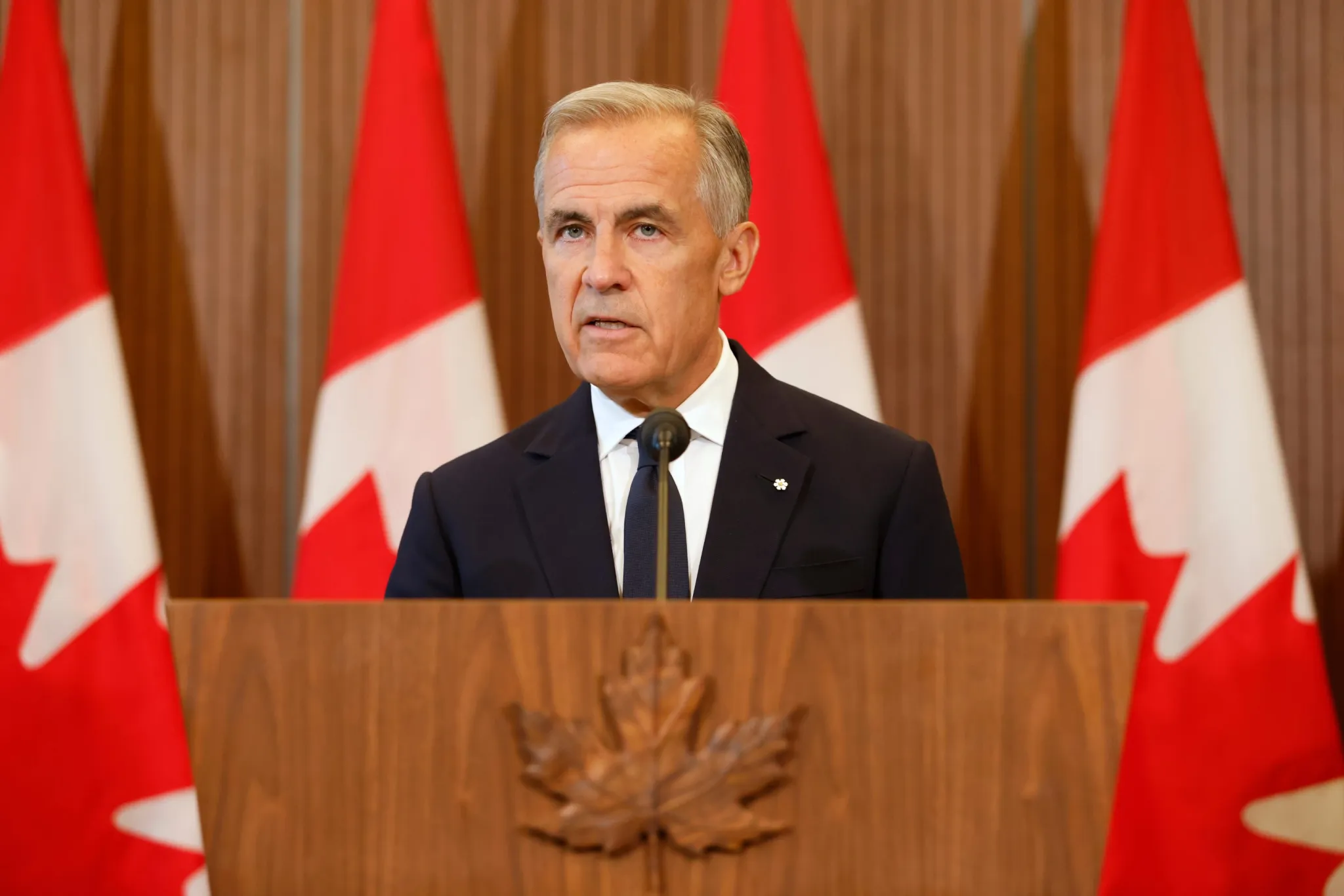
Canadian Prime Minister Mark Carney said Ottawa remains committed to a diplomatic resolution, stating: “Canada is always ready to strike a fair deal.”
Trade analysts say both governments still have an opportunity to resume formal talks and modify tariff schedules before the restrictions are implemented on Sept. 29.