
Bill Ackman Wants to Build the Next Berkshire Hathaway
Pershing Square’s $5 Billion Shift Toward Permanent Capital
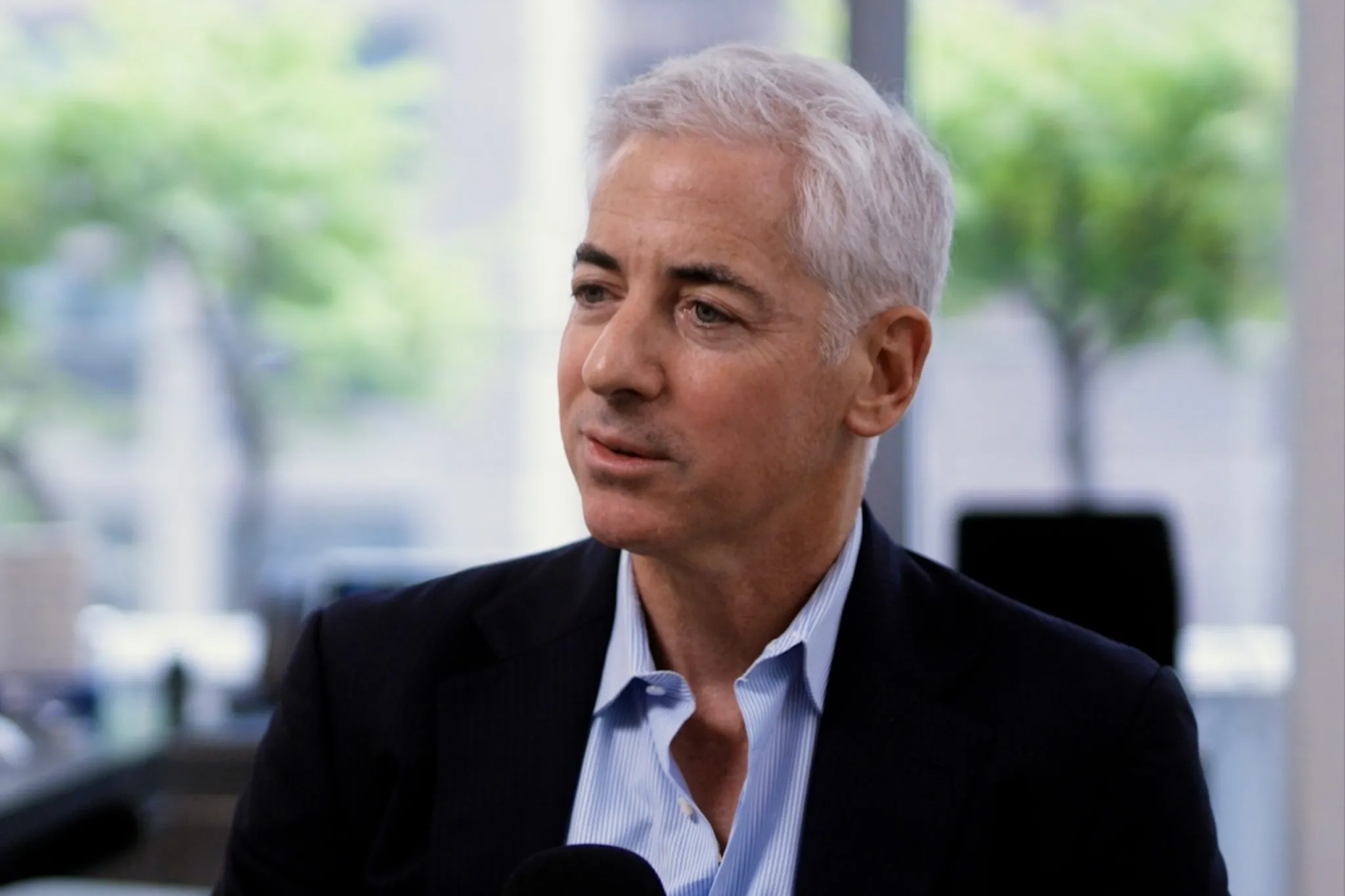
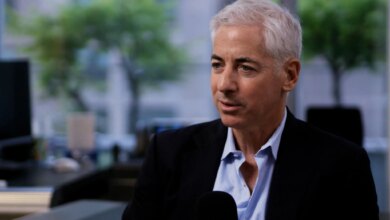
NEW YORK — Bill Ackman is seeking to reshape Pershing Square Capital Management, the $35 billion investment firm he founded and leads as chief executive officer. His goal is to move beyond the traditional hedge fund redemption model and adopt the permanent-capital structure associated with Berkshire Hathaway and Warren Buffett.
Ackman described himself as a “Warren Buffett devotee” during the *Fortune* podcast *Titans and Disruptors of Industry*, hosted by editor-in-chief Alyson Shontell. He said key parts of his long-term investment strategy were modeled on Buffett’s framework.
The structure Ackman is pursuing became more tangible in April, when Pershing Square raised $5 billion through a combined initial public offering. The transaction created the largest closed-end fund listing in U.S. history, while an incentive offering gave investors 20 additional free shares for every 100 shares purchased.

Closed-end funds trade on public exchanges, allowing shareholders to buy and sell stock without withdrawing capital from the underlying fund. Traditional open-ended hedge funds, by contrast, must return cash when investors redeem their holdings.
“That gives us what Mr. Buffett would call permanent capital,” Ackman said. “Berkshire is a corporation. When people want their money out, they sell Berkshire shares, but the capital stays in the enterprise, and Buffett has done a remarkable job investing it over time.”
Ackman’s firm has placed approximately 98% of its capital into public companies, often becoming one of the largest shareholders. Its holdings include technology giants Amazon and Microsoft, as Ackman continues shaping Pershing Square around long-term corporate holdings.
The firm’s longer record includes a compound annual return of nearly 16.5% since its inception in 2004, compared with the S&P 500’s 10% average annual return over the same period. By February 2026, however, Pershing Square Holdings had fallen 11% year-to-date while the S&P 500 had gained roughly 1%.
Ackman’s investment career began after he graduated from Harvard College and joined his father Lawrence Ackman at Ackman-Ziff Real Estate Group, the New York commercial real estate firm his father co-founded and ran. The developers and entrepreneurs on the other side of those transactions attracted more of his attention than the firm’s own operations.
“I found the entrepreneurs and developers on the other side of the phone more interesting, and I decided I wanted to be an investor,” Ackman said.
While he was working at the firm, family friend Leonard Marks recommended *The Intelligent Investor*, Benjamin Graham’s 1949 foundational work on value investing. Graham was a Columbia Business School professor, and his principles of fundamental analysis and margin of safety later deeply influenced Warren Buffett during Buffett’s time at Columbia in the early 1950s. Ackman subsequently adopted that framework.
Ackman had also pursued commercial work as a Harvard undergraduate. Through Harvard Student Agencies, he sold advertising space for the *Let’s Go* travel guide series on commission and earned $14,000. The amount was so substantial at the time that the agency expressed concern he might outearn his superiors.
As a teenager, Ackman told his father that he intended to become a millionaire by age 30, reach a net worth of $100 million by 40, and become a billionaire by 50. His estimated net worth now stands at $11.5 billion.
After earning an MBA from Harvard Business School in 1992, Ackman co-founded Gotham Partners with fellow Harvard graduate David Berkowitz. When Gotham Partners was wound down in the early 2000s, Ackman established Pershing Square Capital Management in 2004 with $54 million in initial capital.
Pershing Square later became known for concentrated public equity bets and high-conviction activist campaigns. Around a decade ago, Ackman led a turnaround campaign at Canadian Pacific Railway, winning a proxy contest that resulted in changes to the company’s executive leadership and operational model.
The firm also invested $1.2 billion in Chipotle Mexican Grill in 2016, after a series of food safety crises at the chain. The position nearly doubled in value before Pershing Square eventually exited it.
At the onset of the COVID-19 market panic in early 2020, Pershing Square took a credit default swap position and deployed $27 million into corporate credit market hedges. As credit spreads widened, the trades generated $2.6 billion in proceeds within weeks. Pershing Square later redeployed those profits into equity holdings across its core portfolio.

One Comment