The David Jones Administration Leaves Gift Cards Last in a Queue Set Years Ago
The store was bought for $2.1 billion, sold for $100 million, and its flagship buildings sold for $583 million. The queue for what's left was written into those sales.
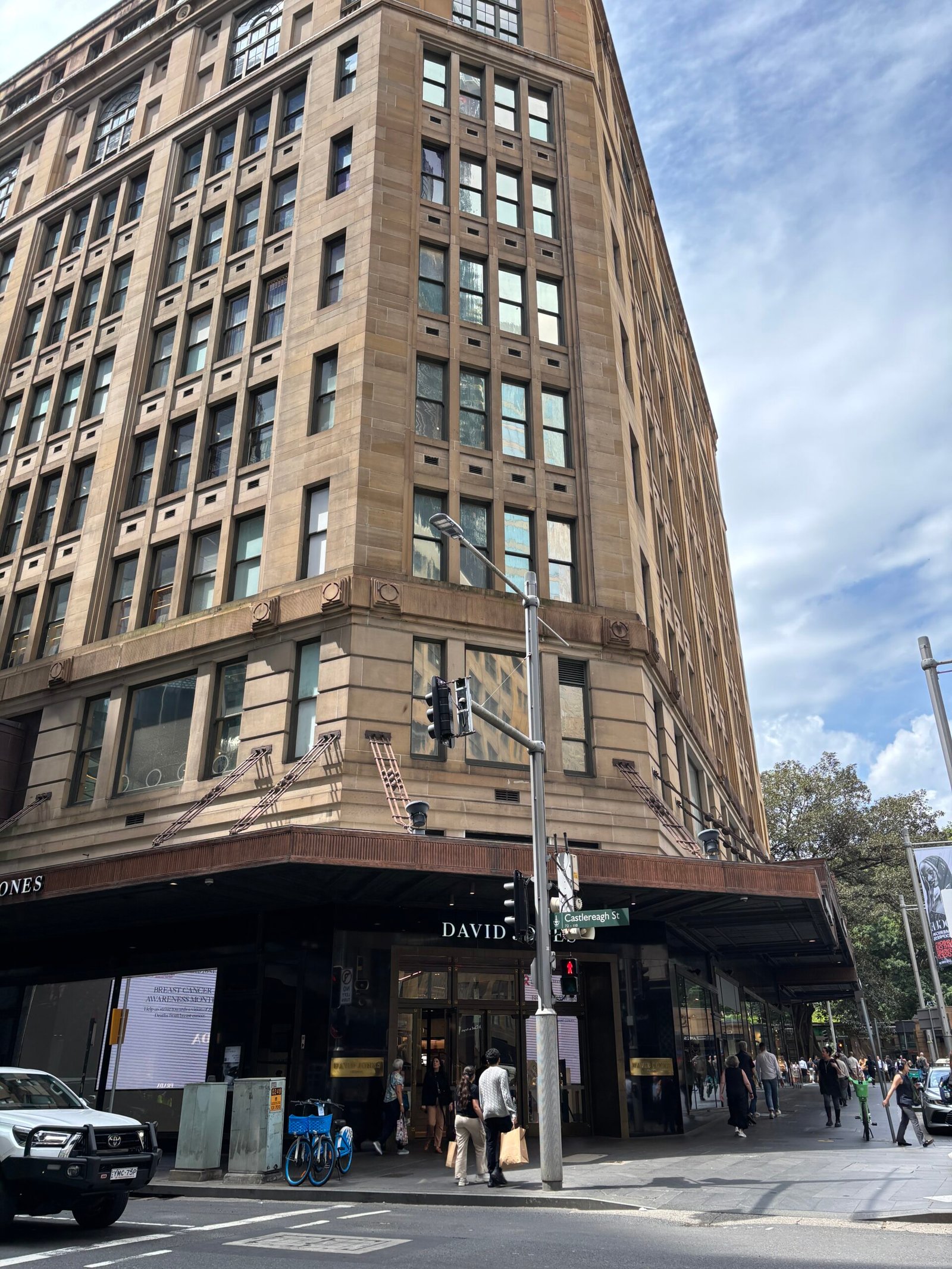
Within hours of the announcement on Thursday, shoppers were walking into David Jones stores to spend gift cards. At Highpoint in Melbourne they queued at the tills the same afternoon, and by Friday the advice everywhere was the same: use it now, while the card still buys anything. The stores were still open.
The David Jones administration began on Thursday morning, 5 November, the first in the chain’s 188 years. The board appointed McGrathNicol as voluntary administrators, and the secured lender, Hilco Capital, appointed FTI Consulting as receivers and managers the same day. The shops and the website keep trading under the receivers while McGrathNicol runs a sale or recapitalisation process. David Jones has 38 stores across Australia and New Zealand and about 6,000 staff, and its chief executive, Erica Berchtold, says the retailer has “a well-developed plan on how to reset the business for the future.” The administration came two days after the Reserve Bank lifted the cash rate for the fifth time this year, to 4.85 per cent, the highest since late 2008, on a six-to-three vote of its board.
The receivers run the business for the lender now. That is what receivership means: FTI’s first duty is to recover Hilco’s debt, and the trading stores are the asset it recovers it from. Behind the lender stands the landlord. Scentre Group owns the Westfield centres housing 17 of the chain’s stores. It holds about $30 million in bank guarantees from David Jones, equal to eight months of gross rent, which it can call on for unpaid rent. Scentre’s share of gross rent from the stores is $45 million for 2026. David Jones has paid nothing since 30 September. The guarantees were a condition Scentre imposed when it approved Anchorage Capital Partners’ purchase of the business in 2023. Scentre’s filing puts the rent at $352 a square metre, against a $942 average across its portfolio. The landlord was already charging about a third of its going rate, and still did not get paid.


The staff come ahead of the shoppers in the queue, by law. Employees are a priority group when a company is wound up, and their redundancy pay under the enterprise agreement runs from four weeks for a year of service to 24 weeks for two decades. The suppliers and the gift-card holders sit together at the back, as ordinary unsecured creditors. If David Jones cannot pay the redundancy bill, the federal government’s Fair Entitlements Guarantee steps in.
David Jones sold its buildings before it ran out of money. The buildings went first. In August 2016 it sold the Market Street store in Sydney, the menswear building and home of its food hall, to Scentre Group and Cbus Property for $360 million, and stayed on as a tenant paying 4.5 per cent a year on the price. In December 2024 Woolworths Holdings sold the Bourke Street flagship in Melbourne for $223.5 million, a building it had kept when it sold the business and leased back to the chain on market terms. The two sales together took $583.5 million out of the property and into the owners’ hands. The shops kept trading in buildings they no longer owned.
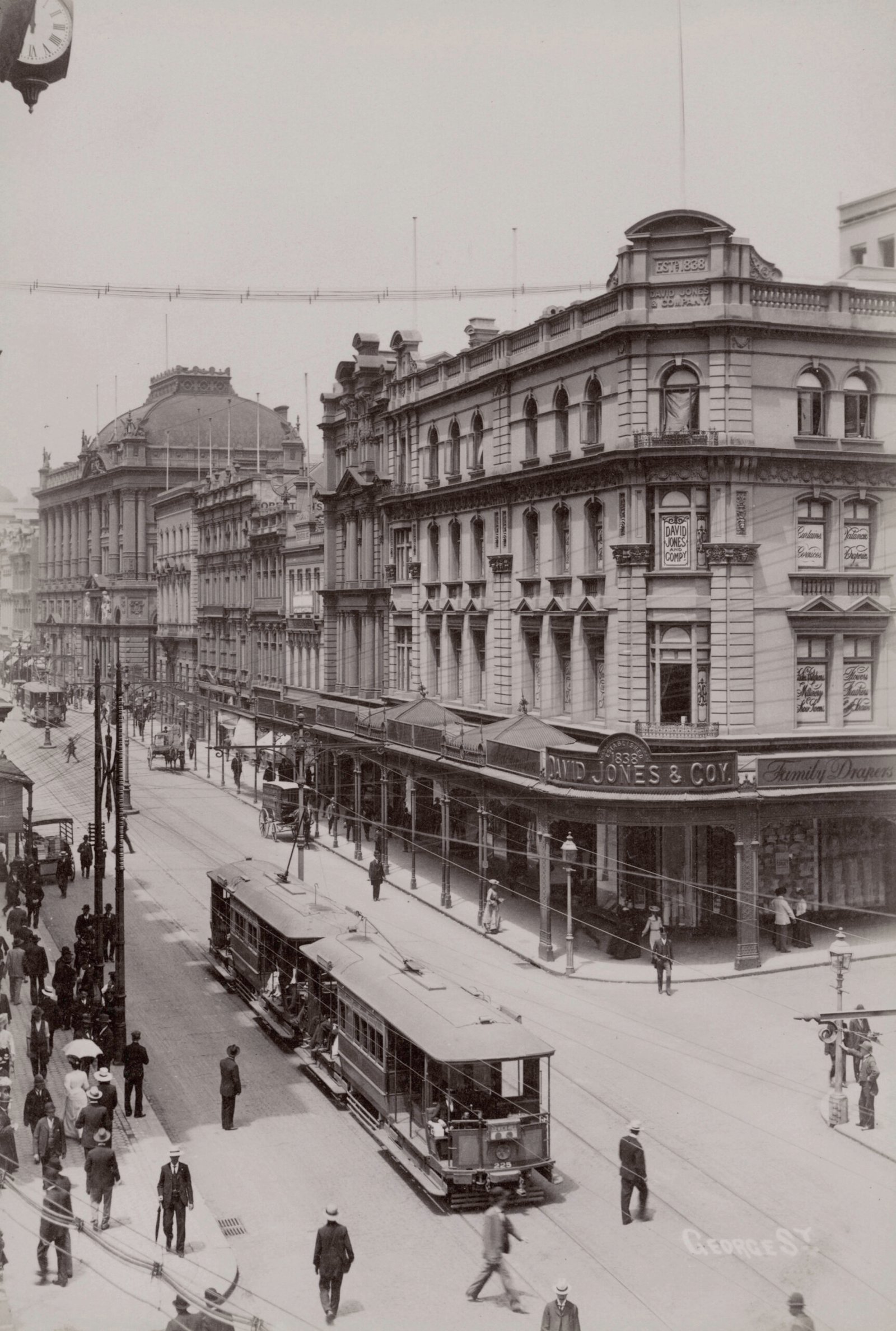
Woolworths Holdings of South Africa paid A$2.15 billion for David Jones in 2014, a premium of more than 25 per cent, to build what it called a southern hemisphere retail champion. In December 2022 it agreed to sell the business to Anchorage Capital Partners. The reported price was A$100 million in the Australian Financial Review, A$130 million in Bloomberg’s account. The parties never confirmed a figure. The sale took about R17 billion of lease liabilities off Woolworths’ balance sheet. Its chief executive at the time, Roy Bagattini, said “the strategic rationale at the time of the acquisition did not materialise to the extent originally envisaged.” A$2.15 billion to about A$100 million is a fall of roughly 95 per cent. In 2016 Woolworths moved the head office from Sydney, its home since 1838, to a new campus in Richmond, Melbourne, shared with Country Road, a $240 million move. Olvera Advisors, an insolvency firm, argues in its history of the collapse that the move stripped the buying and marketing knowledge out of the business. The chain lost $74.1 million before tax in 2024 and $95.5 million in 2025, and it has not filed its 2026 accounts. The corporate regulator is investigating the late filing of the 2025 accounts.
Dick Smith’s gift cards died the same way in 2016. The cards bought nothing. The electronics chain went into administration and receivership in January that year, and on 5 January the receivers told customers the cards would not be honoured. There were 40,884 unredeemed cards holding $2,170,394 in Australia, worth an average of $53 each, and they made up 1.19 per cent of the $182.7 million owed to ordinary unsecured creditors. The administrators later reported a shortfall of more than $260 million. The secured banks took only a partial return on about $140 million, and the administrator said there was “little prospect of any return to unsecured creditors.” Dick Smith’s former private equity owner, the firm whose 2013 float of the chain delivered it a huge return, was Anchorage Capital. The same firm owned David Jones when it collapsed.
Suppliers spent 2026 on longer payment terms while trade credit insurers refused to cover new stock for David Jones. They saw it coming. Once the administrators were appointed, distributors and brand suppliers were given access to the stores by staff and took their goods out rather than wait for the administrators to take control of the stock. The luxury brands had already gone. Gucci, Scanlan Theodore, Yves Saint Laurent and Oroton pulled out of their concession stores within hours of the announcement, leaving shelves empty.
By Friday, the receivers had changed the rules for shoppers. David Jones stopped selling new gift cards, ended refunds on new purchases, and capped exchanges at 14 days. Existing cards are still honoured, in store and online. The moves cut the liabilities the receivers would otherwise carry into a sale, and they landed the day after the chain’s busiest customers had rushed in to spend the cards they already held.
Chris Ilsley, commenting on a Facebook post about a cancelled David Jones order, asked why the chain kept selling gift cards at all. “Why did David Jones continue selling gift cards knowing it was in financial trouble? It’s not like the problem appeared recently. There appears little doubt money was taken knowing full well there was a high probability the card(s) could never be redeemed.” Pasqualeen Esposito, on the same post, was handed a new one the day after the collapse: “I bought something with a gift card I had on Friday and was given a 30$ gift card for spending over 150$, I was told it was a promotion they had, so I’m confused about the whole thing.”
Chloe Cracknell, on another thread, defended the people behind the tills. “They may have not had time to remove that sign yet with everything that’s just happened. Let’s give them a break and stop this type of posting. Go spend your gift card. The poor staff have enough going on right now.” Susan Butterworth, who lives in Tasmania and has no local store, shopped online and asked others to keep the chain alive. “Treated myself to some beauty with an online shop yesterday (no local store as I live in Tasmania). Gift card offer was still valid. Please support DJs so they have a good chance to keep operating. They are an amazing store!” The officials talk about a reset and a sale. The shoppers talk about cards, confusion, staff, and keeping the shops open.
McGrathNicol has opened the sale process the joint statement promised, seeking offers for a recapitalisation or a sale as a going concern. The Australian Financial Review has reported that Anchorage is mulling a bid to buy the business back, smaller, and David Jones told suppliers late on Wednesday that Anchorage “may put forth a proposal including a restructured store footprint.” The administrators’ clock runs in weeks: a first creditors’ meeting within eight business days, and a second meeting in weeks five to six to vote on a deed or a sale, with an aim, in one insolvency adviser’s account, of 13 to 15 stores that can sustain a premium model. The chain’s own rescue plan had already unravelled. It would have cut the network to 12 stores.
The Market Street building Scentre bought for $360 million is now a $1 billion redevelopment of shops, offices and flats above it. The Bourke Street store was sold for $223.5 million, and David Jones now pays rent on a flagship it used to own.