Cristiano Ronaldo Wrote His Farewell Once Before. This Time, Nobody Talked Him Out of It.
He wrote the first retirement letter after the World Cup. The federation president talked him out of it on the plane home. Then came the 30 minutes that never arrived, the walkout, and a €255 fine.
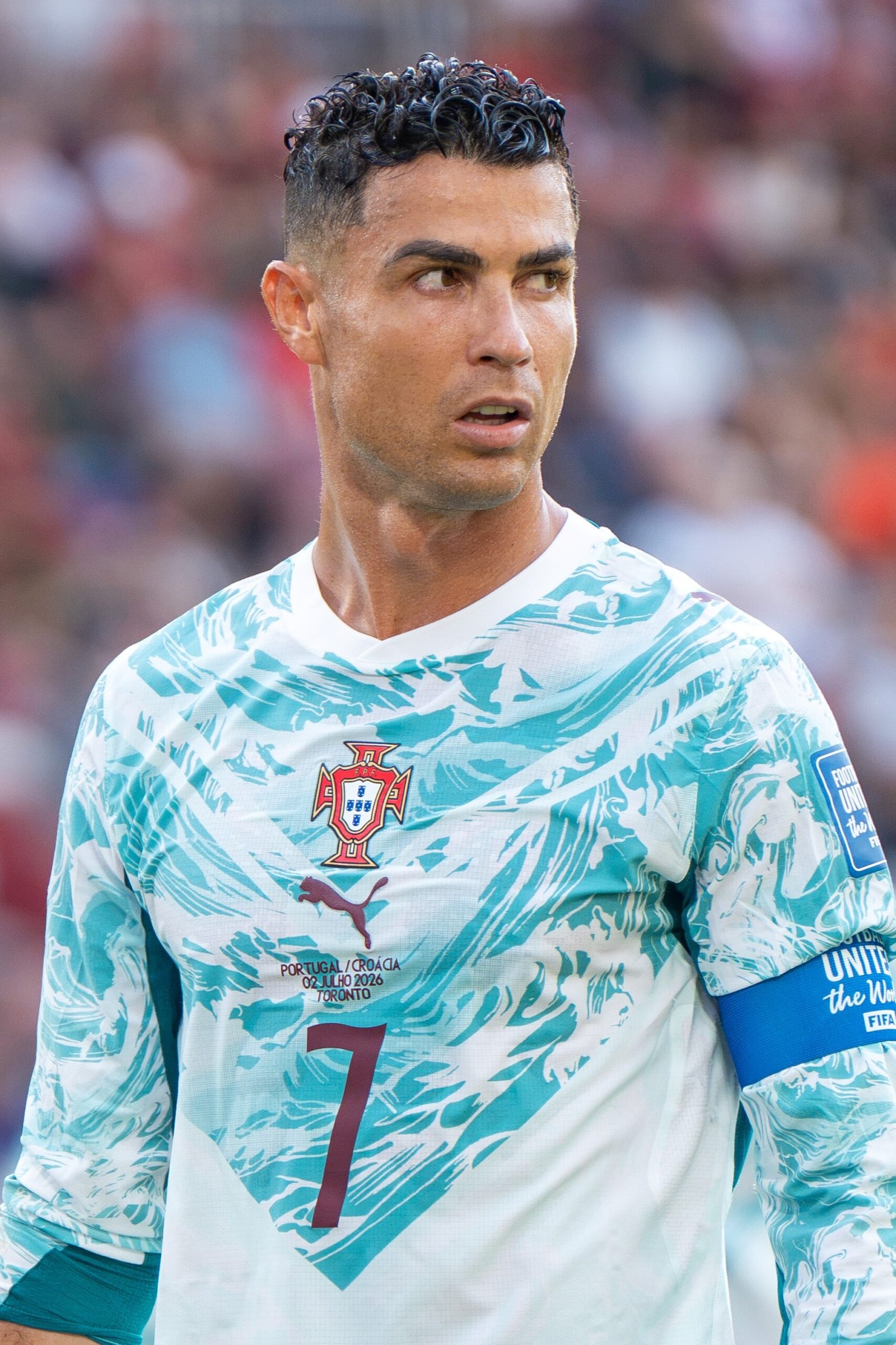
“The day has come for me to hand back the number seven shirt of our national team.” Cristiano Ronaldo read the line from a page, in a five-minute video posted on Thursday morning. The words were not new. He had written a retirement statement once already, after the World Cup, and the federation president, Pedro Proença, had talked him out of it on the plane home from North America.
The World Cup had ended on July 6 in Arlington, Spain winning 1–0 on a stoppage-time goal from Mikel Merino, Ronaldo’s 233rd cap. He had said before the game that it would be his last World Cup, and afterwards that he would not make any rash decisions. By the time the team flew home, he had a retirement statement written. Proença talked him out of it on the plane, and Ronaldo came back for the autumn. Jorge Jesus, who had taken over from Roberto Martinez, named him in the side for the September break.
His last game for Portugal was the 1–0 win over Wales on September 24 in Lisbon, 67 minutes at the Estádio José Alvalade, a goal of his disallowed by VAR. Three days later, against Norway, he stayed on the bench for the whole of a 2–1 win. He had been told he would play 30 minutes. He warmed up from half-time and was never called on. On September 30, the eve of the Denmark game, he left the camp in Copenhagen. He flew to Madrid on a private jet. Portugal beat Denmark 4–2 the next day without him.


On October 6 he published the explanation, 1,966 words on Instagram. Jesus had told him on the day of the Norway game that he would play 30 minutes, then gone back on it, Ronaldo wrote. After the game the two men met, with Al Nassr’s sporting director, Simao Coutinho, in the room, and Jesus agreed to tell the press that his captain had never demanded minutes and that it was a mistake to let him warm up without bringing him on. An eight-point document was drawn up recording what had been agreed, with Coutinho and Ronaldo’s adviser Tiago Craveiro. Then Jesus held his press conference. Ronaldo wrote that it bore no reflection of the conversation, which had ended with the coach asking him for a hug. “It was the second time he had broken his word to me. I decided to leave the training camp without waiting for any further broken promises.” Jesus denied that any such agreement had been made.
He apologised in the same statement. He wrote that he never should have left the camp, “despite the absolute breach of trust”, and asked the federation to punish him without leniency. “The Portuguese Football Federation must assess the consequences of my actions and punish me for them. I believe the punishment should not be reduced.” The statement also disclosed that he had written his retirement letter after the World Cup. And he turned down the farewell the federation was offering. “I learned in life, going hungry and with nothing to eat, that nobody gives anything to anybody,” he wrote. “I can promise all my fans, naturally and especially all Portuguese people, that we will have one or more farewell matches; there will be time for that. But when I think of the national team, what I really think of is competing.” He promised to be available once the suspension was served: “If I am physically well, playing for my club, with goals I hope, after serving the suspension that may be applied to me, I will be available, as I have always been until today, to compete and win for our national team.”
The federation answered on October 19. Its disciplinary council found that he had intentionally committed an offence under Article 160(1) of its regulations, and called a 30-day suspension and a €255 fine “adequate and sufficient”. Thirty days was the minimum the regulations allow for leaving the national team: the range runs from one to six months. The €255 was the maximum fine the rules allow once mitigation was counted. The mitigation was the remorse in his October 6 statement, his contributions to the game, and a CV of his career achievements that he had been asked to submit. He had admitted the facts in a formal statement the previous Friday. The suspension was backdated to October 1, the day of the Denmark game, and it ended on October 30.
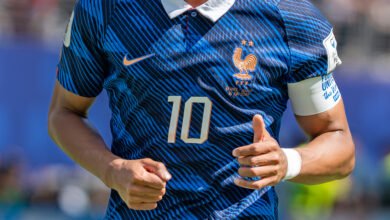
Rafael Leão was wearing the No. 7 in Copenhagen on October 1, the day after Ronaldo left the camp. UEFA’s Nations League rules put matchday squads in numbers 1 to 23, with no gaps, so the vacant shirt had to go to somebody. Leão, who normally wears 17, took the 7. Fábio Silva took the 17. After the 4–2 win over Denmark, Leão spoke about wearing the number of the player he has admired since childhood. Ronaldo had inherited the shirt in May 2008, when Luís Figo retired from international football. In his absences the shirt had passed around: Bruma wore it against Sweden in March 2024, Gonçalo Guedes in April 2026, Carlos Forbs in November 2025, and each time it came back to him. La Gazzetta dello Sport reported that Leão will wear it again against Denmark on November 14. By the time he recorded the video, the number 7 shirt was already gone.
On September 23, with 979 career goals, Ronaldo told the Spanish newspaper El Comercio that he hoped to reach 1,000 before retiring, and ideally while representing Portugal. He now sits on 985, 15 short, after a hat-trick against Al Kholood on October 29, three goals in 15 minutes, took him to 985. He has eight league goals in 10 matches this season for Al Nassr, nine in 12 in all competitions. At that league rate he needs about 19 more matches for the 15; Al Nassr have 23 league games left. Eight club games remain in 2026, and he would need almost two goals a game to get there before January. The National put it plainly: the decision leaves him just one avenue to 1,000, his club. The federation’s own tribute ended on the same number: “Let’s go for goal 1,000!”
Ronaldo’s last goal for Portugal came on July 2, a penalty against Croatia in the World Cup’s round of 32, his first goal in a World Cup knockout game and, at 41, the oldest anyone has scored in one. Portugal won 2–1. They lost the next round to Spain, 1–0 in Arlington. He finished the tournament with three goals, 11 across six World Cups, the first player to score at six of them. He made his debut in August 2003, aged 18. The record stands at 234 appearances and 146 goals, both men’s world records, with a European Championship in 2016 and two Nations Leagues beside them.
On Reddit, the retirement thread drew close to a thousand comments in two hours. “he couldve ended it off in a much better way, shame,” wrote u/Odd_Yogurt_1609. “Still an insane career.” Another, u/Immediate_Dependent, wished for the farewell Messi got last month: “I wished that he had a farewell like messi because he deserved it but the mindset that made him the best also made him impossible to put up with when he was no longer the best. Thank you for everything.” A Messi fan, u/FaehBatsy, wrote that the announcement “marks the end of the era i grew up with” and regretted “a good chunk of my years hating on Cr7, instead of appreciating these 2 legends together.” The count, from u/InspectorExact3836, was shorter: “1 Euro, 2 NL 🐐 Will never forget that hattrick against sweden 🥺”. They wanted the ceremony he had refused on October 6, and the federation has promised a tribute and named no date for it.
Jesus names the Portugal squad for Denmark and Wales on Friday. Denmark visit Braga on November 14, and Portugal travel to Cardiff three days later. Leão will wear the No. 7 in Braga.
Cristiano Ronaldo played in 12 major tournaments, six World Cups and six European Championships. Portugal won all four of their Nations League games in the September–October window, the last three without him, and qualified for the quarter-finals with two games to spare.