USS Enterprise Dismantling Ends the Navy’s 14-Year Argument About Nuclear Carriers
The tow from Pier 2 ended an argument that began with a price estimate, passed through a watchdog report and a courtroom, and finished $118 million cheaper than the first contract.
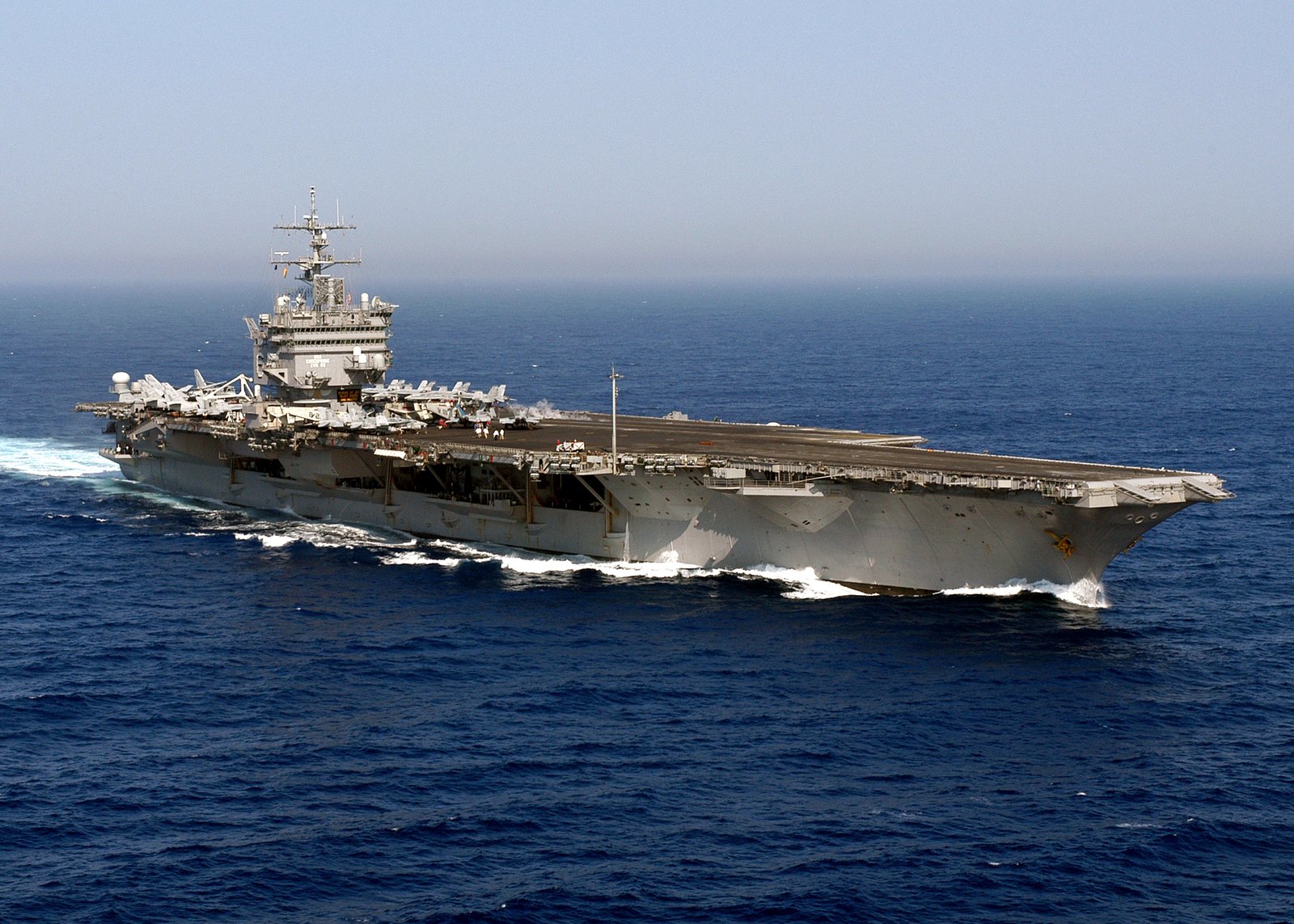
The tugs moved her off Pier 2 at about 11:15 on the morning of November 2, bound down the James River and south to Mobile, Alabama. A man filming from the shore noticed the rust-coloured deck where, he presumed, the flight deck had been cut away, and behind the tugs rode the former USS Enterprise, the first nuclear-powered aircraft carrier, on its last tow. NorthStar Maritime Dismantlement Services held the contract to take it apart when it arrived.
USS Enterprise dismantling is a job of cutting a ship apart around its reactors. The fuel came out in 2017, in work the yard at Newport News did first. The eight reactor plants stayed inside the hull, defuelled and waiting. “For submarines, you remove the reactor compartment as an entire section and ship it off to a disposal site,” Bryan Clark of the Hudson Institute told USNI News in July. “Here, the reactor compartment is too big, so you have to disassemble the hull itself.” A Navy spokesman said in 2023 that 142 reactor compartment packages had gone to disposal since 1986, each cut out whole. The section holding Enterprise’s eight plants weighs 28,000 tons and is too big to come out whole.
The argument began with money. In 2011 the Navy put the cost of doing all the work at Puget Sound Naval Shipyard at $500 million to $750 million. By 2013 the estimate was well over $1 billion. The yard spent $863 million taking the fuel out and stripping the ship, according to the Government Accountability Office, and the office found the Navy’s budget exhibits could not track even that sum. A 2016 attempt to hire a commercial firm for the non-nuclear parts ended when the Navy cancelled the solicitation in February 2017.

In 2018 the accountability office laid out the two ways left. The shipyard way: $1.05 billion to $1.55 billion, ten years, starting in 2034, with the reactor packages sent to Hanford in Washington state. Commercial dismantling was cheaper and faster on paper, $750 million to $1.4 billion, about five years, starting in 2024, with the disposal site still to be decided. The report also recorded a disagreement the Navy left unsettled. Naval Reactors said the Nuclear Regulatory Commission’s authority should govern a commercial dismantling. The commission disagreed. The auditors recommended that Congress require the two bodies to settle which authority applied, and the Defense Department agreed.
The Navy chose the commercial way in a decision notice published in September 2023. The notice picked Alternative 3, commercial dismantlement, from the environmental review finished that June. It promised about five years against more than fifteen for the other options, and about half the cost to the taxpayer. It also recorded the lowest greenhouse-gas emissions of the options studied, and no new work at the Port of Benton in Washington. The public yards would stay on fleet maintenance, and the Puget Sound workforce would keep its size. The environmental review’s own price bands, in 2019 dollars, put the commercial job at $554 million to $696 million against $1.1 billion to $1.4 billion for the yard options.
Mobile had already handled a smaller piece of the same problem. The Surface Ship Support Barge, the platform that held reactors steady while carriers were refuelled at Newport News from 1964 to 2016, was cut apart under a $129 million contract over three years. The Nuclear Regulatory Commission gave technical advice. Naval Reactors handed the barge over in June 2021, and it reached the Port of Mobile the same month, carried to Alabama Shipyard on self-propelled transporters. The work finished in the summer of 2023. The barge was 268 feet long. The carrier is 1,123 feet, and the reactors are inside it.
That contract went through a courtroom and a software failure. NorthStar won the first award in June 2025 at $536.7 million, for completion in November 2029. Huntington Ingalls’ ShipCycle unit said it had been locked out of the government’s procurement platform on the April deadline day, its final proposal hours late after long loading times, and the Navy refused leniency. A federal claims judge ordered the competition reopened in February 2026. The Navy ran it again, on the same platform, and awarded NorthStar the work a second time on July 15, 2026, at $418,497,668. Of that, $415,497,668 was obligated at signing — about 22 percent less than the first price, a cut of $118.2 million, for completion in September 2030. Huntington Ingalls protested the second award over the past-performance scoring, then withdrew the protest in October, and the tow left Newport News nineteen days later.
The people who served on her were watching the tow for something else. “I was a reactor operator on her from Jan 1983-Jun 1986. Proud to have served on her,” one former crew member wrote on Reddit. “I’m sorry that she is being scrapped and not saved as a museum.” Another commenter wanted the island saved and added to the USS Alabama site in Mobile: “It’d be nice if they could save her island and add it to the USS Alabama site—they have the space—but I bet very little ends up preserved.” The man filming the departure wrote of “my dad at Nuclear Engineer for fueling/refueling and brother for defueling /decommisioning on the same boat.” The official statements speak of a blueprint, of half the cost, of five years. Preservation is the subject the statements leave to the commenters. The one preservation the record shows is measured in pounds: about 35,000 pounds of her steel was set aside for the new Enterprise, CVN-80, now building at Newport News, with about 20,000 pounds salvaged by August 2022.
Ten more carriers wait behind Enterprise, which is why the Navy calls the Mobile job a blueprint. The office created to end her, the Nuclear-Powered Aircraft Carrier Inactivation and Disposal Program Office, PMS 368, is the first of its kind. Its commander, Captain William Cleveland, said in a 2024 statement that the United States is “the only country in the world that builds nuclear-powered, large-deck carriers” and that the office was “creating a blueprint for the Navy on how to dispose of them.” The next carrier in line, Nimitz, moves into inactivation in March 2027, ten months later than first planned, after a $96 million planning contract. The last of the class, George H. W. Bush, is due for inactivation in the mid-2060s. The decision notice that sent Enterprise to Mobile leaves the authority question the auditors raised in 2018 unanswered in its text.
Commercial firms had already dismantled 32 civilian nuclear power plants by the time the Navy asked one to dismantle a carrier. Their method takes a plant apart piece by piece and sends each piece to the place licensed to take it. Enterprise is the first nuclear-powered aircraft carrier a commercial crew has been asked to take apart with its reactors inside the hull, rather than cut out whole and shipped away.