Chili’s Margaritas Chemical Burns: The Unlabeled Container That Sat in the Bar for Two Days
A granulated degreaser handed over during power-washing spent two days in an unlabeled container in the bar. On Wednesday morning it was used to prepare the margarita station.
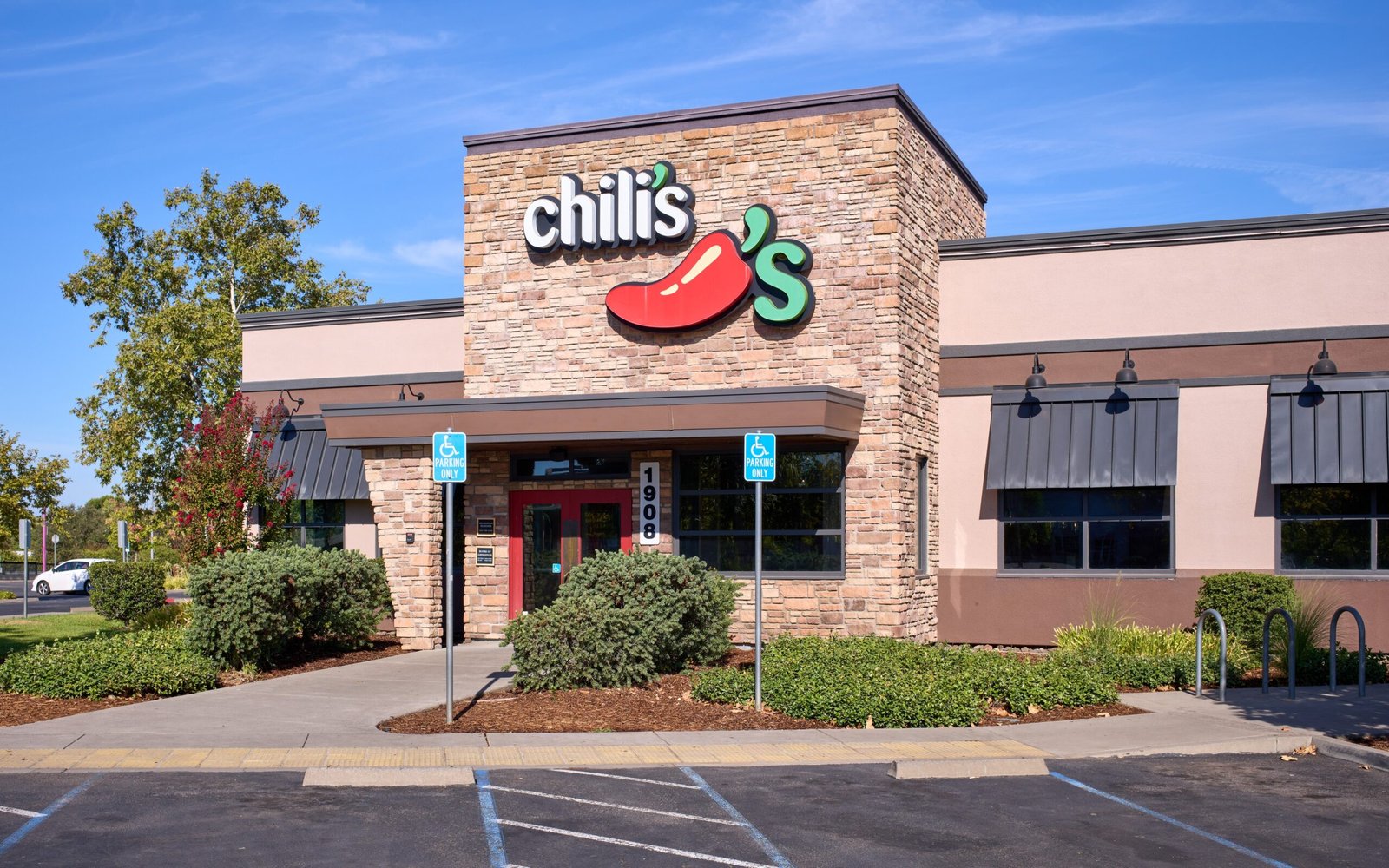
The margaritas arrived shortly after the Chili’s in Forest City, North Carolina, opened for lunch on Wednesday, October 28. Three customers drank them and felt it at once. The Foothills Health District, the health department for Rutherford and McDowell counties, recorded that they “immediately experienced discomfort” and suffered chemical burns in and around their mouths. They told the staff what had happened. Then they left for urgent care.
Two days earlier, on Monday, a contracted worker power-washing the outside of the restaurant handed a granulated degreasing chemical to a restaurant employee. The employee put the chemical in a container with no label on it, carried the container inside, and left it in the bar area. It stayed there until Wednesday morning, when an employee preparing the bar for lunch service found it, took it for sugar, and used it to prepare the margarita station. The district’s preliminary findings are the fullest public account of the Chili’s margaritas chemical burns, and that container, a degreaser mistaken for sugar, and the two days it spent in the bar, are at the centre of them.
After the customers spoke up, two restaurant employees tasted the substance in the container and reported similar symptoms. Levonne Baker, a regular at the Forest City Chili’s, told News 13 he was “beyond surprised and almost scared,” and he compared the ordeal to “a Wes Craven story that’s coming to life.” A mechanic and an urgent care clinic sit next door to the restaurant, and Baker said the incident had made him nervous about going back to the bar. “It’s like, what’s in there next? I mean, am I going to be the next person who’s going next door? And not for an oil change,” he said.


Jason Masters, the Foothills Health District’s director, put the incident down to “proper chemical labeling, storage, and handling in food service establishments, as required by the North Carolina Food Code.” North Carolina’s rule, 15A NCAC 18A .2650, adopts the FDA’s 2017 Food Code and its supplement, and the state’s own amendments to the Code’s Chapter 7 touch only pesticides and sanitizer containers. The labeling and storage rules stand as the FDA wrote them. Chapter 7 starts with the label: a container of poisonous or toxic material must bear a legible manufacturer’s label, and a working container taken from bulk supplies must be clearly and individually identified with the common name of the material. It had no label. The chemical had been moved out of the container the contractor brought it in. Nobody had written a name on it.
The North Carolina Food Code requires poisonous or toxic materials to be stored so they cannot contaminate food, equipment, utensils, linens, and single-service and single-use articles, separated by spacing or partitioning and never stored above them. Only material required for the operation and maintenance of the establishment may be kept there at all, and it must be used according to the law, the Code, and the manufacturer’s directions, applied so that no hazard is constituted and contamination is prevented. A container previously used to store poisonous or toxic materials may not be used to store, transport, or dispense food. The degreaser came in from outside, from power-washing the building, and it ended up in the bar area. The last step used the contents of a toxic material’s container in preparing drinks.
The health district counted three customers with burns, and two employees who tasted the substance and reported similar symptoms. Chili’s counted differently. “We are aware of an isolated incident at our restaurant in Forest City, North Carolina that resulted in injuries to two of our guests and Team Members,” a spokesperson told the New York Post. Two guests, and team members besides, or two people in all: the company did not say which. No clarification followed in any account available. Its statement changed in another way, too. The early wording, that the company was “actively investigating the circumstances,” later became a claim that it had “thoroughly investigated the circumstances and addressed the issues specific to this location.”
The district opened an investigation when it learned what had happened, and it suspended the restaurant’s food service permit on the spot. Staff were ordered to thoroughly wash, rinse, and sanitize the affected food preparation areas, equipment, and surfaces. By Thursday morning the investigation was complete. The permit was reinstated, after officials determined the restaurant met “all applicable food safety requirements” and could safely resume operations.
Under the local television station’s Facebook post about the incident, Terra Ogden wrote: “If it isn’t labeled, don’t use it. Negligence can harm others & cause many paying the price for it.” Masters had spoken of labeling, storage, and handling. Ogden supplied the word for a failure of all three. Amy Roper, posting on the same thread, wrote from experience the official record does not contain. “I am burn survivor of chemical burns. Chemical burns run deep.” The Cleveland Clinic says much the same in clinical language: chemicals often stay on the skin for long periods, eating away at tissue, and damage may go past the superficial layers, so a burn should be treated at once even when it seems mild. Daniel Aulph asked: “Does this mean they failed their health inspection?” The district suspended the permit and then restored it. No violation or citation was named in the accounts available.
In Forest City, the degree of the burns was never recorded, and the product was never named beyond a granulated degreaser. The Oklahoma record shows what that blank can hold. On Valentine’s Day in 2023, Holly Hill, a 30-year-old teacher and mother of three, took one sip of a margarita at Hacienda Las Margaritas Bar & Grill in Elgin, Oklahoma, that contained an industrial-strength degreaser. Hill later recalled feeling as if her mouth was on fire. She vomited, and doctors found a hole in her oesophagus. She had more than 30 procedures on it, and her mother said each hospital visit, about every three weeks, cost around $80,000. A confidential settlement followed her lawsuit against the restaurant. She died on October 23, 2025, from complications of the injuries, and the Elgin police asked the Oklahoma State Bureau of Investigation to take an initial inquiry into her death. The restaurant said the staff involved in 2023 had been terminated and that new training and procedural safeguards, worked out with the Oklahoma alcohol enforcement commission and the state health department, remained in effect. The chemical in Forest City was never named, so nobody can say from the public record whether it was anything like the one in Elgin.
The packet in Oregon was labeled. On October 20, 2025, at Fowler Middle School in Tigard, cafeteria staff served 37 pretzels coated in crushed Alto-Shaam concentrated oven cleaner, mistaken for salt, and more than 50 sixth-graders ate all or part of them. The cleaner contained sodium hydroxide, a caustic chemical. A substitute kitchen worker tasted the seasoning, felt burning, and found the discarded packet. The lead worker checked the label and identified oven cleaner, and Poison Control was contacted about 27 minutes after staff realised what had happened. The district called it unintentional human error. A lawsuit filed in Washington County Circuit Court in September 2026, seeking $950,220.85, alleges the district failed to store caustic chemicals away from food and to train staff, and that the cleaner had been left on a prep counter. A label names the chemical, and in Oregon it was read after the pretzels had been served. The lead cook remained employed, the district said, without saying in what capacity. Tigard police said no criminal charges had been filed.
Megan Rollins, the Foothills Health District’s spokesperson, made the label point in practical terms. With everything labeled, she said, an ingestion is easier to identify. “Then you can call Poison Control, and they can walk you through exactly how to neutralize that chemical,” she said. Poison Control in the United States is reached at 1-800-222-1222, through 53 poison centres, free and confidential, around the clock. A specialist asks for the container to be brought to the phone, and for the brand, the amount, and the symptoms, before saying what to do. Help is free, confidential, and available around the clock.
Rollins said officials had no updates on the conditions of the customers or the employees who consumed the chemical. The product itself was never named beyond a granulated degreaser.